Potential Changenaire #002: Dolly Parton
She died two months ago. For thirty years she mailed books to children she would never meet, and the count just passed 332 million. We run Dolly Parton's record through the Changenaire lens.
Subscribe to the Changenaire Weekly Newsletter — get a free ebook copy of Rebuilding Justice: An Employment-Based House Arrest Story of Redemption
One email a week. The Journal's best, the next profile, and the book — free.
Free forever. A free ebook copy of Rebuilding Justice: An Employment-Based House Arrest Story of Redemption, then one email a week. Unsubscribe anytime.
January 19, 1946. A one-room cabin in Sevier County, Tennessee. Dolly Parton was born into a family of twelve children with very little money — and a father, Robert Lee Parton, who could not read or write.
That last fact is the whole story. Everything else — the songs, the fame, the theme park, the fortune — is how she got the means. The father who could not read is why the books exist.
She never forgot it. In interviews across her life she came back to the same image: a man she loved who could not read a letter, and a daughter who decided no child in her home county should start life that way.
What happened next
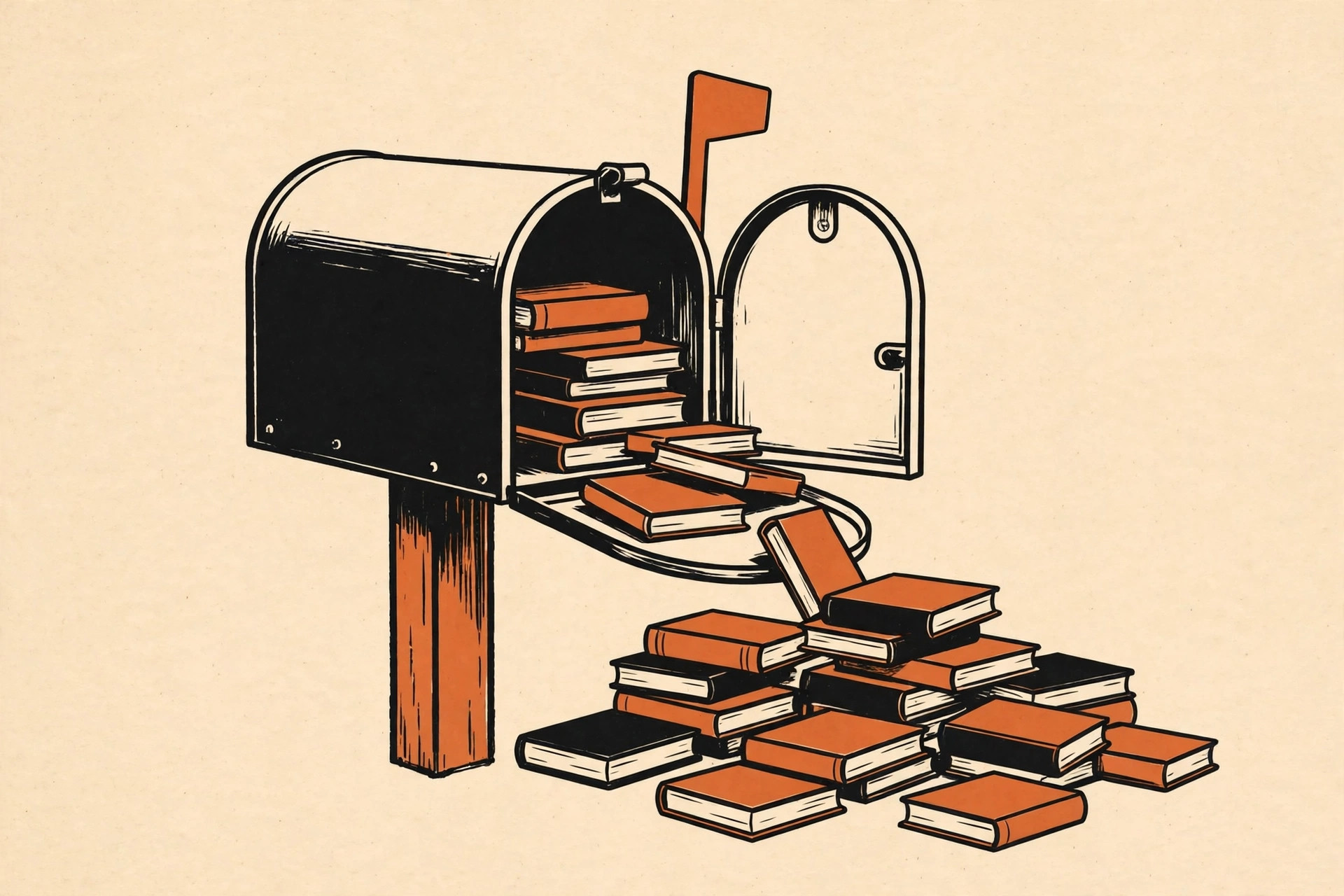
In 1995, through the Dollywood Foundation, she started the Imagination Library in Sevier County. The idea was almost too simple to take seriously. A child, from birth to age five, would get a carefully chosen book in the mail every single month. No income test. No application proving need. No merit. The book would simply come.
It started in one county. Five years later it went national. Then it crossed borders — Canada in 2006, the United Kingdom in 2007, Australia in 2013, Ireland in 2019.
The music paid for the beginning. Dollywood, which she opened in 1986, helped carry it. And the giving widened beyond books: in 2020 she gave $1 million to Vanderbilt University Medical Center for COVID-19 vaccine research, among many other gifts. But the Library stayed the center of it — the thing she built that was not about her.
On August 25, 2026, Dolly Parton died in Nashville at 80, after a brief battle with cancer, at Vanderbilt-Ingram Cancer Center. Her husband of nearly sixty years, Carl Dean, had died the year before. A museum celebrating her life opened in Nashville five weeks after her death, built from narration she recorded before she died.
And the books kept coming. The program did not pause for mourning. That is the first thing to notice about durability: it was already proven before we wrote this.
The numbers
By the time she died, the Imagination Library had gifted more than 332 million books to children around the world. More than 304 million of those had come by the end of 2025, and more than 40 million arrived in 2025 alone. Today the program mails more than three million books every month.
The shape of it matters as much as the size. A child enrolled at birth receives up to 60 books by age five — one a month, age-matched, chosen by a selection committee. The first book is always The Little Engine That Could. The last, as the child heads to kindergarten, is Look Out Kindergarten, Here I Come!
It runs in all 50 states and four other countries. It costs the family nothing, whatever the family earns. Local partner organisations in each community raise the money for the wholesale cost of the books and the mailing; the Dollywood Foundation and her estate support the program behind them.
A number that big stops meaning anything unless you shrink it back down. So shrink it: one book, in one mailbox, in a home where books are scarce. A child who sees a parcel with their name on it. A parent reading aloud. That scene, repeated three million times a month.
Why this counts differently
Most celebrity philanthropy asks for attention and converts it into money. Dolly's model asked for nothing from the child and gave the thing itself away. That is a different kind of impact, and it is the reason this profile lands where it does for us.
We are doing a version of the same thing right now. We give Rebuilding Justice: An Employment-Based House Arrest Story of Redemption away free to subscribers — not as a sample, not as a teaser, the whole book — because we believe the idea travels further without a price on it. Dolly understood that thirty years before us: when the gift has no barrier, the gift does the spreading.
Depth is where the case gets serious. A book at age two does not just add a story. It builds the habit the whole school career stands on — a lap, a voice, a page turned together. Children who start school behind in reading usually stay behind. A monthly book, arriving whether anyone asked for it or not, attacks that gap at the only point it can be closed cheaply: before school starts.
And the model scales without her standing over it. Local partners own their communities' programs. The cost is shared, not carried by one checkbook. A system built that way does not need its founder in the room — which is why it was still mailing books the week she died.
The open questions
A serious ranking holds the criticisms in the same frame:
Books versus outcomes. The program counts books mailed with great precision. Reading outcomes are harder to count. Research finds the monthly books help home reading habits and kindergarten readiness, but a gifted book is not a guarantee of grade-level reading. The last mile is the home, and no program can control what happens after the parcel opens.
Coverage gaps. The Library only reaches children in participating communities. A child outside a partner area gets nothing, and because local partners raise the money, the poorest places can be the hardest to cover. A universal promise delivered through local fundraising is not yet a universal program.
Local fragility. The model's strength — local ownership — is also its weak point. If a community's fundraising dries up, its coverage shrinks. The center holds the system together, but the money is raised town by town.
Attribution. The 332-million figure counts books mailed, not readers made. That is the honest metric, and the program reports it honestly. But a ranking should keep the distinction visible: books in homes is the achievement; readers raised is the hope built on it.
After Dolly. The program's fame rode on her, and its fundraising still does — September 25 was declared a day of giving in her name after her death. The early signs say the giving holds without her. But months are not decades, and durability after a founder is proven over years, not tributes.
The Changenaire lens
Scale: very high. 332 million books, five countries, three million a month, and still mailing.
Depth: high. Early reading compounds across a whole school career and into the next generation — the same compounding our lens is built to catch.
Durability: high. Thirty years running, a local-partner model designed to work without its founder, and already doing so after her death.
Verifiability: medium-high. Books mailed are counted and reported precisely; reading outcomes are real but less precisely measured than the books themselves.
Verdict: Potential Changenaire — yes, with the open questions on the record. A girl born in a cabin to a father who could not read built a machine that puts a book in a child's hands every month, free, no questions asked — and the machine kept running after she was gone. Giving the thing away became the institution. That is a model worth naming.
Next week: #003. Suggest a name — who should we run through the lens?
Follow the series.
One profile every week. The ranking system is coming — this is how we build it.
All posts