AI Is the Matrix. Humanity Is Zion.
Here is an idea that stopped us in our tracks. In the film, a skill could be downloaded straight into a person's mind in seconds. AI does that now, for real. And if AI is the Matrix, then we — going in and out of it every day — are Zion.
The download
Everybody remembers the scene. A man sits in a chair, a program loads, and minutes later he can do something he could not do before. Martial arts. Flying a helicopter. Years of training, delivered in a download.
That was science fiction. Then it quietly became Tuesday.
Today a person who has never flown a helicopter can sit in a simulator, guided by AI, and fly one digitally. A person who has never written code can build software by describing what they want. A person who has never run a business can have a plan, a brand, and a first product in a weekend.
The skill still has to be used. But the download is real now. That is the first half of the metaphor, and it holds.
Zion is the real world
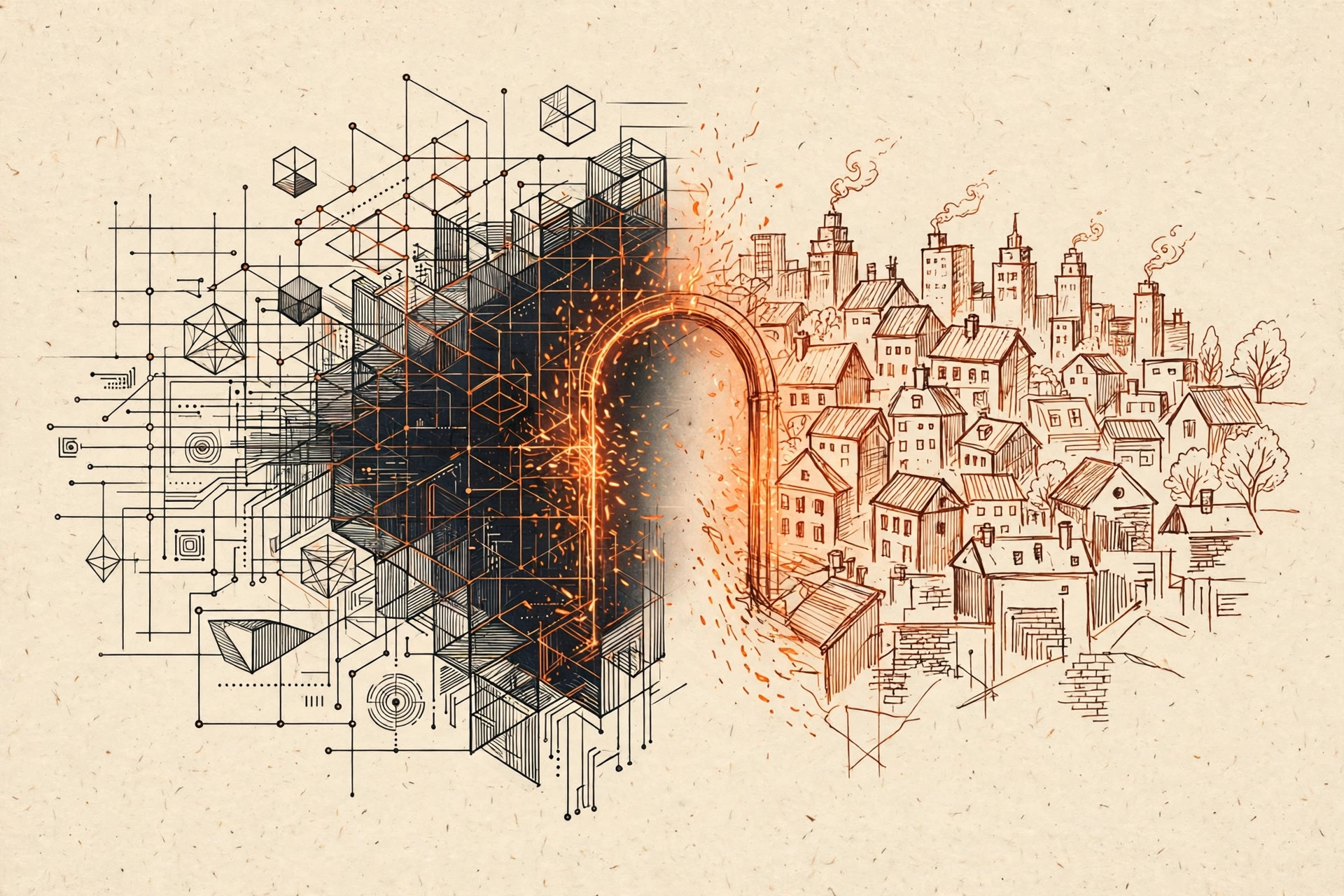
In the film, the Matrix is the simulation, and Zion is the real city underneath it — the place where people actually live, where the stakes are real, where food is grown and children are raised and the lights can go out.
That is us. Every one of us who opens an AI tool, uses it, and closes it again is doing exactly what the crews did: leaving the real world, entering the system, and coming back out.
We do not live inside AI. We visit it. Our lives, our families, our rent, our health — all of that stays out here, in Zion. The machine has no rent to pay. We do. That asymmetry is worth remembering every time someone tells you the machines have already won. A system with nothing at stake cannot win anything. It can only be used.
The crews
Most people enter the Matrix the way most people enter anything new: as passengers. They ask it a question, take the answer, and leave.
But some people learn to move in it. They go in deliberately, with a mission, and they come back out carrying something — a skill, a plan, a built thing — that changes life back in Zion.
Those are the Morpheuses. Not because they are chosen, but because they chose. They learned the system well enough to use it at full capacity, and they never forgot which world they actually live in.
If you are building something with AI right now — a business, a book, a way out of a hard place — you are crew. The question is not whether you use the machine. Everybody does now. The question is whether you go in with a purpose and come back out with something real.
The prophecy, rethought
In the film, the crews are working toward a liberation — a great day, a prophecy, an ending to the war between the worlds.
Here is where we will not overclaim. There is no prophecy written for us. Nobody handed us a script.
But there is a version of the great day that is ours to make: the day the things we build inside the machine start paying off outside it. The business that feeds a family. The book that changes a mind. The skill that becomes a livelihood. Liberation, in this version, is not the machines falling. It is people rising — using the most powerful tool ever built to make their real lives better.
That is the prophecy worth working toward. Not because it was foretold, but because it is buildable.
So what do we do with this?
We keep the doorway open in both directions. Go in. Learn the system. Download the skill. Then come back out and build something with it that outlives you.
The Matrix is not the enemy and not the savior. It is the place you go to get what you need. Zion is where you use it.
And the people who understand that — who go in and out on purpose, carrying something back every time — are the ones who will decide what this era means.
Want more ideas like this one?
Join the Changenaire Weekly Newsletter for essays and playbooks that make you think and move, every week, and more.
Free forever. A free ebook copy of Rebuilding Justice: An Employment-Based House Arrest Story of Redemption, then one email a week. Unsubscribe anytime.