
How to Recover After a Hard Day: Rest Well — Fitness #019
Some days ask a lot of your body. A long run. A hard workout. A day on your feet. The next day, your legs feel heavy and slow. That is your body asking for rest — not for more work. This guide gives you a short rest routine: legs up, a slow walk, and a gentle roll.
Disclosure: some links on this page are affiliate links. As an Amazon Associate, Changenaire earns from qualifying purchases made through links on this page, at no extra cost to you.
Key takeaways
- Rest is part of training, not a break from it — muscles need a day off between hard sessions.
- Legs up the wall for 5 minutes lets your legs rest with no work at all.
- A slow 10-minute walk beats sitting still — gentle movement is the whole point.
- Roll slowly, hold tender spots for 30 to 90 seconds, and never roll on a joint.
- Soreness that fades in a day or two is normal. Sharp pain, swelling, or pain that grows is a sign to call your doctor.
Health note: This guide is education, not medical advice. It describes general techniques for healthy adults. Talk to your doctor before starting a new exercise routine — especially if you have a health condition, an injury, or pain that keeps coming back. If a movement hurts, stop.
Who this is for: anyone who had a hard day on their feet or in a workout and woke up heavy and slow. Who should check first: anyone with sharp pain, swelling, a joint that will not bear weight, or pain that keeps growing — talk to your clinician before starting, and skip any move that hurts.
Go deeper (affiliate link — we may earn a commission): you need nothing to buy for this routine — a wall and the floor do the job, and the moves below are the whole program. If you want a roller for the last step, the TriggerPoint GRID 1.0 Foam Roller, 13-inch is the one we would hand you: a firm roller with a textured top that holds its shape. Skip it if you only want the routine — it is all below, free, and it is enough to start.
Hard days earn rest days. Muscles do their repair work when you stop, not while you push. A day off is not lost time. It is the time your body uses to get ready for the next hard day. Strong for the long build — rest well, and the work lasts. This guide is part of the Fitness hub, and it pairs with hip and hamstring mobility for sitters, which teaches the foam roller basics, and with the bodyweight strength starter, the routine your rest days are resting from.
Step 1: legs up the wall — 5 minutes of doing nothing
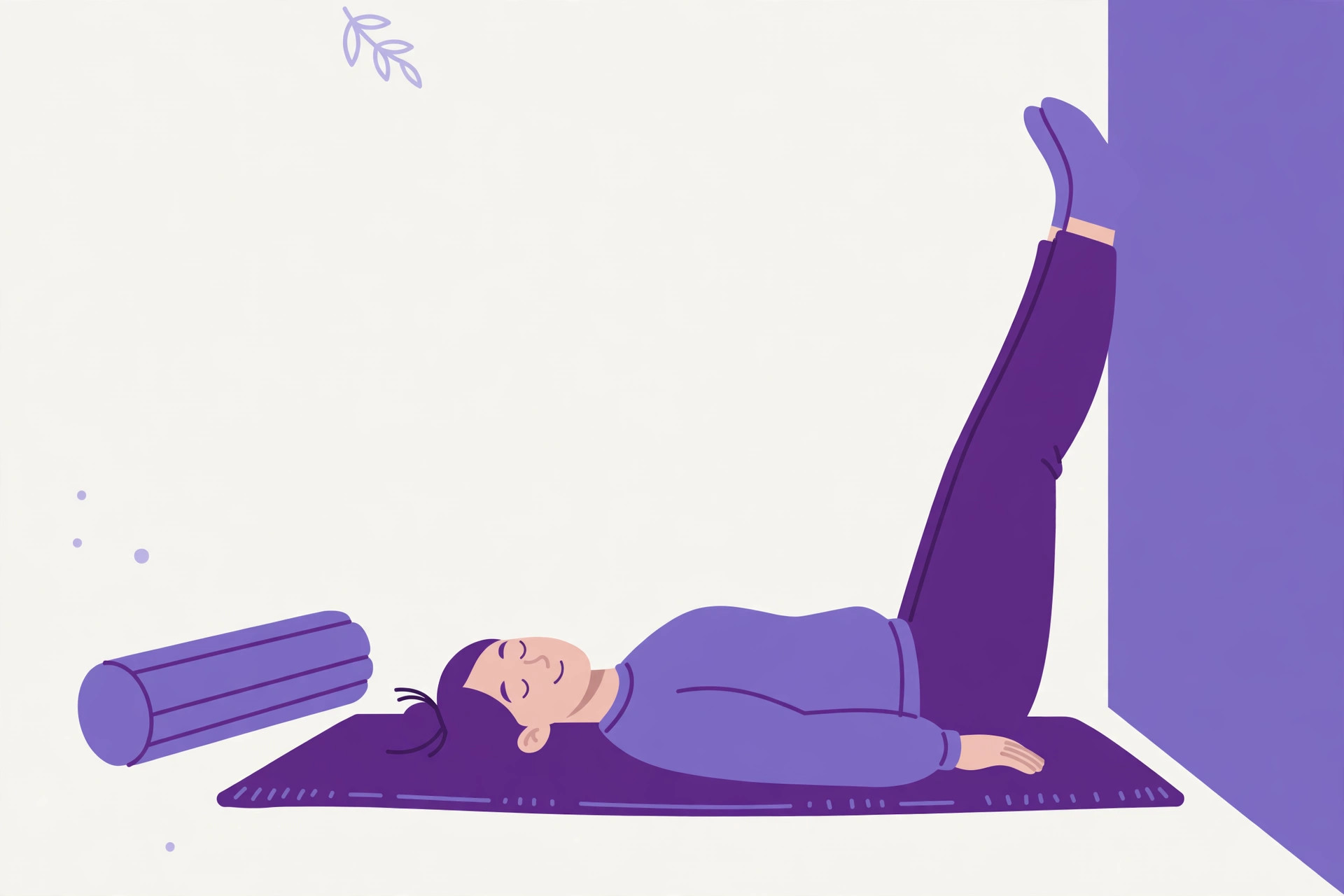
Lie on your back, hips close to a wall, legs up the wall. Let your heels rest on the wall. Arms at your sides, palms up. Close your eyes. Stay there for 5 minutes. Breathe slow. That is the whole move.
Do not force the legs straight. A soft bend in the knee is fine. If your low back complains, scoot your hips a few inches from the wall. The point is rest, not a stretch — if it feels like work, move closer to comfort.
Easier: put a folded blanket under your hips. Harder: stay for 10 minutes instead of 5.
Step 2: the slow walk — 10 easy minutes
Walk for 10 minutes, slow, on flat ground. Around the block. Down the hall and back. The pace is the point — you should be able to talk in full sentences the whole way. If you are out of breath, you are walking too fast.
Gentle movement beats sitting still. Sitting all day after a hard day lets everything stiffen up. A slow walk keeps the legs loose without asking them for more work. Swing your arms. Look around. Let the walk be easy.
Easier: walk for 5 minutes, twice. Harder: walk for 15 minutes, still slow.
Step 3: the gentle roll — calves, thighs, and back
Sit on the floor, roller under one calf. Lift your hips a little. Roll slow from ankle to knee, and back. When you find a tender spot, stop on it. Hold for 30 to 90 seconds. Breathe. Then roll on. Do each calf, each thigh, and your upper back the same way.
Slow is the whole trick. Mayo Clinic says to roll slowly until you find the tender spot, then hold it on the roller for 30 to 90 seconds (checked November 2026). Fast rolling does nothing. Never roll on a joint, a bone, or your low back — muscle only, and light pressure to start.
Easier: roll with less weight — keep one foot on the floor to take some load off. Harder: hold each tender spot for the full 90 seconds.
Step 4: the rest-day rule — one day off between hard days
Do not work the same muscles two days in a row. Mayo Clinic says the same — rest a day between sessions for the same muscle group (checked November 2026). A hard leg day on Monday means Tuesday is a walk-and-rest day, not a second leg day.
Plan the week like this: hard days, then rest days, then hard days again. The CDC asks adults for muscle work on at least 2 days a week (checked November 2026) — two hard days with rest between them already meets the ask. More is not better if the rest is gone.
Easier: one hard day a week, with rest days after it. Harder: three hard days a week, each followed by a rest day.
At a glance
| Step | The short version |
|---|---|
| The rule | Rest is part of training — never two hard days in a row |
| Step 1: legs up the wall | 5 minutes, hips near the wall, eyes closed |
| Step 2: the slow walk | 10 minutes, slow, full sentences the whole way |
| Step 3: the gentle roll | Calves, thighs, upper back — hold tender spots 30 to 90 seconds |
| Step 4: the rest-day rule | One day off between hard days for the same muscles |
Common mistakes
Rolling too fast. You roll back and forth like you are in a race, and nothing lets go. Fix: roll one inch per second, and stop on the tender spots.
Rolling on joints and bones. You roll over a knee, an ankle bone, or your low back, and it hurts. Fix: muscle only — stop before the joint, and skip the low back.
Skipping rest days. You train hard every day, sure that more is better. Fix: put rest days on the calendar first, then the hard days around them.
Chasing soreness with more work. You feel sore, so you work harder to work it out. Fix: sore muscles want rest and a slow walk — not a second hard day.
Can't do today?
Do the 2-minute version on the floor: legs up the wall for 2 minutes, then a slow walk around your home. That is the whole fallback, and it counts. The missed-day rule is simple: let it go — do today’s rest today, never double up to catch yesterday. What counts as enough: legs up and a slow walk on every rest day.
Questions people ask
How long should muscle soreness last?
A day or two is normal. If soreness lasts more than three days, or it gets worse instead of better, check with your clinician.
Should I stretch when I am sore?
Gentle stretching is fine — slow, easy, and never forced. If a stretch hurts, stop. Sore muscles want rest and a slow walk, not a hard stretch.
Is a rest day the same as doing nothing?
No. A rest day means no hard work for the tired muscles — a slow walk, legs up, and a gentle roll all count as rest. Sitting still all day is not better.
When should I see a doctor?
See your clinician for sharp pain, swelling, a joint that will not bear weight, or pain that keeps growing. The health note at the top of this guide says the same.
What comes next
Keep the rest days, and let the hard days count. When the routine feels easy, add five more minutes to the walk — and then hip and hamstring mobility gives your roller work a full routine to live in, while the bodyweight strength starter sets the hard days your rest days are for.
Sources
Every fact in this post was checked against the sources below in November 2026.
- Mayo Clinic — What it takes to be flexible at any age (checked November 2026) — roll slowly to the tender spot, then hold it on the roller for 30 to 90 seconds.
- Mayo Clinic — Strength training: Get stronger, leaner, healthier (checked November 2026) — do not work the same muscle group two days in a row.
- CDC — What You Can Do to Meet Physical Activity Recommendations (checked November 2026) — adults need muscle-strengthening activity on at least 2 days a week.
- TriggerPoint GRID 1.0 Foam Roller, 13-inch, ASIN B0040EGNIU — the foam roller recommended in this post.
Subscribe for more free step-by-step how-to guides to help you get more things done to grow your business or project everyday.
Email required. Unsubscribe anytime.
Read our Privacy Policy.