How to Start Freelancing and Land Your First Client — How-To #011
Tuesday, 9:14 AM. Kitchen table. Laptop open, coffee going cold. Somewhere across town, a business owner is staring at a task they don't want to do and would happily pay someone else to finish. Your job this week: make those two people meet.
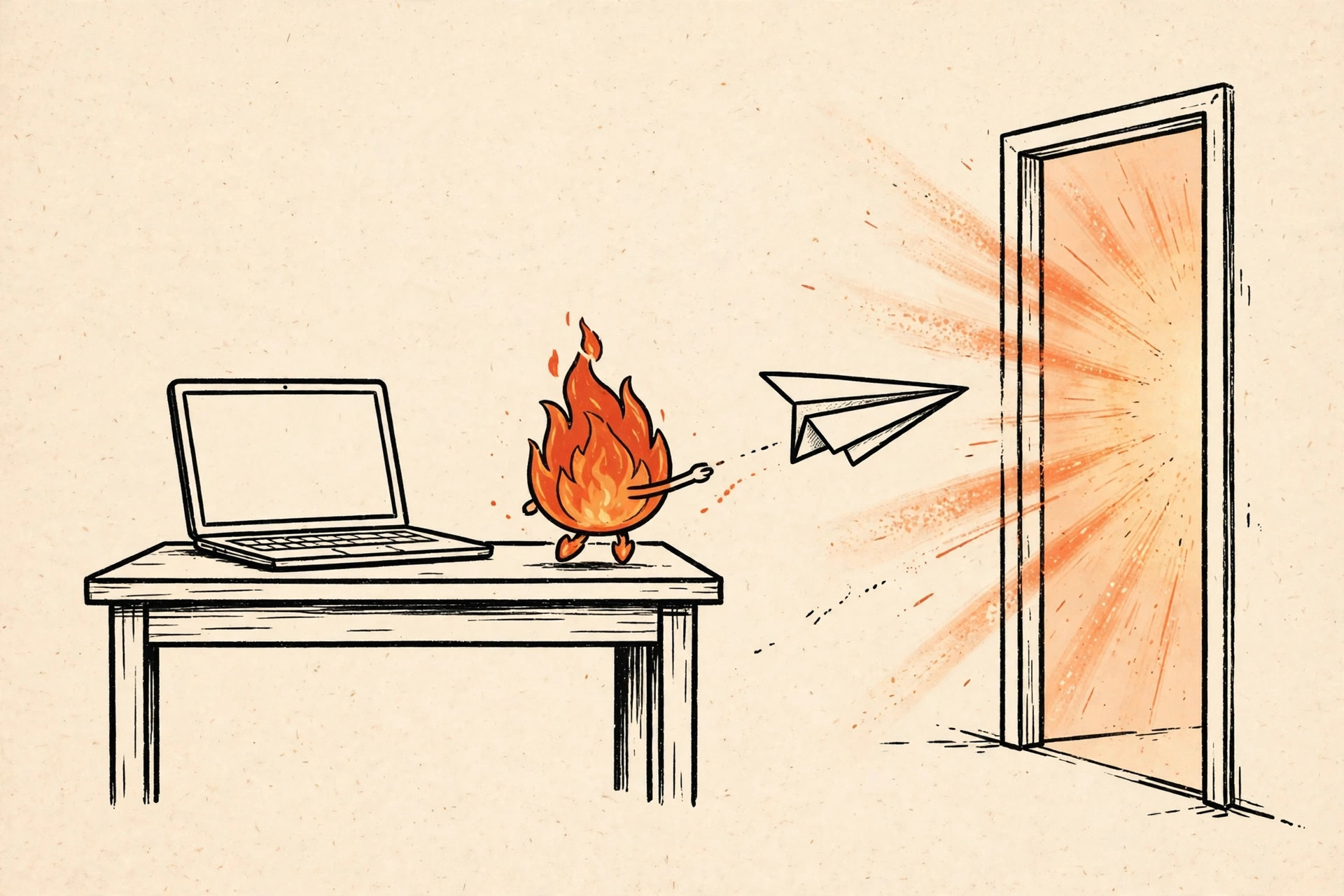
Here's the freelancing myth, briefly: that you need a brand first. A logo. A niche. A personal brand strategy. A course about pricing psychology.
Here's the freelancing truth: your first client does not care about your brand. They care about one thing — will you solve my problem, by when, and for how much? Everything else is furniture. Useful later. Furniture.
We've watched people spend three months building the furniture and zero minutes making an offer. Don't. The freelance economy keeps growing by the hundreds of billions, and not one dollar of it goes to the best logo. It goes to people who make specific offers to specific buyers and deliver.
The method, short version. Pick one thing you can sell by Friday. Wrap it in an offer with a price and a deadline. Put up a one-page proof site. Send ten pitches before you touch anything again. Close plainly and fast, with half up front. Then turn that first client into the next two. That's the whole game — and it starts this week, not someday.
Pick one thing you can sell by Friday
Not five skills. Not "I could learn copywriting." One thing you can deliver this week: writing, design, video editing, bookkeeping, data cleanup, captions, translation, website fixes. Whatever it is, it has to survive the Friday test — could someone pay you for this and receive it before the weekend?
This filter kills the two biggest stalls. The first is selling what you're still learning (that's studying with extra steps). The second is selling a menu — "I do design and writing and social media and strategy" — which reads to a buyer as "I do nothing well enough to name." One thing. This week. The menu comes later, funded by paid work.
Don't have the thing yet? That's fine — #006's side-hustle territory covers building one. But the moment you can do the thing competently, the learning phase is over and the selling phase starts. Most people stay in the learning phase two years too long.
Package one offer with a price and a deadline
"I do graphic design" is not an offer. "A one-page flyer, two concepts, delivered in five days, $150" is an offer. Buyers don't buy skills; they buy finished outcomes they can picture arriving. So picture it for them.
The formula: one deliverable, one quantity, one price, one turnaround. Ten product descriptions in five days, $150. A month of social captions, twelve posts, $200. A bookkeeping cleanup — one quarter, reconciled, two weeks, $300. Specificity is doing three jobs at once: it tells the buyer what they get, tells you what to deliver, and kills the awkward pricing conversation before it starts.
Set the price by working backward from the hour. If the offer takes you five hours and you want $25 an hour, the price is $125. Round it. Don't undercut yourself into the $5-an-hour trap — the freelance market already has a bottom, and the bottom is crowded and miserable.
Build a proof page in one afternoon
You need one page: your name, the offer, three samples, a way to contact you. That's it. A free site builder, a portfolio link, even a well-organized document link if the samples are there. Buyers don't evaluate your web design; they evaluate whether you can do the thing.
The samples are the page. Three finished pieces that look like the offer — if you're selling product descriptions, show three product descriptions. If you don't have client work yet, make three spec samples: pick a real business, do the work as if they hired you, label it clearly as a sample. "Available on request" is a locked door with no doorbell. Public samples are an open one.
One afternoon. Set a timer. The page goes live imperfect, because a live imperfect page takes pitches and a perfect draft takes none.
Pitch ten real buyers before you change anything
This is the step everyone skips, and it's the entire business. Ten specific pitches to ten specific people or businesses — not blasted templates, not "Dear Hiring Manager." A short message: who you are, the offer, the price, the deadline, and one sentence about their business that proves you looked.
Where? Wherever the buyers already gather. Freelance platforms for volume. But also: local businesses with stale websites, podcasters with no show notes, Etsy sellers with flat descriptions, your own network asked plainly — "I'm offering X for $Y this month; know anyone who needs it?" Warm outreach converts far better than cold platforms, and most first clients come from one degree away.
The ten-pitch rule: you are not allowed to redesign the page, reprice the offer, or "rethink the niche" until ten pitches are out. Ten pitches with no reply is data — it tells you to fix the offer or the targeting. Zero pitches with a redesigned logo is procrastination wearing a productivity costume.
Close like a person, not a proposal
When someone bites, move fast. Reply the same day. Restate the deliverable, the price, and the deadline in plain words. Ask a clarifying question or two — it shows you're thinking about their problem, not just their money.
Then: half up front. Non-negotiable, stated casually — "I take half to start, half on delivery." This is the professional filter. Clients who pay a deposit are real; clients who won't are telling you something valuable before you've spent a minute of work. And put it in writing — a one-page agreement with the deliverable, price, deadline, revision count, and payment terms. Not a thirty-page contract. One page that both sides can read in two minutes.
For the structure question — when to formalize, when to open the separate account — #003 and #005 in this series have you covered. The client comes first; the paperwork follows the money.
Turn client one into clients two and three
Deliver early if you can. Then, while the result is fresh: ask what changed for their business. Get the answer in their words. That's your testimonial — real outcomes beat adjectives every time.
Then ask for one introduction. Not "leave me a review" (those help later). One introduction to someone else with the same problem. "Who else do you know drowning in this?" People refer when the result is fresh and the ask is specific. And now you're not pitching strangers — you're arriving recommended, which is a different game entirely.
This is how the first client pays twice: once in money, once in momentum. Freelancing compounds the same way everything compounds — the first unit is the hardest, and it's also the one that makes the next two possible.
Questions we get asked
Do I need an LLC to freelance? No. Sole proprietor is fine for the first client or ten — the real move is keeping the money separate from day one (#009 shows the system). Formalize when the revenue justifies it; #003 walks the entity choice.
Where do I actually find clients? Warm first: your network, asked plainly. Then local businesses and creators with visible gaps. Platforms for volume and practice. The order matters — warm converts best, and most first clients arrive from one degree away.
How much should I charge? Price the outcome, not the hours — then sanity-check it against your hours so you know your real rate. If the math says $8 an hour, the price or the process is wrong. Raise the price or shrink the scope, never your worth.
What if I have no portfolio? Make three spec samples and label them honestly. "Sample — created for demonstration" is professional. Claiming fake clients is a lie that ends the career it was supposed to start.
How do I avoid getting scammed? Half up front, one-page agreement, deliverables in writing. Any client who pushes back on all three is doing you a favor by revealing themselves early.
What comes next
This evening's slot: How-To #012 — how to write a business plan that actually gets read, for the loan officers, grant reviewers, and partners who skim everything. And the daily Potential Changenaire profile keeps running every morning, with the How-To series every evening. One step a day. Offer first, furniture later.
Liked this? Build with it.
Get a free ebook copy of Rebuilding Justice: An Employment-Based House Arrest Story of Redemption when you join the Changenaire Weekly Newsletter. Plus one email a week. Zero fluff.
Free forever. A free ebook copy of Rebuilding Justice: An Employment-Based House Arrest Story of Redemption, then one email a week. Unsubscribe anytime.
Selling your first skill?
Get a free ebook copy of Rebuilding Justice: An Employment-Based House Arrest Story of Redemption when you join the Changenaire Weekly Newsletter.
Get my free ebook