How to Write a Business Plan That Gets Read — How-To #012
Confession: most business plans are written for a reader who doesn't exist — someone with forty free minutes and infinite patience. The real reader has eleven. This post is for the eleven.
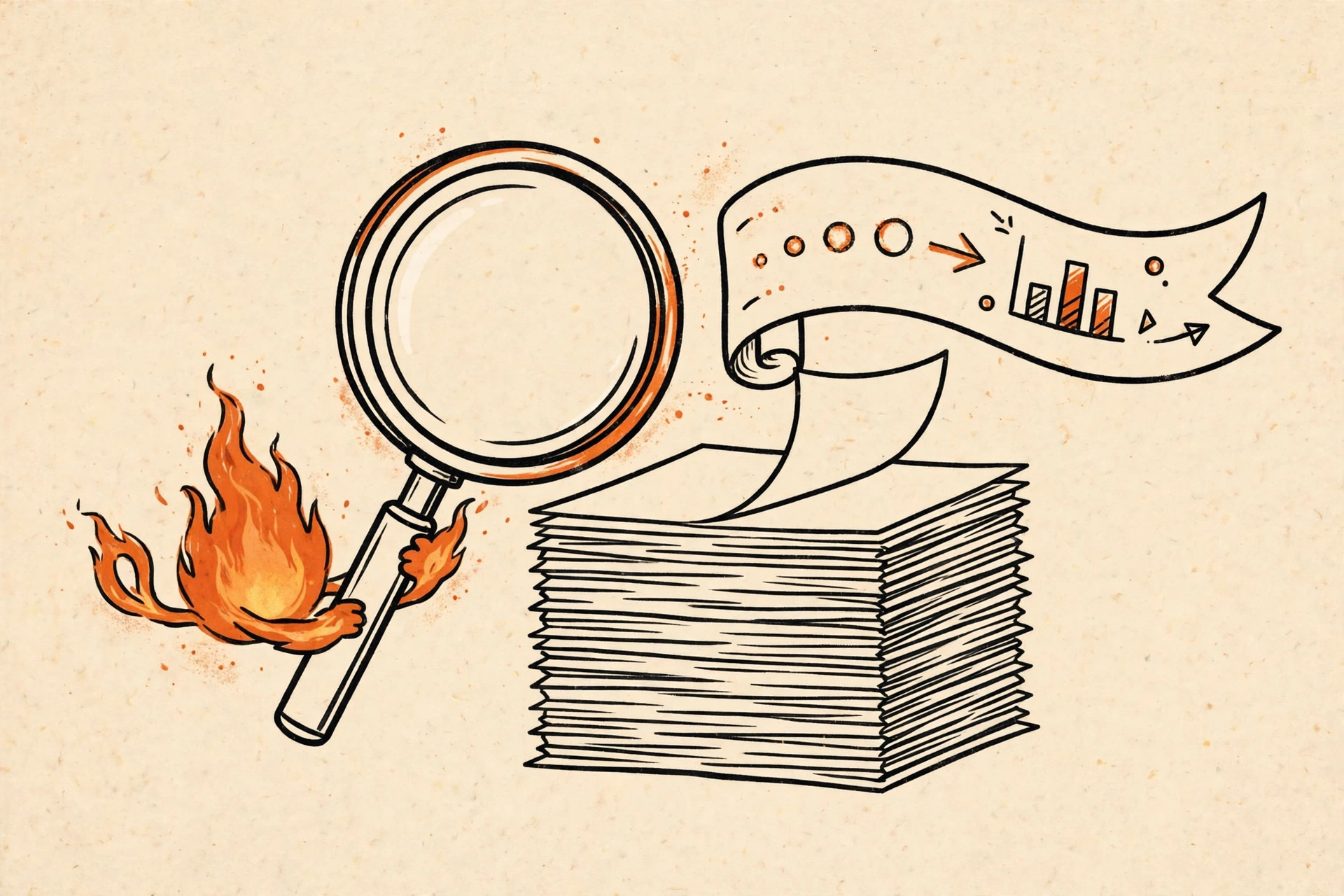
Let's name the real audience. Loan officers. Grant reviewers. Potential partners. Landlords deciding whether you'll make rent. Every one of them reads the same way: the first page carefully, the next two quickly, and the rest only if the first three earned it. Some will decide on page one and use the rest to confirm the decision. This is not cynicism — it's Tuesday, and they have a stack.
So a business plan is not a document. It's an audition with a time limit. And auditions have rules: open strong, don't waste the reader's time, and never make them guess what you want.
Our stance, on the record: the plan is a byproduct. The thinking is the product. A plan written to impress fails; a plan written to think clearly succeeds — and thinking clearly is exactly what impresses. That's the whole trick, and it runs through every step below.
Start with the one-page version
Before the forty-page plan, write the one-page plan. What you sell. Who buys it. What it costs you. What you charge. What you need. Five answers, one page, plain words.
This is the first-page test made literal: if the business doesn't hold together on one page, forty pages of appendices won't hold it together either. The one page is also your executive summary in waiting — expand it slightly and it opens the full plan. Write it first and the long version almost outlines itself. Write the long version first and you'll spend a weekend decorating an idea you haven't stress-tested.
Keep that page in front of you for the rest of this post. Every section below is just that page, given room to breathe.
Name the customer and the pain
Describe the customer so specifically you could point at them on the street. Not "small businesses" — "landscaping companies with three to ten crews who lose bids to late invoices." Not "consumers" — "working parents who pay for meal prep because Sunday is the only day off." A plan without a named customer is a wish with a table of contents.
Then name the pain they already pay to solve. "Already pay" is doing heavy lifting in that sentence — it separates real demand from polite interest. If nobody currently spends money on this problem, you need evidence that they will, not a paragraph asserting that they should. The reader has seen a thousand assertions. They have not seen your evidence yet. Give it to them.
Where do the customer details come from? Conversations, not spreadsheets — the validation work from #001's playbook. Three strangers who said yes beats thirty pages of market sizing every single time.
Show the math, honestly
Startup costs. Monthly burn. Price per sale. How many sales per month make the business work. Put the numbers on the page, and where you're guessing — you are guessing, everyone is guessing — use ranges and say so. "First-year revenue: $60,000–$90,000, based on 40–60 clients at $150 each" reads as competent. "$87,400" reads as a number you invented to look precise. The reader can tell which is which.
Include the floor, not just the ceiling. What's the break-even month? What does a bad month look like, in dollars? #009's "forecast on the floor" rule lives here too — a plan whose numbers only work in the best case is a plan that only works in a fantasy. The honest version keeps more businesses alive than the optimistic one.
And keep the math short. A lender wants to see that the numbers were done, not to redo them. Summary on the page, detail in the appendix — the eleven-minute reader thanks you.
Prove you can sell it
This section decides more plans than any other. Evidence that the selling works: pre-orders, letters of intent, a waitlist with names, pilot sales, a first freelance client (#011 just covered how). One real buyer on paper outweighs three chapters of market analysis, because buyers are proof and analysis is argument.
Don't have proof yet? Say what you're doing to get it, on what timeline. "Selling pilot packages to ten local businesses in November; three signed at $200" is a plan in motion. "We will capture 2% of the $4 billion market" is a sentence. Readers fund motion, not sentences.
This is also where the side-hustle and online-store installments (#006, #007) earn their keep — a plan that says "here's what the first sales channel looks like" is a plan with a pulse.
Say what could go wrong
Name the two or three real risks and your answer to each. Supplier prices jump. The big client leaves. Permits take six months. Whatever is true for your business, say it.
This feels backwards — why hand the reader reasons to say no? Because the reader already knows the risks. They've read a thousand plans; they can list your risks from the cover page. Naming them yourself does two things: it proves you've thought further than the pitch, and it lets you frame the risk with your answer attached instead of leaving it to their imagination at 11 PM. A plan that pretends nothing can go wrong reads as written by someone who hasn't thought about it. And nobody funds that person.
Keep it brief and grown-up. Risk, likelihood, mitigation. Three lines each. The reader nods and moves on — which is exactly what you want.
End with the ask
The last page does one job: say exactly what you want. The loan amount. The grant. The partnership terms. What the money funds, line by line. What the reader gets back, and when. Never make the reader finish a plan and wonder what you were asking for — we have seen it happen, and it is an astonishing way to lose.
Match the ask to the evidence. Asking for $250,000 with zero sales is a different conversation than asking for $25,000 with fifty paying customers. The plan you just wrote is the argument for the ask; the ask is the sentence the whole argument was building toward. Write it like one — plain, specific, confident.
Then stop. The most common business-plan failure isn't a weak plan — it's a strong plan with three extra chapters nobody asked for. End on the ask. Let the reader say yes.
Questions we get asked
How long should a business plan be? One page that works, full version ten to fifteen pages max for formal use. Length has never won a loan; clarity has.
Do lenders actually read them? They read the first page and skim the rest — which is why this whole post is built around surviving both. The plan that respects the eleven-minute reader beats the plan that pretends the reader has eleven free hours.
What if my numbers are guesses? All early numbers are guesses. Label them as ranges, show your assumptions, and never fake precision. An honest estimate with visible reasoning beats a confident fiction.
Can I use AI to write my plan? For drafting and structure, yes — #010 covers the honest way to use the tools. But the thinking is the point of the plan; if the AI did the thinking, the plan is the AI's, and it will show the first time anyone asks you a question about it.
Do I need a plan before I start? The one-page kind, yes — clarity before money. The forty-page kind, no — start selling first. A plan written before the first sale is theory; a plan written after ten sales is a record. Records get funded.
What comes next
Monday morning: the next Potential Changenaire profile in the daily series. Monday evening: How-To #013, continuing the founder track. One step a day. Think it through, write it plain, ask for what you need.
Liked this? Build with it.
Get a free ebook copy of Rebuilding Justice: An Employment-Based House Arrest Story of Redemption when you join the Changenaire Weekly Newsletter. Plus one email a week. Zero fluff.
Free forever. A free ebook copy of Rebuilding Justice: An Employment-Based House Arrest Story of Redemption, then one email a week. Unsubscribe anytime.
Writing your plan?
Get a free ebook copy of Rebuilding Justice: An Employment-Based House Arrest Story of Redemption when you join the Changenaire Weekly Newsletter.
Get my free ebook