
How to Pick a Side Hustle That Actually Pays $500 a Month — How-To #046
Sixty-two percent of Americans with a side hustle earn up to $500 a month after taxes. Not ten thousand. Not money while they sleep. Five hundred — the number that covers the car payment, or the groceries, or the debt payment that has been eating them alive. An Omnisend survey of more than 1,200 Americans, run in July 2025, put it plainly: 31% of adults run a side hustle, 73% of them because money is tight, and most of them land at or under $500 a month. The average, per Bankrate's survey, is about $885. So $500 is not a dream number. It is the normal number. And we counted five hot threads on r/sidehustle in November, all asking for the same thing in different words: an extra $500 a month, a few hours a week, no car, no boss, nothing that needs a second job's worth of energy. One of them — rural, no car, five to ten hours a week — drew about 250 upvotes and 233 comments. The ache is specific. The answer should be too.
Disclosure: some links on this page are affiliate links. If you buy through one, Changenaire may earn a commission at no extra cost to you. As an Amazon Associate, Changenaire earns from qualifying purchases made through links on this page.
Go deeper (affiliate link — we may earn a commission): Side Hustle: From Idea to Income in 27 Days by Chris Guillebeau (Amazon Associates link — we may earn a commission) is the closest thing to a field manual for this post — a 27-day plan built on one hour a day, for people who are not quitting their jobs. The steps below stand on their own; the book is the deeper cut.
Do the math first
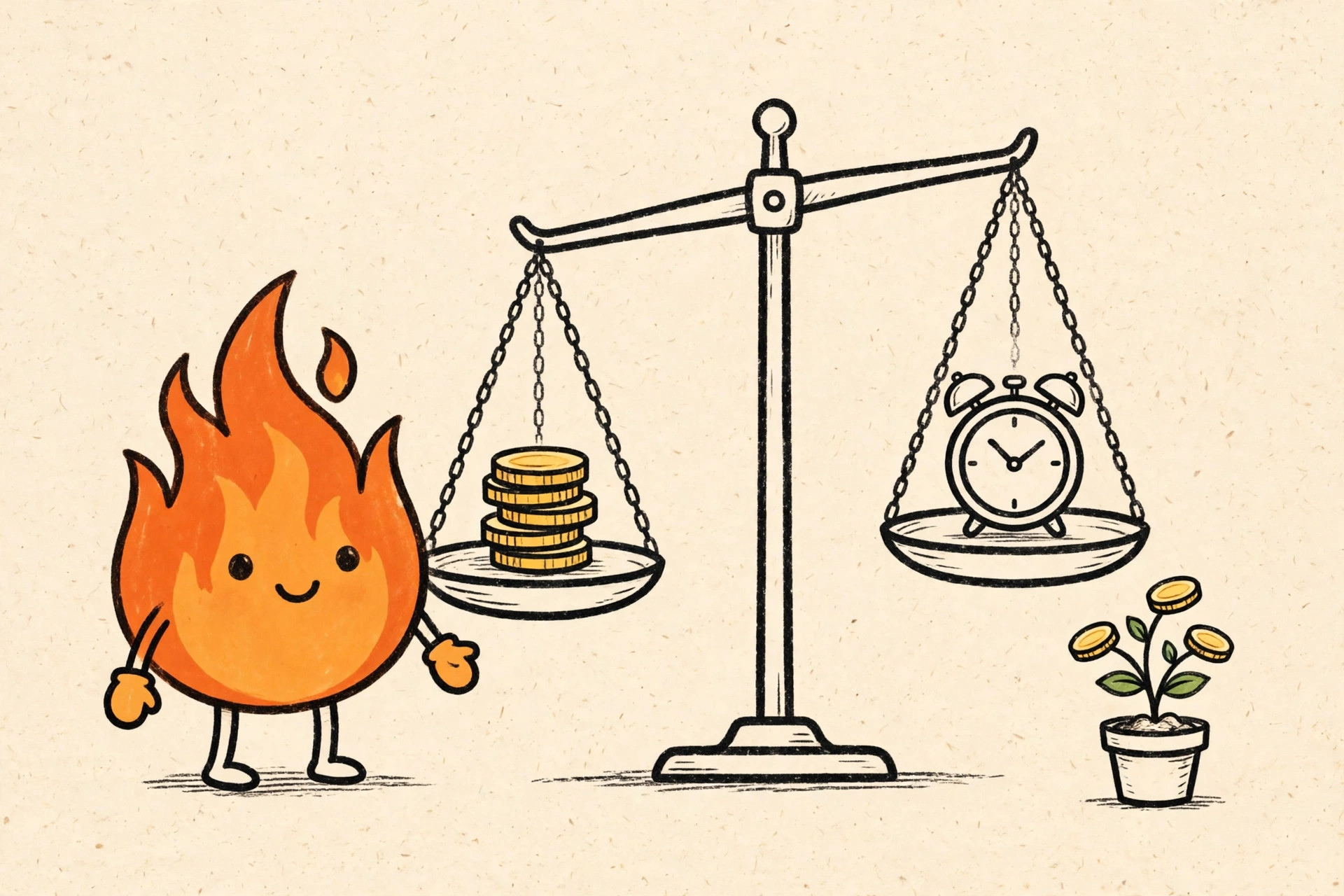
Five hundred dollars a month is $115 a week. At five hours a week, that is $23 an hour. At ten hours, it is about $12. That is the whole secret, and it is also the whole test: any hustle you pick has to clear your hourly number, or it is a hobby with a tip jar.
Now look at the five threads again, because the constraints in them are the whole story. Rural, no car, five to ten hours a week. Debt payoff — the money has a job already. Injured, can't do physical work. Exhausted from a physical job, so nothing that needs the body twice. Nobody in those threads asked for a business plan. They asked for $500 that fits inside a life that is already full. So the picking comes before the starting, and the math comes before the picking. Write your number. Write your hours. Do the division. Everything after this is shopping with a budget instead of a wish.
Name your number and your hours
Start with two honest numbers. The first is the monthly amount that would actually change something — $500, or yours, whatever it is. The second is the weekly hours you truly have, not the hours you wish you had. Be brutal here. A parent with a full-time job and a commute does not have twenty hours a week. They have five, maybe, on the edges of the day. Write the real number down, because every step after this one runs on it.
Then divide. Five hundred a month over five hours a week is $23 an hour. Over ten hours, about $12. Over twenty, about $6 — and a hustle that pays $6 an hour is worse than no hustle at all, because it burns the only hours you had. This is the filter. Any idea that cannot clear your number, at your hours, goes in the bin before you spend a dollar or an evening on it.
Pick a path that fits your hours, not your dreams
There are only three families of side hustle, and every idea you have ever heard is one of them wearing a costume. Sell your time: freelance writing, design, tutoring, virtual assistance — a skill someone pays for by the hour. Sell a thing: print-on-demand, reselling — a product that moves while you sleep, after you set it up. Sell your knowledge: a template, a short guide, a class — something you know, packaged once and sold many times.
Match the path to your constraints before you match it to your interests. No car means remote only — the driving and delivery ideas are out, no matter how good they sound. An injury means nothing physical. A body already worn out by a physical job means the hustle has to live in your head, not your back. How to Start a Side Hustle That Actually Pays (How-To #006) walks the starting line in full; this post is about choosing before you start, so the starting doesn't waste your month.
Price it backwards from $500
Most people price forwards: what should I charge? Start at the other end. Your rate is $500 divided by your monthly hours, and the market either pays it or it doesn't. Twenty hours a month at $25 an hour is $500. Forty hours at $12.50 is $500. If the going rate for your skill is $15 and you have twenty hours, the math says $300 — and then you choose: more hours, a better-paying skill, or a different path. The numbers don't argue. They just sit there.
The product path prices the same way, in reverse. A print-on-demand shirt leaves you a few dollars of profit after the base cost and fees, so $500 means dozens of sales a month, not a handful — say that plainly, then decide whether you can drive dozens of sales. Reselling is the same arithmetic with smaller numbers: a little profit on a lot of small sales, steady sourcing, steady listing. If the margin times the volume can't reach $500, the hustle is a hobby, and hobbies are fine — they just don't pay the car note.
Get one paying customer before you build anything
Here is the rule that saves more months than any other: one paying customer before you build anything. Not a landing page. Not a logo. One person, paying real money, for the thing. Freelance? One client, one small job, paid up front. Print-on-demand? One design, one listing, one sale. A template? One buyer before you build the ten-pack.
If nobody pays for the first one, you have not failed. You have learned the price is wrong, or the offer is wrong, or the audience is wrong — and you learned it for free, in a week, instead of learning it after a month of building. How to Use AI to Start Earning Money (How-To #010) covers the remote, no-car version of this first sale in detail, and it is the fastest first dollar most people have. The first sale is the whole business in miniature. Everything after it is repetition.
Track the hourly rate, not the revenue
Revenue lies. A $500 month that took a hundred hours paid $5 an hour. A $200 month that took five hours paid $40. The second one is the better business, and the revenue number will never tell you that. So track the hourly rate, every week, written down: money in, divided by hours spent, costs taken out first.
Do it on paper if you have to. One line a week. Date, money in, hours spent, rate. After four lines you will know more about your hustle than any course could teach you, because the number doesn't care about your hopes. It only reports. And when the rate is flat for three weeks, change one thing — the price, the offer, or where you find customers — and watch the next line.
Decide: scale it, keep it, or kill it
After a month, judge it. Three verdicts, no fourth. Scale it: the hourly rate beats your number and there is more demand than you can serve — raise the price, take more clients, add a second product. Keep it: it pays, it fits your hours, it doesn't drain you — leave it alone and let it pay. Kill it: it eats hours for pennies and the rate won't move — shut it down fast and take the lesson with you.
The kill is the hardest verdict and the most valuable. A dead hustle you keep feeding is a second job that pays worse than the first. A killed hustle is a month of tuition, paid once, that makes the next pick sharper. How to Choose a Business Idea Worth Starting (How-To #043) makes the same call at the bigger scale: the idea earns its keep, or it goes.
Three paths, run through the same test
| Path | What $500 looks like | Fits who | Watch out for |
|---|---|---|---|
| Freelance your skill | About 20 hours a month at $25 an hour — one steady client | You have a skill someone already pays for | Feast and famine — one client leaving halves the income |
| Print-on-demand | Dozens of sales a month at a few dollars of profit each | You can design, or write words people want on a shirt | Nobody finds a new store by accident — the marketing is the job |
| Resell what you find | Steady sourcing and listing — a little profit on a lot of small sales | You know a category cold — sneakers, books, vintage | Inventory piles up, and dead stock eats the profit |
One of these is your path. It is the one whose $500 column you can picture yourself actually doing, week after week, at your hours. If none of them fit, the answer is not a fourth path — it is more hours, a better-paying skill, or a smaller number to start. All three are honest moves. Print-on-demand runs through our partner Printful (affiliate link — we may earn a commission), which prints and ships each order with no inventory on your shelf — the closest thing to a $0 start in the product family.
Red flags that eat your $500
- A course that costs more than your first month's goal. The teacher got paid. You haven't.
- "Passive income" that needs forty hours of setup before the first dollar. That is not passive. That is a job with a delayed paycheck.
- Any hustle that needs a car you don't have, a body you can't spare, or hours you don't own.
- Paying in exposure. Exposure doesn't cover the car payment.
- Counting revenue before costs. Five hundred dollars in sales is not $500 in your pocket — fees, shipping, and materials come out first.
Questions people ask
Is $500 a month realistic for a beginner?
Yes — the numbers say it is the normal outcome, not the exception. Omnisend's July 2025 survey found 62% of side hustlers earn up to $500 a month after taxes, and Bankrate's survey puts the average at about $885. The people who miss it usually pick a hustle that cannot clear their hourly number, or they never get the first paying customer. Both are fixable.
Which side hustle pays $500 a month the fastest?
Selling your time — freelancing a skill you already have — because the first dollar can land this week. Product paths pay slower: a print-on-demand store or a reselling shelf needs traffic and listings first. Fast is not the same as best; the fastest path that fits your hours wins.
Do I need to quit my job to make $500 a month on the side?
No. The whole point is the opposite: $500 a month beside a paycheck, without quitting. Chris Guillebeau's 27-day plan is built on one hour a day for exactly that reason — a side hustle that fits around the job you already have.
Do I have to pay taxes on side-hustle income?
Yes, in general — side income is taxable income, and the IRS expects you to report it and keep records. Set aside a slice of every payment as you go. This is general information, not tax advice — How-To #024 walks through Schedule C basics for small-business taxes.
What comes next
Tonight: write down your number and your real weekly hours, and do the division. Tomorrow: pick one path and price it backwards from $500. Then the Journal's evening post takes the other side of the same question — getting hired when a record stands in the way. More step-by-step guides in this series live on the Changenaire Blog.
Sources
Every number in this post was checked against the sources below in November 2026. Survey figures describe the people surveyed, not a promise about any single hustle — your hours, your skill, and your market set your number.
- Omnisend, "One Third of Americans Have a Side Hustle, Collectively Earning $83.1B Extra per Month" (survey of 1,223 U.S. consumers, conducted by Cint, July 2025) — 31% of adults run a side hustle; 73% motivated by financial need; 62% earn up to $500 per month after taxes; 44% sell products online. Omnisend — One Third of Americans Have a Side Hustle.
- Bankrate, Side Hustles Survey — the average side hustler brings in around $885 a month on top of regular income. Bankrate — Side Hustles Survey.
- Changenaire community listening, November 1, 2026 — five hot threads on r/sidehustle asking for an extra $500 a month: "~250 upvotes, 233 comments (rural, no car, 5–10 hrs/week)", "~136 upvotes, 180 comments (debt payoff)", "~50 upvotes, 44 comments", "~50 upvotes, 54 comments (injured, can't do physical work)", "~48 upvotes, 58 comments (exhausted from physical job)".
- Chris Guillebeau, Side Hustle: From Idea to Income in 27 Days (Crown Currency, 2017) — the 27-day plan, one hour a day. Via Amazon (Amazon Associates link — we may earn a commission).
Subscribe for more free step-by-step how-to guides to help you get more things done to grow your business or project everyday.
Unsubscribe anytime.