
How to Manage Cash Flow When Income Comes in Waves — How-To #067
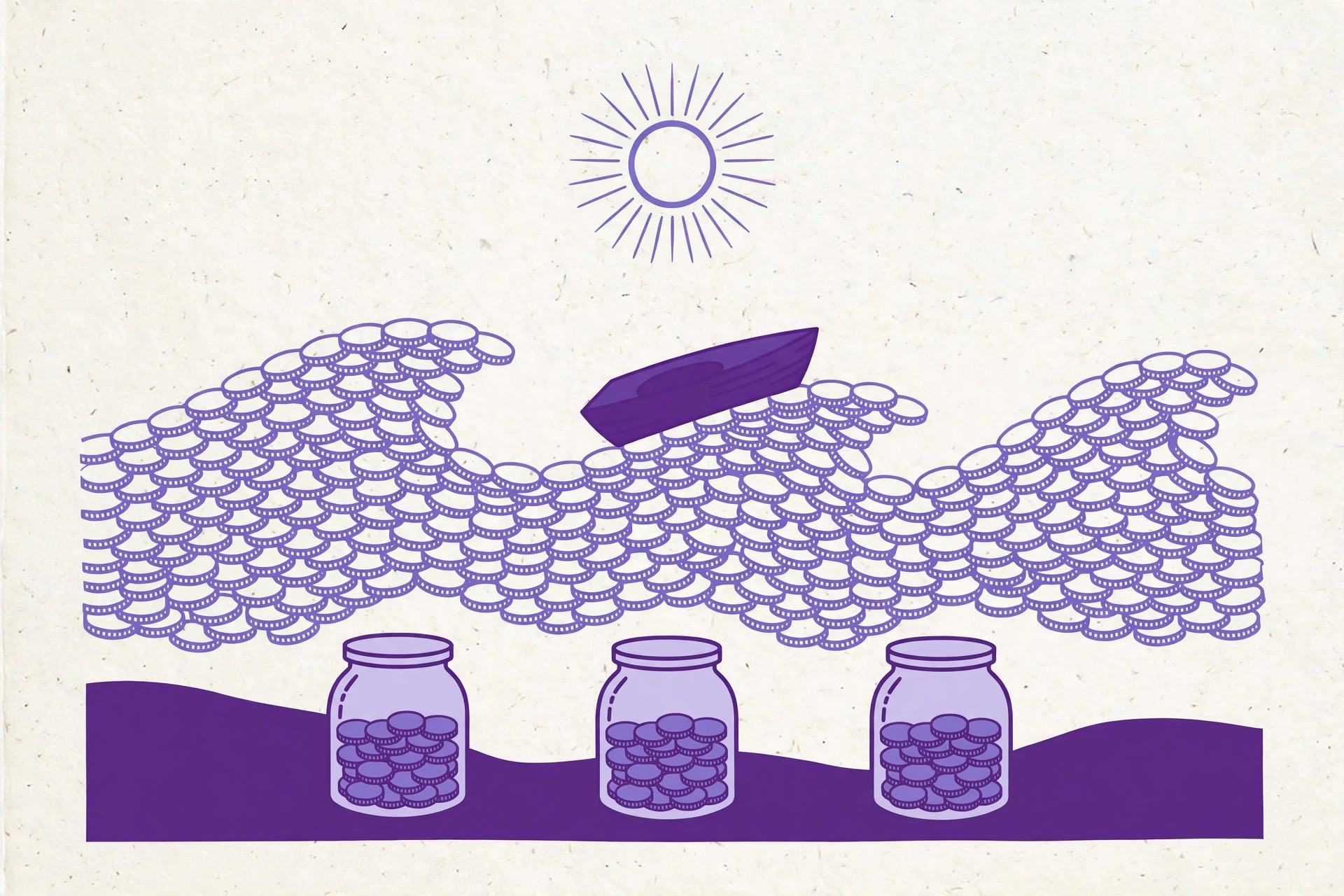
Your income comes in waves. One month pays well. The next month is dry. The firm that spends the good month like it will last forever runs out of cash in the dry month. This post shows how to smooth the waves: three jars, a lean-month plan, and a tax holdback that never gets spent.
Disclosure: some links on this page are affiliate links. If you buy through one, Changenaire may earn a commission at no extra cost to you. As an Amazon Associate, Changenaire earns from qualifying purchases made through links on this page. Changenaire has no affiliate relationship with the authors or publishers named below — the figures in this post are reported from the public pages linked in the text, not from any partnership.
Go deeper (affiliate link — we may earn a commission): Profit First: Transform Your Business from a Cash-Eating Monster to a Money-Making Machine, by Mike Michalowicz (Amazon Associates link — we may earn a commission) — the simple jar system for paying profit, tax, and pay first — before the firm spends the rest. Optional reading; the steps below stand on their own.
Key takeaways
- Split each payment on arrival: tax, pay, and running costs.
- Keep one month of costs in a buffer before you spend on growth.
- A lean month is a plan, not a panic — cut in a set order.
- Watch cash weekly; the bank balance is not the profit.
Step 1: Split each payment on arrival
Cash in one pot gets spent as if it were all yours. It is not. Part of it is tax. Part of it is your pay. Part of it runs the firm. Split each payment the day it lands: tax in one jar, pay in one jar, costs in one jar. What is left is the firm's profit.
Start with a tax holdback of one fifth. Hold back 20 in every 100 for tax until you know your real rate. The IRS page on estimated taxes shows the quarterly dates: April 15, June 15, September 15, and January 15, as of November 2026. Pay on those dates from the tax jar, and the bill never shocks you.
Step 2: Build one month of buffer
The buffer is what turns a dry month into a slow month. Add up one month of must-pay costs: rent, pay, and the bills that keep the lights on. Save that sum in the costs jar before you buy growth. A firm with one month of buffer can say no to bad work.
Build it from the good months. When a big payment lands, move the extra to the buffer first. Spend what is left. The SBA guide to managing your finances shows how to read the cash flow sheet that tracks it all.
Step 3: Write the lean-month plan now
Decide the cuts while you are calm. List your costs in three rings: must-pay, nice-to-have, and growth. In a lean month, cut growth first, then nice-to-have, and protect must-pay. A plan written in a good month beats a panic cut in a bad one.
Chase the money you are already owed. A lean month is the time to call every late payer. How to Get Paid on Time, Every Time (How-To #049) shows how to ask without burning the tie. One late payment chased down can cover a week of costs.
Step 4: Watch the cash every week
The bank balance is not the profit. Cash in the bank may be tax money, or a prepayment for work not yet done. Check once a week: cash in, cash out, and what is owed to you. Fifteen minutes a week beats a nasty surprise at tax time.
Forecast one month ahead, always. Write down the cash you expect in next month and the cash that must go out. If the gap is wide, act now: chase pay, cut growth, or move a big buy. How to Make a Budget That Actually Sticks (How-To #008) is the budget twin of this post.
At a glance
| Step | The short version |
|---|---|
| Split on arrival | Tax, pay, and costs in three jars; profit is what is left. |
| Build one month of buffer | One month of must-pay costs saved before growth. |
| Write the lean-month plan | Cut growth first, then nice-to-have, protect must-pay. |
| Watch weekly | Cash in, cash out, and what is owed — fifteen minutes a week. |
Common mistakes
Spending the tax money. Tax cash feels like profit until the quarterly bill lands. Then the firm pays tax with a card, and the debt starts.
Fix: Hold back one fifth of each payment for tax, in its own jar.
Growing in the good month. A big month tempts owners to hire, buy gear, and sign leases. When the wave falls, the new costs stay and the cash does not.
Fix: Fill the buffer first, then grow from what is left.
Ignoring the late payers. Cash owed to you is cash you cannot spend. Owners who never chase late pay fund their customers' firms with their own.
Fix: Call every late payer in the first week of the lean month.
Checking cash once a quarter. By the time the quarter ends, the gap is a hole. Cash problems found late cost more to fix.
Fix: Check cash once a week, even when the news is good.
Questions people ask
How much cash should a small business keep in reserve?
One month of must-pay costs is the floor. Three months is the goal for a firm with wavy income. Build the first month before you spend on growth.
What is the Profit First method?
It is a jar system: split each payment on arrival into tax, owner pay, profit, and running costs. You pay profit first, in small set shares, instead of waiting to see what is left at year end.
How do I pay myself when income is uneven?
Pay yourself a steady, modest sum from the pay jar each month, even in dry months. The jar smooths the waves. Raise the sum only when the jar stays full for three months.
Should I use a loan to cover a slow month?
Only for a short, known gap — and only if the next month's cash can repay it. A loan that covers a dead market just moves the gap to next month.
What comes next
This week: open three jars — tax, pay, and costs — and split your next payment the day it lands. How to Give Your Business Its Own Budget (How-To #009) sets the budget the jars sit inside.
Subscribe for more free step-by-step how-to guides to help you get more things done to grow your business or project everyday.
Unsubscribe anytime.