
Side Hustles That Actually Work in Real Life
Every side hustle sounds good in a 30-second video. The person filming is smiling, the money screenshot is right there, and the whole thing looks like it takes twenty minutes a day. Then you try it. Three weeks in, you have spent forty hours, earned eleven dollars, and learned a lesson nobody posts about: most side hustles are not businesses. They are hobbies with a tip jar.
Disclosure: some links on this page are affiliate links. As an Amazon Associate, Changenaire earns from qualifying purchases made through links on this page, at no extra cost to you.
Go deeper (affiliate link — we may earn a commission): The $100 Startup by Chris Guillebeau — the book for the first move — fifty people who built a living from a small start, with no funding and no permission needed.
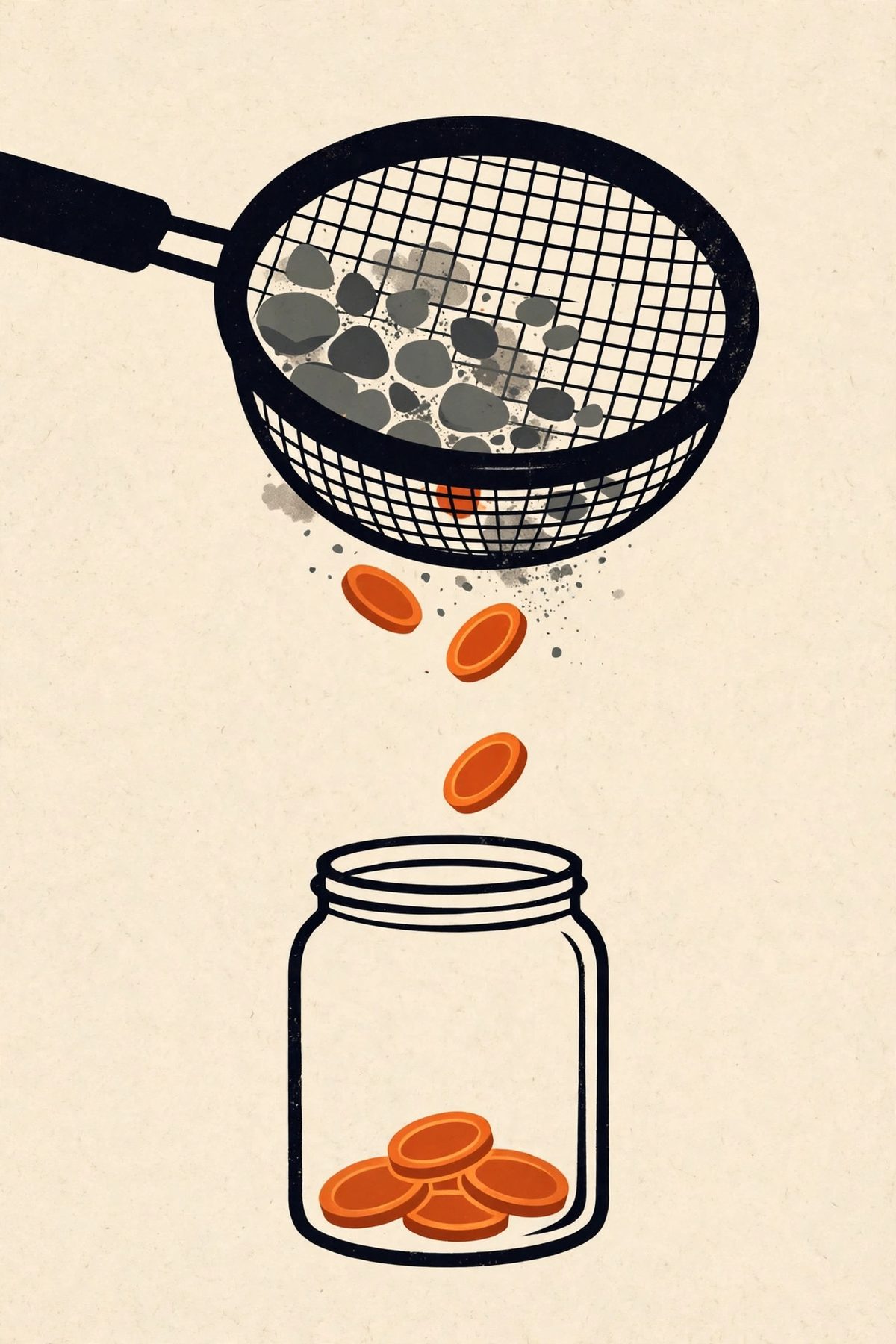
This post is the filter. Not a list of fifty ideas — you have seen those lists, and many of the ideas on them pay less than the federal minimum wage once you count the hours. This is the test we run before we recommend anything: three questions, one honest look at the math, and a two-week trial that gives you a real answer instead of another month of hope.
The three-question filter
A side hustle earns the name only if it passes all three. Miss one, and it is not a hustle — it is a project, a gamble, or a chore somebody dressed up.
One: has a stranger paid for it? Not a friend being nice. Not a like, a follow, or a "let me know when you launch." A person you did not grow up with, handing over real money, for the thing itself. If no stranger has paid, you do not have a side hustle yet. You have an idea waiting for its first customer.
Two: does it fit around a full-time job without eating your sleep? A side hustle runs on evenings and weekends, on hours you can actually give. If it needs forty hours a week to pay anything, it is not a side hustle — it is a second job wearing a nicer name, and it will burn you out the same way. The test is simple: can you do it tired, after a shift, and still do it well?
Three: can you start it without a big upfront cost? If the hustle needs you to buy inventory, pay for a course, or rent equipment before your first dollar comes in, the risk is backwards. The hustle should pay you before you pay it. Your time is the investment. Your wallet stays closed until the money starts coming back.
The ones that pass
Here is what survives the filter, and why. Freelancing a skill you already have — writing, fixing things, cutting hair, bookkeeping, tutoring — passes because the buyer exists before the business does. People already pay for these things every day. You are not creating demand. You are stepping into it.
Reselling passes when you start with what you already own or can get cheap and sell where buyers already shop. Cleaning, errands, and yard work in your own neighborhood pass because the customer is ten minutes away and the trust is face to face. A neighbor who pays you to clean their place this Saturday is a stranger paying within a week — that is the test, passed on day one.
Notice what these have in common. None of them needs an audience first. None of them asks you to build a following and hope the money follows. The buyer comes before the brand, not after it.
The ones that eat your time
Now the other side. Paid surveys and watching ads fail the filter on the money alone: often only a few dollars an hour is not income, it is a rounding error with extra steps. Most "passive income" courses fail on question three — they charge you to learn how to earn, which means the course is the business and you are the customer.
Flipping fails when there is no buyer lined up. A garage full of things you hope to sell is not a hustle; it is storage with a plan attached. And anything that pays you in exposure, points, or "future opportunity" fails question one outright. Exposure does not cover rent. If the work is real, the pay is real, and it arrives in money.
The pattern is worth naming: in our experience, the hustles that get pushed the hardest are usually the ones that pay the worst, because the person pushing them earns from your sign-up, not from the work itself. When somebody's income depends on you starting, their advice is not neutral.
Do the real math before you start
Gross pay is a rumor. Net pay is the truth. Say a delivery app shows $22 an hour on the screen — an example, not a typical rate — and that number is doing a lot of hiding. Take out the gas, the wear on your car, the phone data, and the unpaid minutes waiting for the next order, and the real number can drop sharply. Work out your own net rate, and remember gig income still counts for tax — the IRS self-employment tax page explains what self-employed workers owe. We have seen the same gap in reselling — a $40 sale is not $40 of profit once you count the item, the shipping, the fees, and the hour you spent listing it.
Run the math on paper before you run it on your life. Hours in, costs out, money left. If the leftover number is less than what your time is worth to you, say no — and say it fast, before the sunk-cost feeling sets in. Say the leftover number is $6 an hour after costs — that hustle is not a stepping stone. It is a second job that pays worse than the first one.
The two-week test
Here is the whole method in one move: offer the thing to ten strangers in two weeks. Post it where your buyers already are. Tell five people in person. Price it plainly, with no discount games and no "DM for details" fog.
One yes in two weeks means keep going — you have a live wire, and your job is to find more people like the one who said yes. Zero yeses in two weeks means change something: the price, the offer, or the buyer you are talking to. It does not mean you failed. It means the test did its job and saved you three months.
That is the honest version of "side hustles that actually work." Not the flashiest list. The one with a stranger, a payment, and two weeks of proof behind it.
Sources
The two official pages behind the figures in this post are listed here. The dollar figures in the examples are our own illustrations, labelled as examples in the text.
- U.S. Department of Labor: Minimum wage — the federal minimum wage the intro compares listicle ideas against. Accessed November 6, 2026.
- IRS: Self-employment tax (Social Security and Medicare taxes) — what gig and freelance income owes in tax; supports the "do the real math" section. Accessed November 6, 2026.
Subscribe for more free step-by-step how-to guides to help you get more things done to grow your business or project everyday.
Email required. Unsubscribe anytime.
Read our Privacy Policy.