
Self Improvement #014: How to Fall Asleep When Your Mind Won't Stop
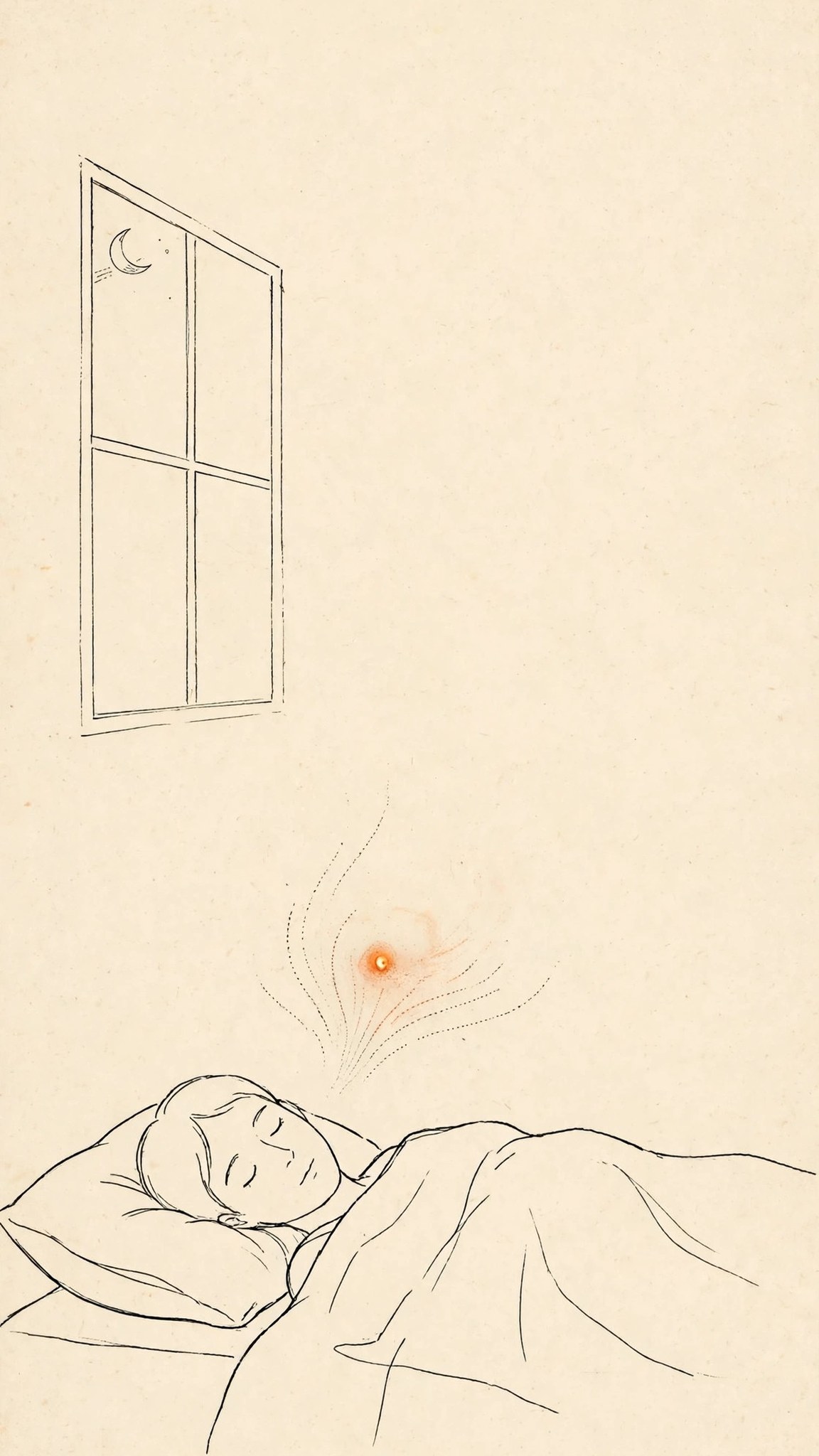
The day is over. The lights are out. And your mind is just getting started — replaying the conversation, listing tomorrow's jobs, worrying about the thing you forgot. Sleep will not come while the mind is still holding everything. The fix is not to fight the thoughts. It is to put them down somewhere safe before bed.
Health note: This piece is general information, not medical advice. It describes gentle techniques for healthy adults. Talk to a doctor before starting a new exercise or breathing routine — especially if you have a health condition, an injury, or pain that keeps coming back. If anything hurts, stop.
Disclosure: This post contains one affiliate link. If you buy through it, Changenaire may earn a commission at no extra cost to you. As an Amazon Associate, Changenaire earns from qualifying purchases made through links on this page. We only link things we would hand to a friend.
One book worth your money
You don’t need it to start — nothing here replaces the practice itself. But if you want the case made properly, Meditation for Fidgety Skeptics by Dan Harris is the one: Harris wrote it for people whose minds will not sit still — practical, funny, and honest about what meditation can and cannot do for a racing mind. (Referral link — we may earn a commission.)
The five-minute write-down
An hour before bed, take a pen and a scrap of paper. Write down tomorrow's jobs — the things you must do, in plain words, one per line. Not a journal. Not your feelings. Just the list: call the landlord, buy milk, finish the report, call your mother. Five minutes, then stop.
Put the paper on the desk where you will see it in the morning. Then go to bed. The list is still there. Your mind does not have to carry it through the night, because the paper is carrying it now.
A notebook by the bed does the same job every night — LEUCHTTURM1917 Notebook, one place for the list, always there in the morning.
Why it works
Your mind replays unfinished business because it is afraid you will forget it. Writing the jobs down answers that fear directly: they are written, they are safe, they will be there in the morning. The mind can let go of what is held somewhere else.
There is a small study behind this. In a 2018 study at Baylor University, people who wrote a to-do list before bed fell asleep faster than people who wrote about things they had already done. Be clear about the limits: 57 young adults, one night, in a sleep lab — not a habit tested over months. It is a promising start, not proof. And the Centers for Disease Control and Prevention says adults need 7 or more hours of sleep a night — so the hours matter as much as the method.
What not to do at 2 a.m.
If you wake up anyway, do not pick up the phone. The screen wakes the brain up, the news feeds it, and the argument you were rehearsing gets a second act. Stay in the dark. Breathe slowly — four in, six out, the way the earlier piece in this series taught.
If you are still awake after about twenty minutes, get up. Sit somewhere dim. Read something dull. Go back to bed when your eyes get heavy. Lying there fighting it only teaches the bed to mean worry.
What not to buy
You do not need a sleep supplement, a special pillow, or an app that charges you every month to play rain sounds. A pen and a scrap of paper do the job. The method costs nothing, and that is the point — the thing keeping you awake is not a thing you can buy your way out of.
What comes next
This is Self Improvement #014. The series continues the inner work: stillness, movement, time outdoors, and faith without the fine print. Next, we move — stretching for people who sit all day, and why ten minutes is enough to undo a day in a chair.
Five minutes. One pen. No gear. Start tonight — the world you’re going to change is waiting on the person you’re becoming.
Sources
- Scullin et al. (2018), "The effects of bedtime writing on difficulty falling asleep," Journal of Experimental Psychology: General — a Baylor University study of 57 young adults: writing a to-do list before bed helped people fall asleep faster than writing about completed tasks. Limits: one night, in a sleep lab, not a habit tested over months.
- Centers for Disease Control and Prevention, "About Sleep" (accessed November 2026) — adults need 7 or more hours of sleep a night.
Subscribe for more free step-by-step how-to guides to help you get more things done to grow your business or project everyday.
Email required. Unsubscribe anytime.
Read our Privacy Policy.