Self Improvement #126: Do Five Slow Squats at Your Desk Today
Your legs carry you everywhere, and most days they get no real work. Five slow squats at your desk is all it takes to wake them up.
Disclosure: This post contains one affiliate link. If you buy through it, Changenaire may earn a commission at no extra cost to you. We only link books we would hand to a friend.
One book worth your money
You don’t need it to start — nothing here replaces the practice itself. But if you want the case made properly, Born to Run by Christopher McDougall is the one: McDougall writes about people who run for the joy of it, not for a medal. Five squats at your desk is the same idea at a smaller scale: your body was made to move, and a little of it beats none of it. (Referral link — we may earn a commission.)
Your legs want work
Your legs are built for work, and sitting gives them none. A desk keeps you still for hours, and still legs get stiff, weak, and sore. Five slow squats change that in under a minute — they wake the muscles up and get the blood moving again. The World Health Organization says that any amount of physical activity is better than none, that all of it counts, and that muscle strengthening benefits everyone, in its fact sheet on physical activity. Five squats count.
How to do five slow squats
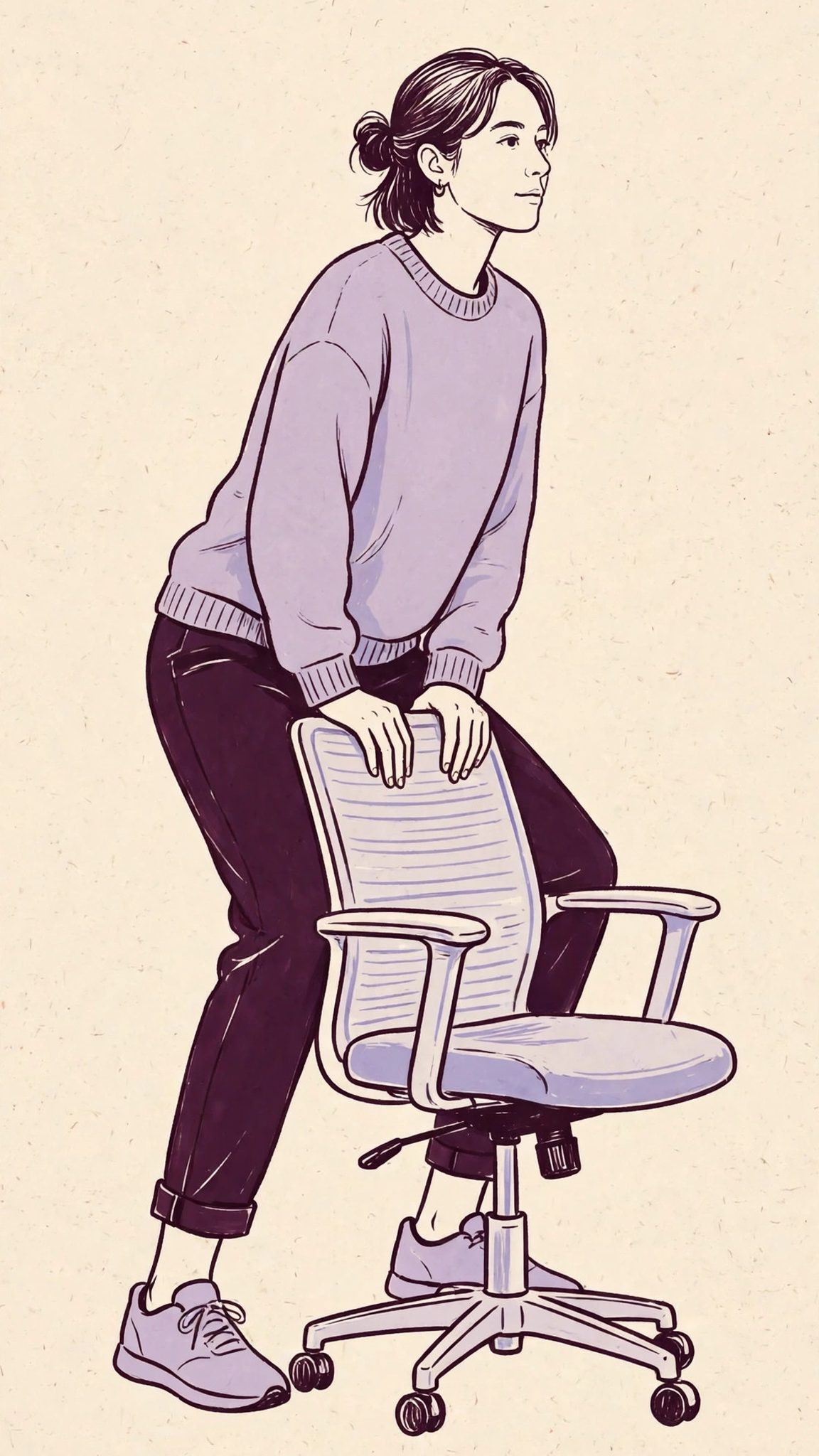
Stand behind your chair and hold the back of it. Put your feet hip-width apart, keep your back straight, and bend your knees slowly — as far as feels fine. Come back up just as slowly. That is one squat. Do five. The NHS mini-squat is exactly this move: hands on a chair back, knees bent as far as is comfortable, back straight, five slow reps. If five feels easy, do five more tomorrow.
Try it today. Do five slow squats at your desk before lunch.
What not to buy
No gym, no weights, no special shoes. The chair you already sit in is all the gear you need.
What comes next
This is Self Improvement #126. Next, we move — how to walk to the farthest door in your building, and why the long way is the better way.
More of the series lives on the Self Improvement hub: stillness, movement, time outdoors, and faith without the fine print.
Sources
- World Health Organization, “Physical activity” fact sheet (accessed November 2026) — any amount of physical activity is better than none; all physical activity counts; muscle strengthening benefits everyone.
- NHS, “Strength exercises” (accessed November 2026) — the mini-squat: hands on a chair back, feet hip-width apart, slowly bend the knees as far as is comfortable with the back straight, five slow reps.
Subscribe for more free step-by-step how-to guides to help you get more things done to grow your business or project everyday.
Email required. Unsubscribe anytime.