
Self Improvement #076: Healing Is a Process, Not a Finish Line
You want to be past it by now. You are not past it — and that does not mean you are doing it wrong. Healing takes the time it takes, and it rarely moves in a straight line.
Disclosure: This post contains one affiliate link. If you buy through it, Changenaire may earn a commission at no extra cost to you. We only link books we would hand to a friend.
One book worth your money
You don’t need it to start — nothing here replaces the practice itself. But if you want the case made properly, The Body Keeps the Score by Bessel van der Kolk is the one: van der Kolk spent three decades working with survivors, and his book explains, in plain language, how hard experiences can live in the body as well as the mind — and how steady, patient practices help people reclaim their lives. Healing works the same way: small, steady, and honest about what it is. (Referral link — we may earn a commission.)
Healing does not move in a straight line
A good day does not mean you are done, and a hard day does not mean you are back at the start. Healing moves the way grief moves — in waves, with good days and hard days taking turns for a while. MD Anderson Cancer Center puts it plainly: there is no simple cure for grief, grieving takes time, and you should not pressure yourself to move on or get over it. A hard day is part of the process, not proof that the process failed.
So stop keeping score by the day. Ask a kinder question instead: did I do one small thing that helped today? A walk, a meal, a phone call, an early night — one small thing is enough for one day. The days add up quietly, even when you cannot feel them adding up.
Rest is part of the work
Rest is not the reward for healing — it is part of how healing happens. A tired body carries everything heavier, so sleep and rest are not time off from the work; they are the work. If rest feels like laziness to you, read Self Improvement #047: How to Rest Without Feeling Guilty — rest without the guilt is a skill, and it can be learned like any other.
Small routines hold the ordinary days
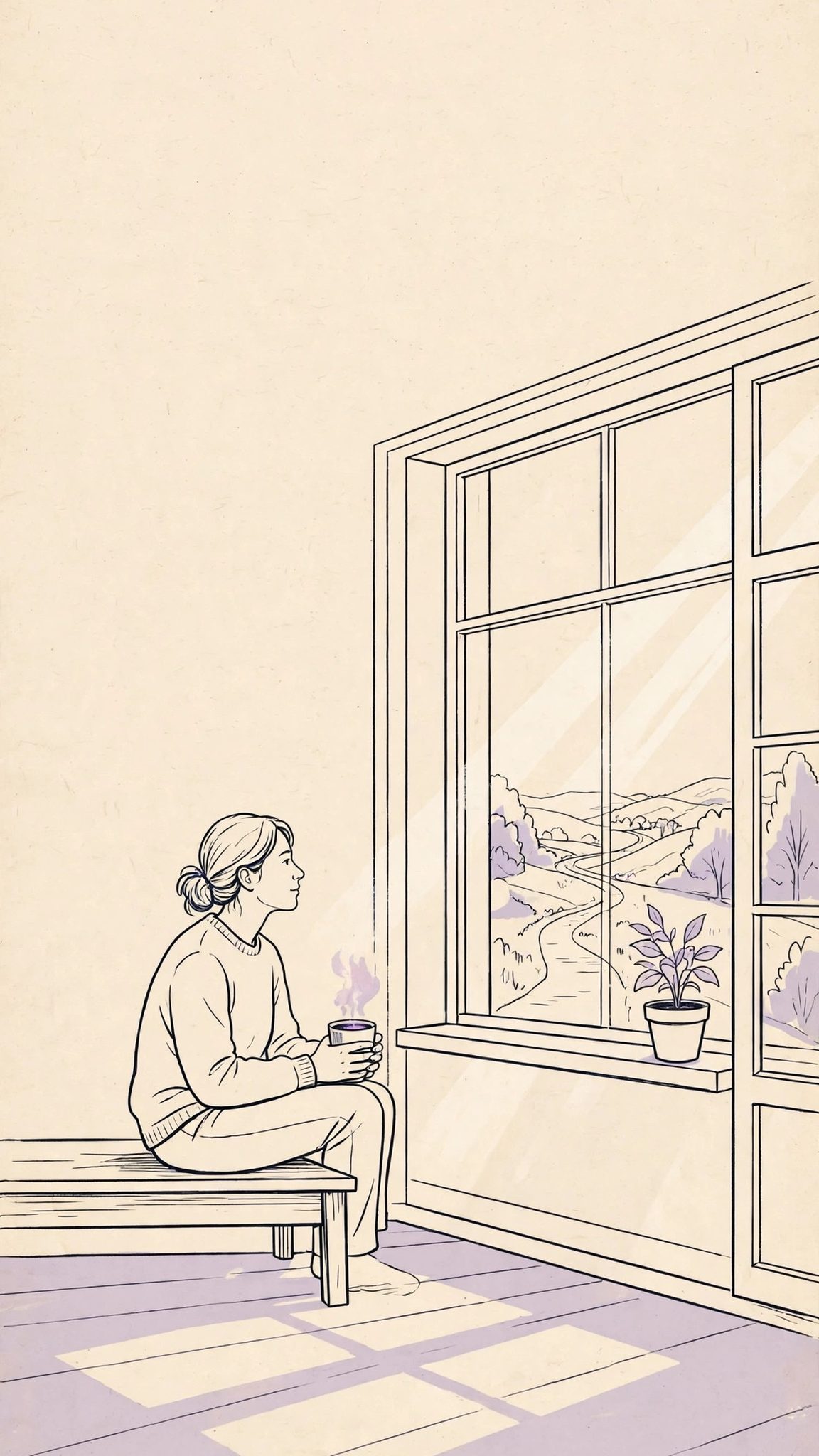
You do not need a new life — you need a few small things you can repeat on an ordinary day. Pick three and keep them small enough to do on a bad day: the same wake time, a short walk outside, one real meal, ten quiet minutes with a cup of something warm. Routines hold you steady when feelings will not.
- Same wake time, even on slow days.
- A short walk outside, no distance goal.
- One real meal, eaten sitting down.
- Ten quiet minutes before the phone comes out.
Ask for help when you need it
Asking for help is not a setback — it is how you keep going. The American Psychological Association describes resilience as adapting well in hard times, built through connection, rest, and clear thinking — and it says plainly that it matters to accept help and support from people who care about you. If the weight is more than you can carry alone, Self Improvement #070: How to Ask for Help When You Cannot Carry It Alone walks through how to say it out loud. And if the hard days keep getting heavier, or you stop being able to do the ordinary things, talk with a doctor or a counselor — that is help too, not failure.
What not to buy
No book, course, or program can put a date on healing. Skip anything that promises a finish line by a set week, a cure in a bottle, or a reset in a weekend. What helps is slower and cheaper: rest, routine, people, patience — and time you do not try to rush.
What comes next
This is Self Improvement #076. Next, we stay still — how to sit for five minutes without reaching for your phone, and why the quiet feels hard before it feels kind.
More of the series lives on the Self Improvement hub: stillness, movement, time outdoors, and faith without the fine print.
Sources
- MD Anderson Cancer Center, “Dealing with Loss” (accessed November 2026) — grief comes in waves with good and bad days; there is no simple cure for grief; grieving takes time; let others help you.
- American Psychological Association, “Building your resilience” (last updated 2020; accessed November 2026) — resilience is the process of adapting well in the face of adversity; connection, wellness, healthy thinking, and meaning support it; accepting help and support from people who care matters.
Subscribe for more free step-by-step how-to guides to help you get more things done to grow your business or project everyday.
Email required. Unsubscribe anytime.