
Self Improvement #073: How to Step Out for the Night Air Before Bed
The day is done, but your body does not know it yet. Ten minutes outside in the night air — dark, cool, quiet — is the signal that tells it to wind down.
Disclosure: This post contains one affiliate link. If you buy through it, Changenaire may earn a commission at no extra cost to you. We only link books we would hand to a friend.
One book worth your money
You don’t need it to start — nothing here replaces the practice itself. But if you want the case made properly, Braiding Sweetgrass by Robin Wall Kimmerer is the one: Kimmerer writes about paying attention to the living world — the sky, the seasons, the small changes most of us walk past. Ten minutes of night air is that attention, taken before bed. (Referral link — we may earn a commission.)
Darkness is the signal
Your body keeps time by light. Bright light says stay awake; fading light says wind down. Sleep Foundation's guide to light and sleep explains that light is one of the strongest cues that set the body's internal clock, and that as evening light fades the brain begins producing melatonin, the hormone that brings on sleepiness. An hour of bright screens before bed sends the opposite signal. Ten minutes outside in real darkness sends the right one.
Make it a small habit
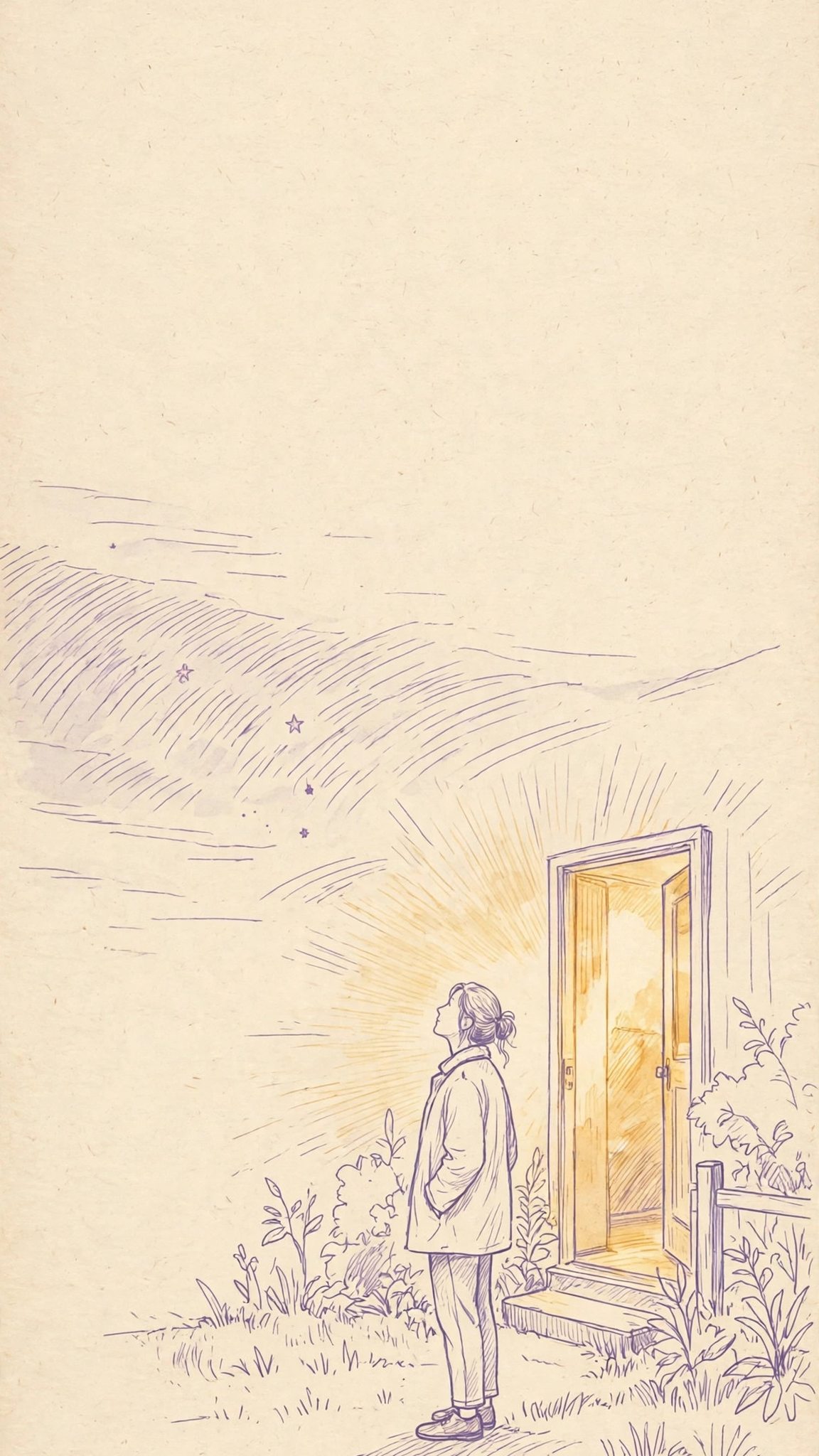
Go out at the same time each night, just before you get ready for bed. Leave the phone inside. Stand still for a minute and look up — a few stars, a porch light, the sound of the street settling down. Breathe the cool air in slowly. Then go back in and get ready for bed the way you always do. Sleep runs in stages and cycles across the night, and Sleep Foundation's guide to how sleep works notes that a steady wind-down routine helps the body settle into those cycles. The night air is not a trick. It is the routine itself.
What not to buy
No sleep gadget, no white-noise machine, no special lamp. A door, a yard, and ten minutes.
What comes next
This is Self Improvement #073. The series continues the inner work: stillness, movement, time outdoors, and faith without the fine print. Next, we go outside — how to take your morning coffee outside on a cold morning, and why the chill wakes you up better than the cup.
Ten minutes. One sky. Sleep comes easier.
Sources
- Sleep Foundation, “How Light Affects Sleep” (accessed November 2026) — light is one of the strongest cues for the body's internal clock; as evening light fades, the brain begins producing melatonin, the hormone that brings on sleepiness.
- Sleep Foundation, “How Sleep Works” (accessed November 2026) — sleep moves through stages and cycles across the night, and a regular wind-down routine helps the body settle into them.
Subscribe for more free step-by-step how-to guides to help you get more things done to grow your business or project everyday.
Email required. Unsubscribe anytime.