
Self Improvement #053: How to Read the Clouds
The sky tells you what tomorrow will bring, if you know how to look. Farmers read it for a living, and sailors too — and the skill is simpler than it sounds. Three shapes, five minutes, and you will never look at a grey sky the same way again.
Disclosure: This post contains one affiliate link. If you buy through it, Changenaire may earn a commission at no extra cost to you. We only link books we would hand to a friend.
One book worth your money
You don’t need it to start — nothing here replaces the practice itself. But if you want the case made properly, The Nature Fix by Florence Williams is the one: Williams gathers the research on what time outside does for the brain — calmer, sharper, kinder — and tells it like a story, not a lecture. If the sky is your new habit, this is the book that explains why it works. (Referral link — we may earn a commission.)
Three shapes to know
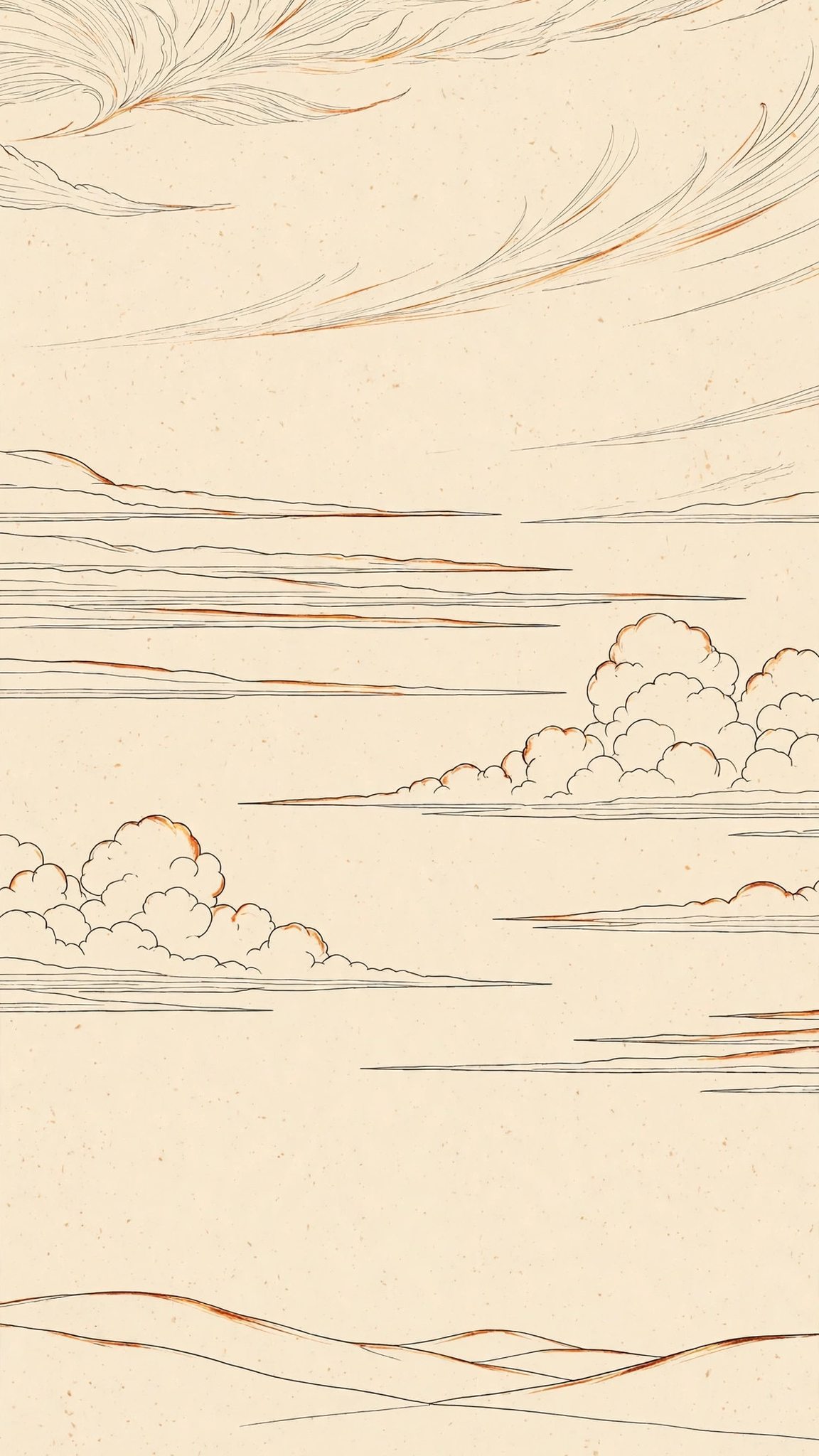
Clouds are sorted by height and shape, and three cover most of what you will see. Cumulus are the puffy ones with flat bottoms, like cotton piled on a table — fair weather, most of the time, unless they grow tall and dark. Stratus are the flat grey layers that cover the whole sky like a blanket — a dull day, maybe drizzle. Cirrus are the wispy feathers, high and thin — pretty, and a sign the weather is about to change in a day or two. The National Weather Service sorts clouds the same way, by height and form, and the Met Office keeps a plain guide to the ten main types if you want to go further.
A five-minute sky check
Step outside in the morning and look up for five minutes. Name what you see: puffy, flat, or wispy. Then check tomorrow — did the sky do what the shape said? That is the whole practice. After a week of it, you will start to notice the pattern yourself: high wisps on a clear evening often mean rain is coming, and a sky full of flat grey usually means the day stays dull. You are not forecasting for anyone. You are learning to read the weather the way people did before the forecast was in your pocket.
What not to buy
No weather station, no app subscription, no field guide you will not carry. Your eyes and five minutes outside.
What comes next
This is Self Improvement #053. The series continues the inner work: stillness, movement, time outdoors, and faith without the fine print. Next, we go outside — how to find north without a compass, and why the sun and the shadows are all you need.
Five minutes. One sky. Look up.
Sources
- National Weather Service, JetStream, “Clouds” (accessed November 2026) — clouds are classified by height and form; cumulus, stratus, and cirrus are the three main families.
- Met Office, “Clouds” (accessed November 2026) — a plain guide to the ten main cloud types and what weather each one brings.
Subscribe for more free step-by-step how-to guides to help you get more things done to grow your business or project everyday.
Email required. Unsubscribe anytime.