
Self Improvement #036: Stargazing for Beginners: What to Look For
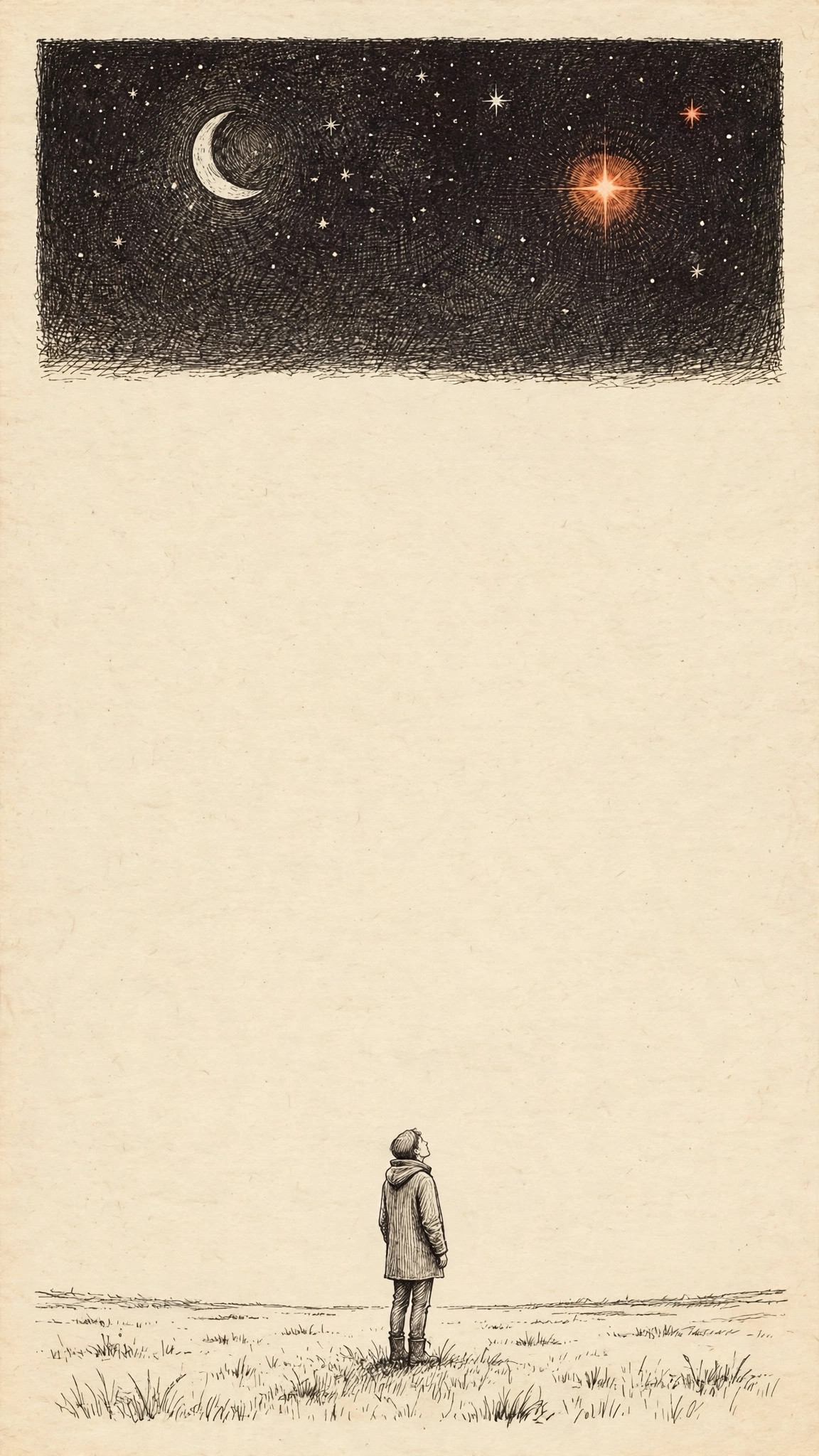
The sky is the oldest show there is, and it plays for free every clear night. You do not need a telescope, an app, or a trip to the desert to start. You need a dark patch of sky, twenty minutes of patience, and one bright thing to find. This piece is about your first night out.
Disclosure: This post contains one affiliate link. If you buy through it, Changenaire may earn a commission at no extra cost to you. As an Amazon Associate, Changenaire earns from qualifying purchases made through links on this page. We only link books we would hand to a friend.
One book worth your money
You don’t need it to start — nothing here replaces the practice itself. But if you want the case made properly, The Nature Fix by Florence Williams is the one: Williams gathers the science on what time outside does for the mind — calmer, sharper, kinder. It is the right book for a night spent looking up, and for anyone learning to pay attention again. (Referral link — we may earn a commission.)
Start with the Moon
The Moon is the easiest first target and the most rewarding — it changes shape every night, waxing toward full and waning back to a crescent. NASA’s skywatching guide lists what else your eyes alone can find: five planets are easily seen without a telescope — Mercury, Venus, Mars, Jupiter, and Saturn — plus star clusters like the Pleiades and the band of the Milky Way in a dark place. Pick one thing for your first night. The Moon is a good choice. So is Jupiter, the brightest “star” that does not twinkle.
Give your eyes time to adjust
Your eyes need time to switch to night vision, and one glance at a bright phone screen resets the clock. NASA’s skywatching FAQ puts it simply: you do not need any special equipment to start, and the number one priority for a good spot is getting away from bright city lights, which wash out the fainter stars. Give yourself about half an hour in the dark before judging the sky. A dim red light, if you need one, disturbs your night vision less than white light. Then just look up and wait — the stars arrive slowly, one by one.
Learn one pattern, then another
Do not try to learn the whole sky in one night. Learn one shape and it will anchor the rest. The Big Dipper is the easiest in the northern sky, and its two pointer stars lead straight to Polaris, the North Star, which marks true north. NASA’s FAQ notes that finding Polaris is easy on any clear night once you have the Dipper. From there, Orion’s three-star belt is the next shape worth knowing. One pattern a night, a few nights a month, and the sky starts to feel like a place you know.
What not to buy
No telescope to start — NASA’s own guidance says binoculars are the best first instrument, and your eyes alone are enough for the first few nights. A sky app on your phone can help you find things, but it is a guide, not a requirement. The sky was free long before the apps arrived.
What comes next
This is Self Improvement #036. The series continues the inner work: stillness, movement, time outdoors, and faith without the fine print. Next, we go outside — how to grow something from a seed, and why starting small works.
One clear night. One bright star.
Sources
- NASA, “Skywatching Tips” (accessed November 2026) — five planets are easily seen without a telescope — Mercury, Venus, Mars, Jupiter, and Saturn; the Moon changes phase night to night; binoculars are an excellent first instrument.
- NASA, “Skywatching FAQ” (accessed November 2026) — no special equipment is needed to start; the top priority for a good spot is getting away from bright city lights; Polaris is found by following the Big Dipper’s pointer stars.
Subscribe for more free step-by-step how-to guides to help you get more things done to grow your business or project everyday.
Email required. Unsubscribe anytime.