
Self Improvement #043: How to Start Before You Feel Ready
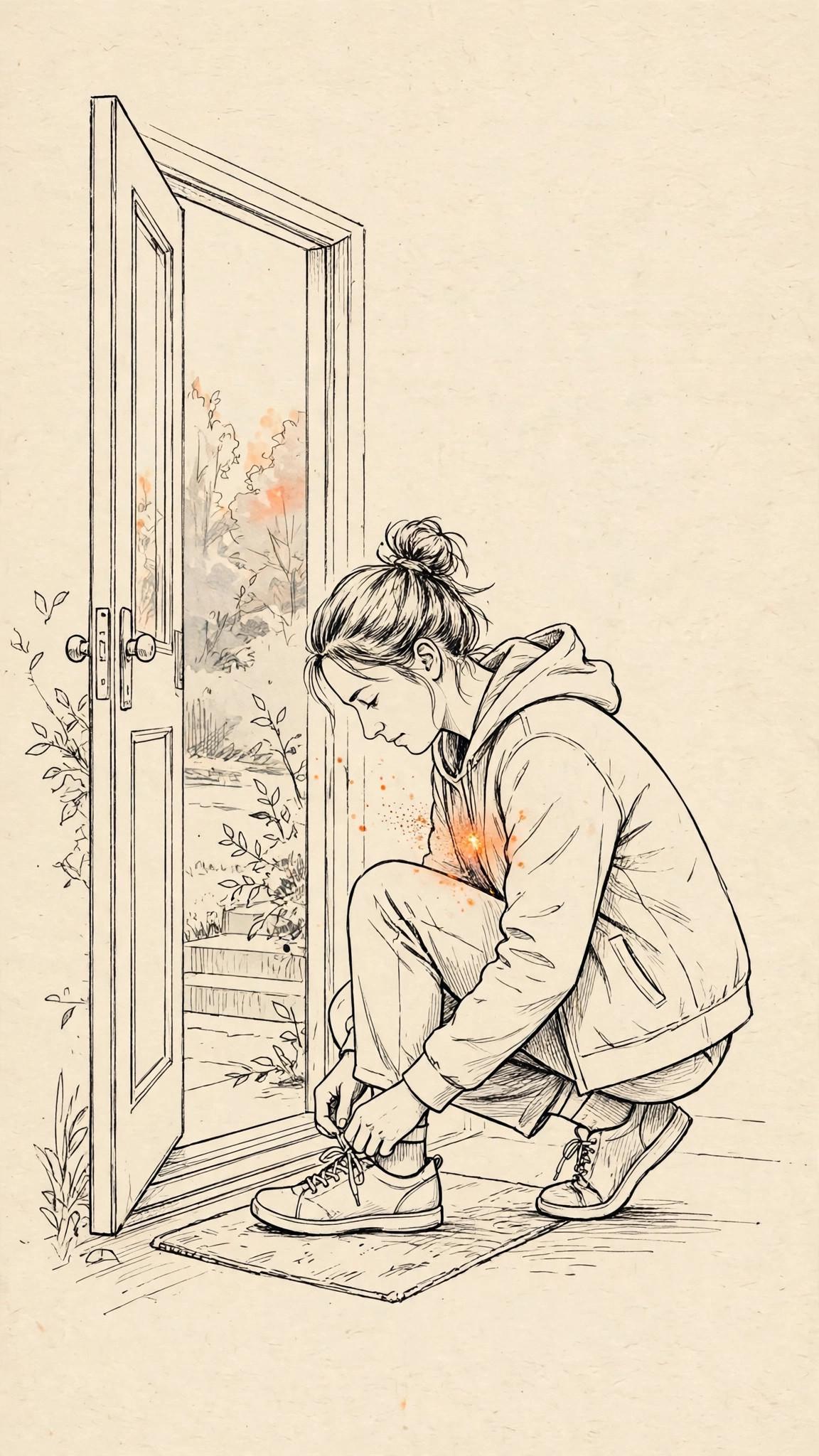
You are waiting to feel ready. The plan is made, the shoes are by the door, the first step is obvious — and still you sit. Here is the honest part: the feeling rarely comes first. Motivation is not the fuel for the first step. It is the reward for taking it.
Disclosure: This post contains one affiliate link. If you buy through it, Changenaire may earn a commission at no extra cost to you. We only link books we would hand to a friend.
One book worth your money
You don’t need it to start — nothing here replaces the practice itself. But if you want the case made properly, 10% Happier by Dan Harris is the one: Harris spent a career doubting meditation, then tried ten minutes a day and wrote it up plainly. If the hard part is starting, not knowing how, this is the friendliest first step. (Referral link — we may earn a commission.)
Motivation follows action, not the other way around
Behaviour researcher BJ Fogg, whose lab at Stanford studies how habits form, puts it plainly: a behaviour happens when motivation, ability, and a prompt meet at the same moment. When motivation is low, the fix is not to push harder — it is to make the step smaller. The Stanford Behavior Design Lab calls this the starting point for tiny habits: shrink the behaviour until it is too small to refuse. One page. One shoe. Two minutes. The size is the strategy.
Decide the when, not just the what
Good intentions fail at the moment of deciding. A plan that names the moment does better: a large review of the research found that “if-then” plans — after I pour my coffee, I will open the document and write one sentence — had a medium-to-large effect on reaching goals. The meta-analysis by Gollwitzer and Sheeran covered 94 studies and found the same pattern across kinds of goals: the plan does the deciding, so your mood does not have to.
A two-minute start for today
Pick the smallest version of the thing and set a two-minute timer. Write one sentence. Tie one shoe. Open the file and read the first line. When the timer rings, stop — you are allowed to continue, but you do not have to. Stopping on time is the point: it teaches your brain that starting is safe, and safe things get started again tomorrow.
What not to buy
No course on motivation, no planner that promises discipline, no app that counts streaks. A timer, one sentence, and a step small enough to take on a bad day.
What comes next
This is Self Improvement #043. The series continues the inner work: stillness, movement, time outdoors, and faith without the fine print. Next, we stay still — how to rest without feeling guilty, and why rest is part of the work, not a break from it.
Two minutes. One small step. Start now.
Sources
- Stanford Behavior Design Lab, “Behavior Design” (accessed November 2026) — behaviour happens when motivation, ability, and a prompt meet at the same moment; tiny habits start with a behaviour small enough to do on a bad day.
- Gollwitzer, P. M., & Sheeran, P. (2006), “Implementation intentions and goal achievement: A meta-analysis of effects and processes,” Advances in Experimental Social Psychology, 38, 69–119 — “if-then” plans had a medium-to-large effect on goal attainment across 94 studies.
Subscribe for more free step-by-step how-to guides to help you get more things done to grow your business or project everyday.
Email required. Unsubscribe anytime.