
Self Improvement #068: How to Stretch Your Hands After a Day of Typing
Your hands type all day and nobody thanks them. By evening the fingers are stiff, the wrists ache, and the keyboard feels heavier than it did at nine. Three small stretches take five minutes — and your hands will feel like yours again.
Disclosure: This post contains one affiliate link. If you buy through it, Changenaire may earn a commission at no extra cost to you. We only link books we would hand to a friend.
One book worth your money
You don’t need it to start — nothing here replaces the practice itself. But if you want the case made properly, Born to Run by Christopher McDougall is the one: McDougall makes the case that our bodies were built to move — and that the small parts matter as much as the big ones. Read it and the hands that carry your work start to look like athletes worth looking after, not tools to wear out. (Referral link — we may earn a commission.)
Spread and squeeze
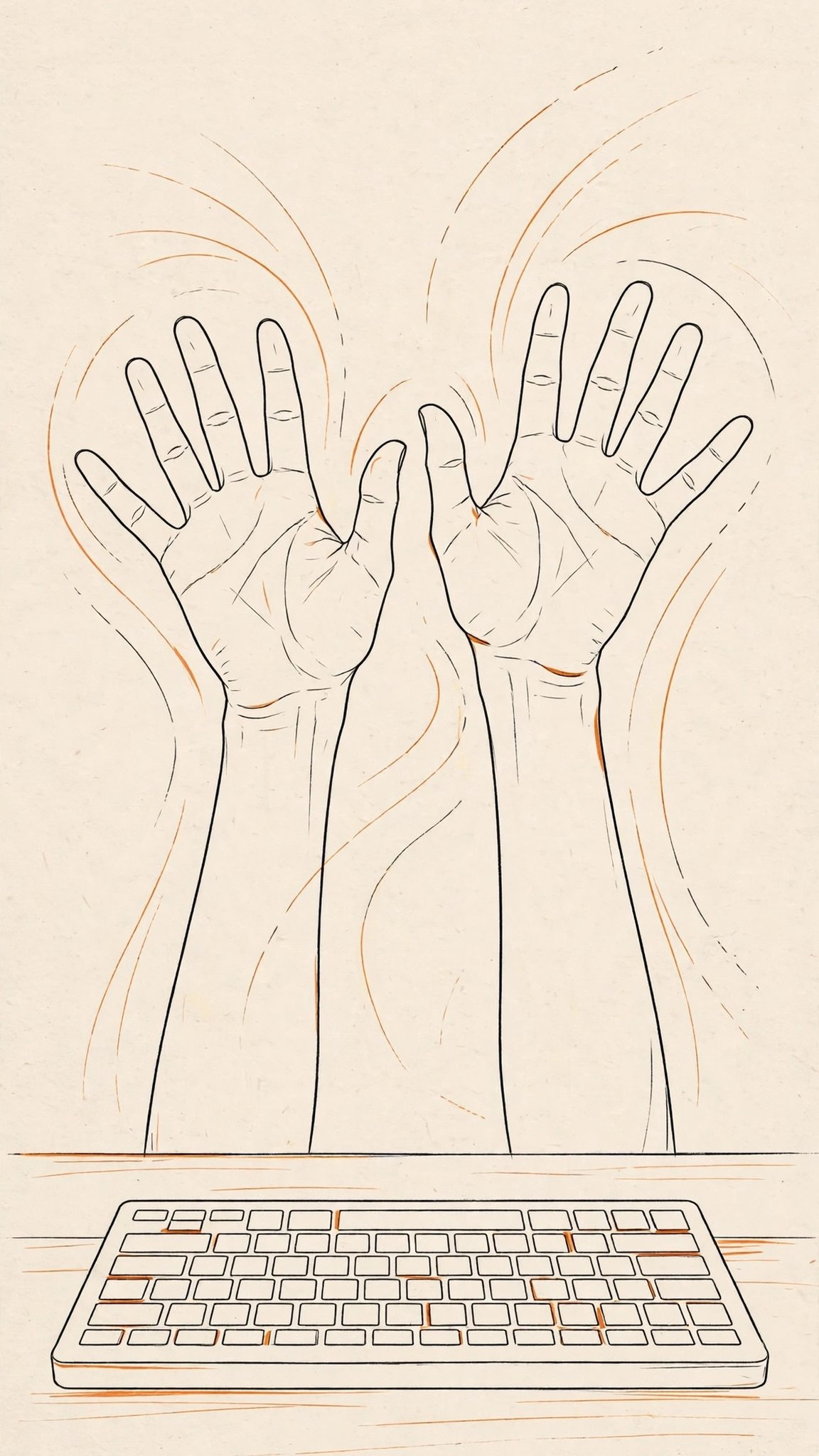
Hold both hands up, fingers spread as wide as they will go, and hold for five slow seconds. Then make a tight fist and hold for five seconds. Repeat five times. It looks like nothing, and it is the whole warm-up: the spread opens the fingers, the fist wakes the muscles back up. Harvard Health lists five commonly recommended exercises for hand and wrist problems, noting that some increase a joint’s range of motion and others loosen tight muscles and tendons through stretching. Typing all day tightens both — so stretch both.
Circles and the prayer stretch
Next, the wrists. Make slow circles with each hand, ten one way and ten the other. Then press your palms together in front of your chest, fingers pointing up, and lower your hands slowly until you feel a gentle stretch in the wrists — hold it for fifteen seconds, breathe, and let go. A sore wrist can come from repetitive hand movements — the NHS notes that carpal tunnel syndrome, where the tunnel inside the wrist swells and squeezes a nerve, can be caused by repetitive hand movements, and that there is a small amount of evidence that hand exercises help ease its symptoms. If a stretch hurts, stop — and if your hand is painful or hard to use, Harvard’s advice is plain: get exercise advice from a physical therapist, not from a page on the internet.
What not to buy
No grip strengthener, no brace, no special keyboard — not yet. Five minutes, three stretches, and a habit of stopping before the ache sets in.
What comes next
This is Self Improvement #068. The series continues the inner work: stillness, movement, time outdoors, and faith without the fine print. Next, we move — how to carry a heavy bag without hurting your back, and why the way you lift matters.
Spread wide. Hold. Let go.
Sources
- Harvard Health Publishing, “5 Exercises to Improve Hand Mobility” (accessed November 2026) — five commonly recommended exercises for hand and wrist problems; some increase a joint’s range of motion, others loosen tight muscles and tendons through stretching; if a hand condition is painful or debilitating, get exercise advice from a physical therapist.
- NHS, “Carpal Tunnel Syndrome” (accessed November 2026) — carpal tunnel syndrome happens when the tunnel inside the wrist swells and squeezes a nerve; it can be caused by repetitive hand movements; there is a small amount of evidence to suggest hand exercises help ease the symptoms.
Subscribe for more free step-by-step how-to guides to help you get more things done to grow your business or project everyday.
Email required. Unsubscribe anytime.