
Self Improvement #033: What Service Teaches You About Yourself
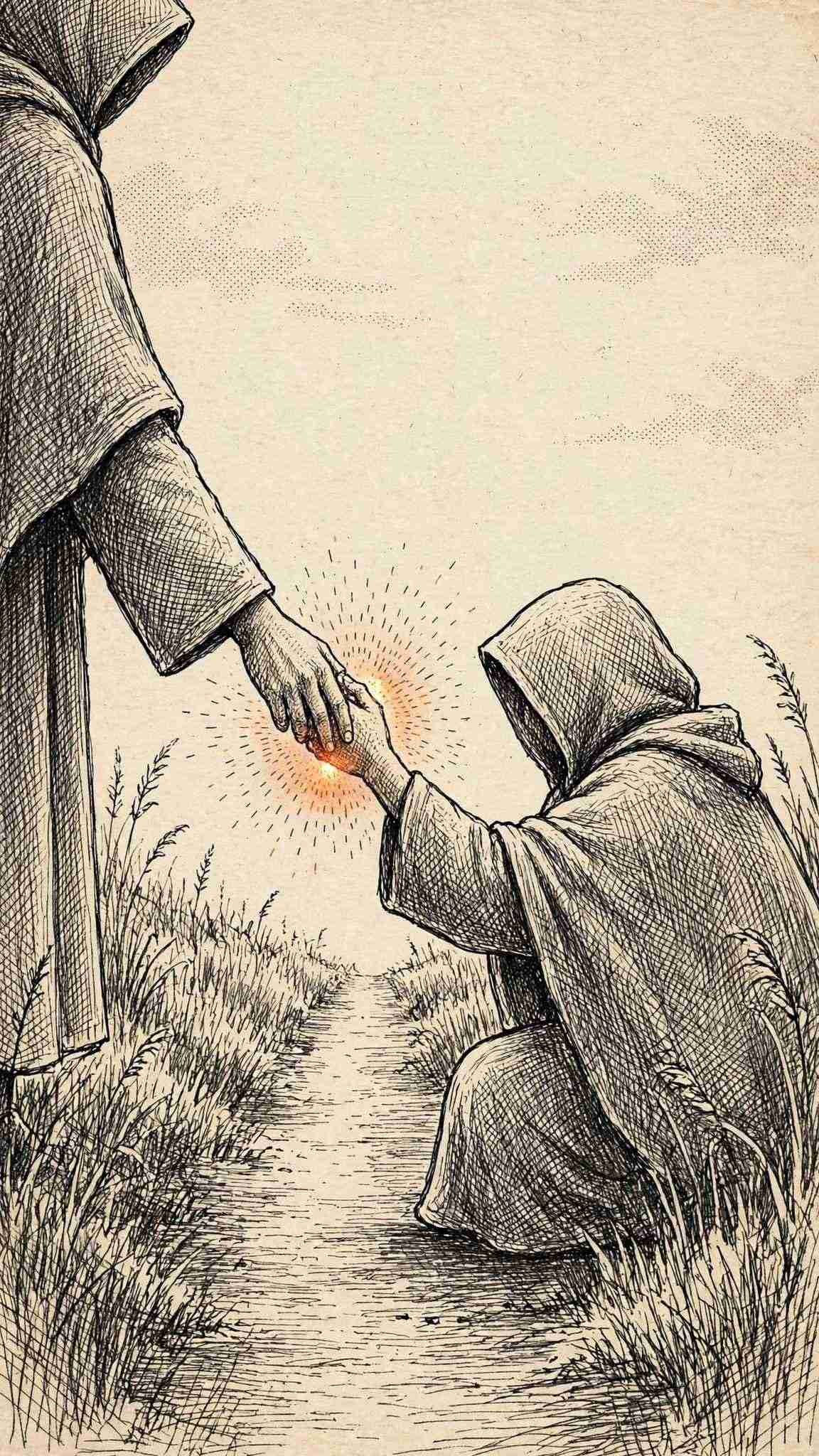
You can spend years trying to work out who you are — journaling, testing, thinking. Or you can help someone, and find out in an afternoon. Service is a mirror with no flattery in it. It shows you what you notice, what you can give, and what you walk past. This piece is about what the giving teaches the giver.
Disclosure: This post contains one affiliate link. If you buy through it, Changenaire may earn a commission at no extra cost to you. As an Amazon Associate, Changenaire earns from qualifying purchases made through links on this page. We only link books we would hand to a friend.
One book worth your money
You don’t need it to start — nothing here replaces the practice itself. But if you want the case made properly, The Alchemist by Paulo Coelho is the one: Coelho’s short fable follows a shepherd who leaves home to follow a dream, and learns who he is along the way. It is a story about listening for what calls you — the same listening service asks of you. (Referral link — we may earn a commission.)
Two hours a week is enough to matter
You do not need to give your life to service. A study from Harvard’s Human Flourishing Program followed about 13,000 older adults for eight years and found that those who volunteered at least two hours a week reported higher happiness, optimism, and purpose in life — and were about 40% less likely to die during the four years of follow-up than those who did not volunteer. The Harvard write-up is careful about what that means: volunteering is linked to better health, not proven to cause it. But two hours a week is a small price for a pattern that strong.
The benefit travels through other people
Why would helping others help the helper? A 2025 study in Health Psychology looked at the same question in nearly 10,000 adults and found the link ran mostly through connection — more contact with friends, more help given to neighbors and relatives. The study’s summary on PubMed puts it plainly: the health link is carried by physical health and by social ties. Service does not just fill time. It fills the room with people.
Start small, start near
Do not wait for the perfect cause. Offer one hour to one person near you: carry a bag, sit with a neighbor, help at the food bank on Saturday. Notice what the work shows you — what you are good at, what drains you, what you keep thinking about after. That is the lesson. Service teaches in the doing, not in the planning.
What not to buy
No course, no retreat, no training to start. The work is already waiting, and it does not ask for a certificate. Give an hour before you buy a book about giving.
What comes next
This is Self Improvement #033. The series continues the inner work: stillness, movement, time outdoors, and faith without the fine print. Next, we live the faith — letting go of what you can’t control, and what stays yours when you do.
Offer one hour this week.
Sources
- VanderWeele, T.J., “Volunteering and Human Flourishing,” Harvard Human Flourishing Program (August 2020) — about 13,000 older adults, eight years; volunteering two or more hours a week linked to higher purpose and about 40% lower mortality in follow-up.
- Nakamura, J.S. et al., “How is volunteering associated with reduced mortality? A mediator-wide approach,” Health Psychology (May 2025) — 9,962 adults; the volunteering-mortality link runs through physical health and social factors, including contact with friends.
Subscribe for more free step-by-step how-to guides to help you get more things done to grow your business or project everyday.
Email required. Unsubscribe anytime.
Read our Privacy Policy.