
How to Turn $100 Into $1,000
Turning $100 into $1,000 is not a trick and not a lottery ticket. It's a ladder: each step is a small, learnable move, and the money from one step pays for the next. Every dollar figure in this post is an example — your numbers will be your own.
Disclosure: some links on this page are affiliate links. As an Amazon Associate, Changenaire earns from qualifying purchases made through links on this page, at no extra cost to you.
Go deeper (affiliate link — we may earn a commission): The $100 Startup by Chris Guillebeau — the book for the first step — fifty people who started with a small sum and built a living from it.
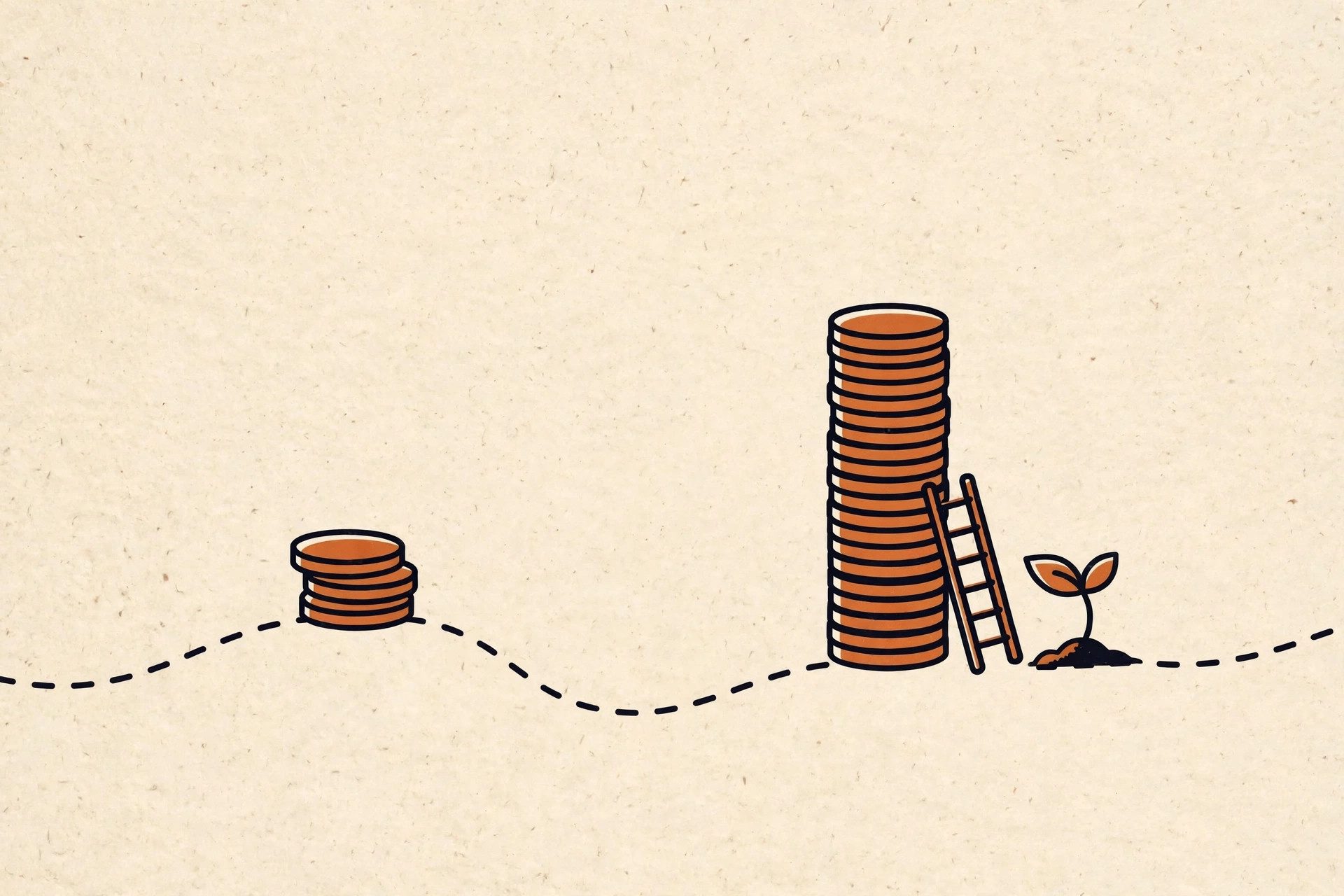
The people who turn small money into bigger money share one habit: they don't ask what $100 can buy. They ask what $100 can start. That's the whole game, and it runs in three steps.
Step one: turn $100 into work that pays
The first $100 — an example amount — buys what you need to sell a skill. Cleaning supplies and your first three customers. A domain name and a simple page for the service you already know how to do. Materials for one product you can make by hand. The point is the same every time: the money becomes a tool, and the aim is for the tool to earn back more than the $100 you started with. It does not always work out that way — the first try often earns little or nothing, and that is normal.
Then keep the profit separate. Spend it and you're back at zero with a story. Keep it and you have $200, $300, $500 — example figures — and the second step gets easier.
Step two: turn $1,000 into a system
At $1,000 — an example figure — you stop doing everything by hand. The money buys a second offer, better tools, or small tests of advertising to find where your customers actually are. It also buys the unglamorous thing that makes everything else work: the books. Write down what comes in and what goes out. A business you can't measure is a hobby with expenses.
If you need a loan to grow, the lender will want to see those books. The Small Business Administration explains how small businesses fund their growth — loans, grants, and the paperwork lenders actually ask for. Read it before you need it.
Step three: $1,000 to $10,000 — the same ladder, taller
The step from $1,000 to $10,000 — example figures — is not a new trick. It's step one and step two, repeated: more customers, not more spending. Reinvest the profit, not the revenue. The money that comes in pays for the next customer, and the next customer pays for the one after that. The ladder works because each rung is paid for by the rung below it, not by a lucky break.
The slow lane that also works
Not every dollar has to be earned by hustle. Money saved can grow on its own: interest earned on savings earns interest of its own, year after year. That's compound interest, and the U.S. Securities and Exchange Commission's compound interest calculator on Investor.gov lets you run your own example numbers and see how time does the work. Investor.gov's guide to saving and investing explains the difference between the two in plain words. Slow is not the same as stuck.
What to skip
Anything that promises to multiply money overnight. Anyone who needs your $100 first and explains the returns later. And any plan where the only person getting paid is the person who sold you the plan. The ladder is boring, and that's how you know it's real.
Go deeper on Changenaire: the ladder starts with knowing the words — our guide Finance for Beginners: A Plain-English Map teaches the six money words first, and our guide to financial literacy in your 20s shows why starting small and early beats starting big and late.
Sources
The facts in this post that come from outside our own experience are listed here, with a direct link to each one. Every dollar figure in this post is our own example, labelled as an example in the text.
- SEC Investor.gov: Compound Interest Calculator — lets you run your own example numbers for compound growth; supports the slow-lane section. Accessed November 6, 2026.
- SEC Investor.gov: Save and Invest — the plain-language difference between saving and investing; supports the same section. Accessed November 6, 2026.
- U.S. Small Business Administration: Fund Your Business — how small businesses fund growth and what lenders ask for; supports step two. Accessed November 6, 2026.
Subscribe for more free step-by-step how-to guides to help you get more things done to grow your business or project everyday.
Email required. Unsubscribe anytime.
Read our Privacy Policy.