

The Hard Thing About Hard Things: What to Do When There Are No Easy Answers — Book Deep-Dive #015
Disclosure: some links on this page are affiliate links. If you buy through one, Changenaire may earn a commission at no extra cost to you. As an Amazon Associate, Changenaire earns from qualifying purchases made through links on this page.
It's 3 a.m. and you're awake. The money in the account covers about six more weeks. Your best hire just told you she's thinking about leaving. And the decision you've been putting off for a month is still sitting there, waiting, getting worse. Ben Horowitz wrote The Hard Thing About Hard Things: Building a Business When There Are No Easy Answers (Amazon Associates link — we may earn a commission) for that night. Not the launch party, not the funding announcement — the night when the business is almost out of road and every move looks bad. Horowitz earned the right to write it the hard way. He cofounded Loudcloud with Marc Andreessen in 1999, took it public in the middle of the dot-com crash, watched it nearly die, sold off half the company, rebuilt what was left into Opsware, and sold that to Hewlett-Packard for $1.6 billion in 2007. Then he cofounded the venture firm Andreessen Horowitz. The book became a New York Times bestseller — not because it promises a way out, but because it tells the truth about what the way through actually looks like.
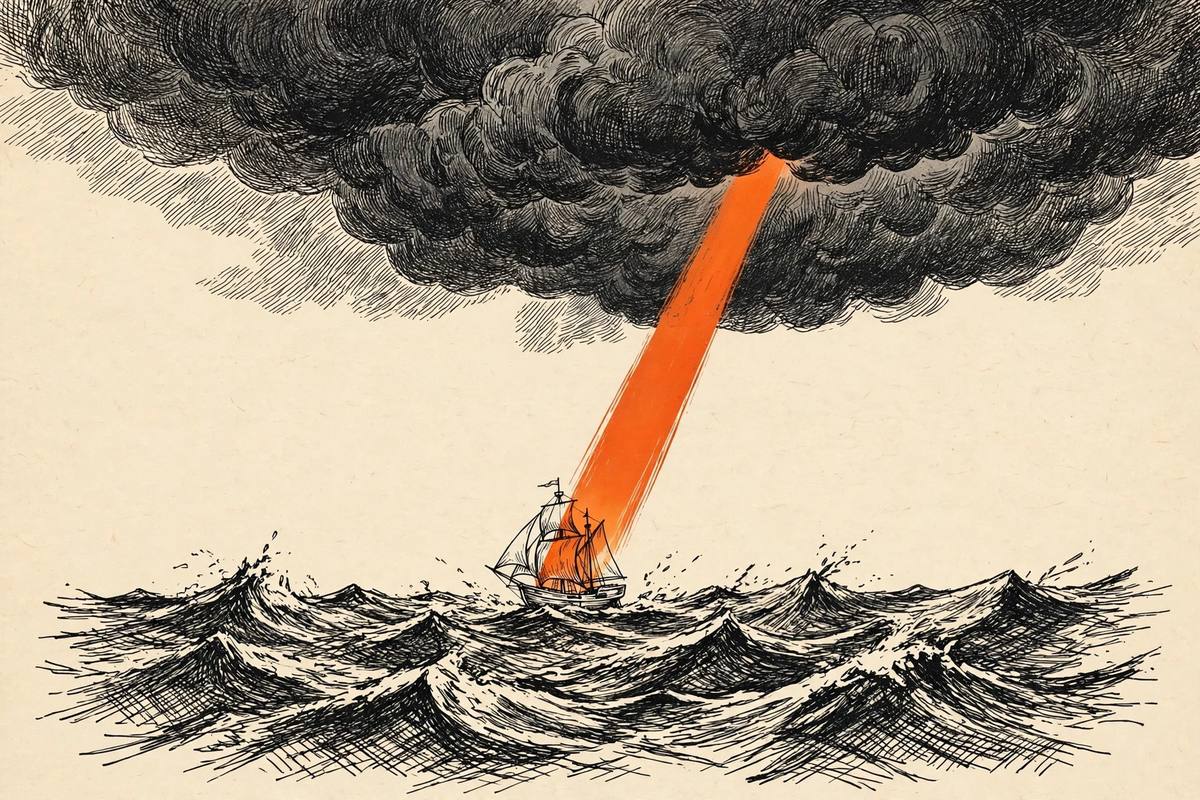
Here’s the book in one line: most business books teach you how to win — this one teaches you how to lead when winning isn't on the table, and the only choices left are hard ones.
This is the fifteenth deep-dive, and it picks up where the last two left off. Influence (#014) asked how a stranger decides to say yes. Built to Sell (#013) asked what your business is worth when you step away from it. This one asks the question underneath both: what do you do when the business is in trouble and the easy answers are gone? The answer isn't a trick, and it isn't a framework. It's a way of standing in the hard part and still making the call.
Key takeaways
- The Struggle is the job, not a detour from it — the weeks when everything goes wrong at once are the work itself, and the CEOs who make it through are the ones who keep deciding while they're inside it.
- Peacetime and wartime are different jobs: growing a company with room to move takes different instincts than saving one that's fighting for its life, and most founders fail by using the wrong instincts for the season they're in.
- Hard calls don't get easier by waiting — they get more expensive. Make the decision, make it once, and make it clean.
- Tell your team the truth. Bad news they hear from you is something they can work with; bad news they invent in the dark is always worse than the real thing.
- Take care of the people, the products, and the profits — in that order. Get the order wrong and the other two fall apart anyway.
The Struggle is the job
Horowitz has a name for the worst stretch of running a company: the Struggle. It's the part where you wonder why you started the company in the first place. The product isn't landing. The money is running out. People you counted on are leaving, and the ones who stay can feel the fear in the room. You can't sleep, and when you do, you dream about the company. Every founder who has been through it knows the feeling instantly, and every founder who hasn't thinks it won't happen to them.
Here's the part that makes the book different from every cheerful business book on the shelf: Horowitz doesn't tell you how to avoid the Struggle. He tells you it's the job. The launch, the growth, the good months — those are the easy chapters. The Struggle is where the company is actually decided. And the way through it isn't a secret strategy. It's the unglamorous stuff: keep showing up, keep making decisions, and don't let the fear make the decisions for you. The founders who survive aren't the ones who never feel the panic. They're the ones who feel it and still call the meeting, still make the cut, still tell the truth on Monday morning.
Peacetime CEO, wartime CEO
The book's most useful idea is a split: there are two kinds of CEO, and they run the company in opposite ways. A peacetime CEO has room to move. The company is growing, the cash is there, and the job is to expand — hire more people, open new markets, build for the long term. A wartime CEO is fighting for the company's life. The market turned, the money is short, a competitor is eating your lunch — and the job is to survive: cut what doesn't work, focus everyone on the one threat that matters, and move fast.
Most founders get this wrong in one of two ways. They run a wartime company with peacetime habits — holding the all-hands about culture while the bank account drains, protecting every project while the one that pays the bills starves. Or they run a peacetime company like it's at war — ruling by fear, cutting everything, burning out good people over a threat that isn't real. The skill is knowing which season you're in and switching honestly. That means asking the question most founders dodge: are we actually in trouble, or am I just scared? The answer decides everything that follows. If you're in trouble, say so, and lead like it. If you're not, stop acting like you are — your team can tell the difference, and they follow the leader who names the season right.
The hard call doesn't get easier by waiting
The chapter people remember most is the one on layoffs, and it's the one most founders wish they'd read a year earlier. Horowitz's rule is blunt: if you have to cut people, do it once, do it fast, and do it right. The slow version — a small cut now, another in three months, another after that — is crueler to everyone. The people who stay spend months wondering if they're next. The people who go get no clean ending. And the company bleeds the whole time, because nobody can plan around a cut that might come next quarter.
The same rule holds for every hard call in the book: demoting a friend who can't do the job anymore, killing a product you love that doesn't sell, firing an executive you hired yourself. Waiting doesn't make the decision easier. It makes the decision bigger, because the problem grows while you stall — and it makes you smaller, because your team watches you dodge it. The test Horowitz offers is simple: if you know what the right call is and you're putting it off, the delay is the decision. Make the call. Make it once. Then take care of the people it affects — honestly, generously, face to face. How you handle the hard call is what your team remembers long after the hard quarter is over.
Tell your team the truth — and take care of them first
When things go bad, the instinct is to hide it. Don't tell the team how short the money is. Don't mention the customer that left. Keep smiling and hope it turns around. Horowitz says this is the most expensive mistake a founder makes, and he's blunt about why: your team already knows. They can see the empty desks and the cancelled orders. When you say nothing, they don't assume everything is fine. They invent a story — and the story they invent is always worse than the truth.
Telling the truth does the opposite of what founders fear. It doesn't start a panic; it ends one. People can work with bad news they understand. They can't work with silence. And the truth carries a second rule with it, the one Horowitz puts above everything else in the book: take care of the people, the products, and the profits — in that order. The order matters. Look after your people first and they build the product. Build the product right and the profits follow. Flip the order — chase the profit, squeeze the product, burn the people — and all three fall apart, just slower. It's the simplest idea in the book and the hardest to hold when the money is tight. That's exactly when it matters most.
Use it this week
First, name your season: are you in peacetime or wartime? Write it down in one sentence, and if the answer is wartime, say so out loud to yourself before you say it to anyone else. Second, find the decision you've been putting off — the hire, the cut, the product, the conversation — and set a date for it this week. Not "soon." A day. Third, tell your team one true thing about where the business stands that you've been holding back, in plain words, without dressing it up. Fourth, check the order: are you taking care of your people first, or have the profits started eating the people? If the order has flipped, name one thing you'll change this week to put it back. Fifth, start a one-on-one habit if you don't have one: thirty minutes, one person at a time, no agenda but their view of the business. The truth you need most is usually sitting with the person you haven't asked lately.
Who should skip this book
If you want a book about starting a business — finding the idea, getting the first customers, building the first version — this isn't it, and it doesn't pretend to be. The Lean Startup (#002) and The $100 Startup (#006) are the better reads for that stage. If you're looking for comfort, skip it too: Horowitz is honest about how lonely and ugly the hard weeks get, and the book doesn't soften that. And if your company is doing well right now, the wartime chapters will feel distant — file this one for the week you need it, because that week comes for more founders than admit it. But if you're in the hard part right now — money tight, a decision you're dodging, a team that can feel the strain — there isn't a better book on the shelf for the exact week you're in.
One honest note before you buy: the language is rough in places — Horowitz writes the way founders talk when the doors are closed — and the stories come from big tech, so some of the numbers (hundreds of employees, millions in funding) will feel far from a small business. Read past the scale. The problems are the same ones you face at five employees or five hundred: the call you're avoiding, the truth you're not telling, the people counting on you to lead through it. The size changes. The hard thing doesn't.
Questions people ask
What is The Struggle in The Hard Thing About Hard Things?
The Struggle is Horowitz's name for the stretch when everything is going wrong at once — the money is running out, the product isn't landing, good people are leaving, and you lie awake wondering why you started the company at all. His point is that the Struggle isn't a detour from running a business. It is running a business. The CEOs who make it through aren't the ones who avoid it; they're the ones who keep making decisions while they're inside it.
Is The Hard Thing About Hard Things only for tech startup CEOs?
No. Horowitz's stories come from Loudcloud and Opsware, a big tech company, but the problems are the same ones any owner faces: cash running short, a hire who isn't working out, a friend on the team who has to be moved, a decision with no good option. If you run a shop, a service, or a one-person business, the scale is smaller and the stakes are just as real. The layoff chapter is about letting people go with honesty and care — that applies at five employees or five hundred.
What is the difference between a peacetime CEO and a wartime CEO?
A peacetime CEO runs a company with room to move: grow the team, expand into new markets, build for the long term. A wartime CEO runs a company fighting for its life: cut what doesn't work, make hard calls fast, and let the threat sharpen everyone's focus. Horowitz's point is that the two jobs need different instincts — and that most founders fail by running a wartime company with peacetime habits, or the other way around.
Should I read The Hard Thing About Hard Things before starting a business?
It helps, but it lands harder once you've felt some of it yourself. If you're still choosing an idea, start with Start with Why (#008) or The Lean Startup (#002). If you've already started and the hard weeks have begun — money tight, a decision you keep putting off, a team that can feel the strain — this is the book for that exact moment. Read it then, and read it with a pen.
See it on Amazon → (Amazon Associates link — we may earn a commission)
Read this next: What You Do Is Who You Are by Ben Horowitz — the follow-up: once you've survived the hard thing, how do you build a culture that holds when you're not in the room? Four models from history — a slave revolt, the samurai, Genghis Khan, and a prison transformation — on making culture out of what you do, not what you say. (Amazon Associates link — we may earn a commission)
From the Book Club shelf: browse all twenty-two picks.
Sources
Figures in this guide are as of November 2026 unless noted.
- Amazon — The Hard Thing About Hard Things: Building a Business When There Are No Easy Answers — by Ben Horowitz; Harper Business, March 4, 2014; 304 pages; ISBN 9780062273208; the Loudcloud-to-Opsware story and the practical advice on the toughest problems business school doesn't cover.
- Computer History Museum — Ben Horowitz — author of the New York Times bestseller The Hard Thing About Hard Things; cofounder and CEO of Opsware (formerly Loudcloud), acquired by Hewlett-Packard for $1.6 billion in 2007.
- The Register — HP bids $1.6bn on Opsware (July 23, 2007) — HP's $1.6 billion purchase of Opsware; Loudcloud founded in 1999, retooled and reborn as Opsware.
- Publishers Weekly — What You Do Is Who You Are: How to Create Your Business Culture — Ben Horowitz, HarperBusiness, 2019; ISBN 978-0-06-287133-6; the follow-up on building company culture.
- Changenaire Book Club — The Books — our shelf note on the book: the only book on the shelf written for the weeks when the business is almost out of road.
Subscribe for more free step-by-step how-to guides to help you get more things done to grow your business or project everyday.
Unsubscribe anytime.