
How to Start a Nonprofit Organization — How-To #014
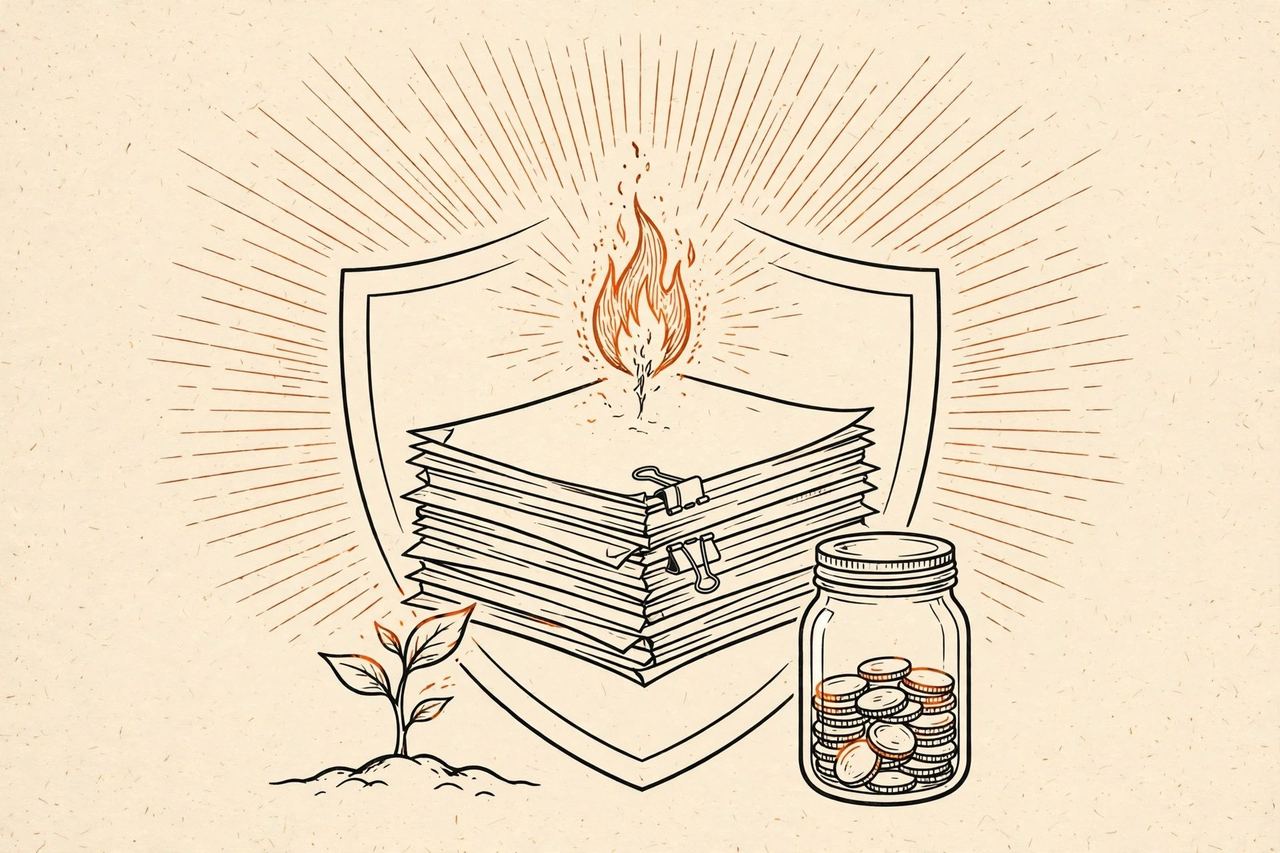
Most nonprofits don't die from lack of heart. They die from lack of paperwork.
Disclosure: This post contains an affiliate link. If you buy through it, Changenaire may earn a commission at no extra cost to you.
Here is the stance this whole installment stands on, stated up front so nobody wastes a filing fee:
A 501(c)(3) is a tax status, not a moral status. Plenty of good work — most of it, honestly — never needs one. Starting a nonprofit because the cause is big is like buying a truck because the road is long. Sometimes the truck is right. Often a bus ticket gets you there faster and cheaper.
So step one below is not a form. It is a question, and answering it honestly will save more readers more money than every other step combined.
The whole road, on one napkin. 1) Confirm you actually need a nonprofit and not a faster vehicle. 2) Recruit a real board — at least three unrelated people — before any paperwork. 3) Write the mission in one sentence, then write the bylaws. 4) Incorporate in your state and get the free EIN. 5) Apply to the IRS on the short form ($275) if you qualify, or the long form ($600) if you don't. 6) Register to solicit donations, open the bank account, and file the yearly 990 like your exemption depends on it — because it does.
Make sure you need a nonprofit — not just a cause
Three vehicles do good work, and only one of them is a nonprofit corporation.
Fiscal sponsorship is the fast lane. An existing 501(c)(3) "sponsors" your project — donations flow through their exemption, usually for 5 to 10 percent of what you raise. You can accept tax-deductible donations this month, not next spring. If the project might last two years instead of twenty, this is almost always the right answer.
An unincorporated association works for the small and informal: the neighborhood cleanup crew, the mutual-aid fund, the team with a bank account and a group chat. No tax exemption, but also no filings, no board minutes, no 990.
A mission-driven for-profit — an LLC from #003 — fits work that can pay for itself. Plenty of impact never needed a donation; it needed customers. And a for-profit can donate, sponsor, and convert later if the mission outgrows the model.
The nonprofit is for the mission that needs an institution: durable, donor-funded, bigger than its founder, built to outlive everyone who started it. That is a beautiful thing to build. It is also a filing cabinet with a heartbeat, and you should only adopt the heartbeat if you want the cabinet.
Recruit the board before you file a thing
Read that heading again, because almost everyone does it backwards. The board is not a formality you fill in after incorporating. The board IS the nonprofit — it governs the organization, hires and fires the executive director (yes, including you), and holds the legal duty to the mission.
The floor: most states require a minimum of three directors. New Jersey, used here as an example among all the states a nonprofit might exist in, requires at least three trustees. The IRS expects something stricter in practice: a board whose majority is independent — not related to each other, not on the payroll — because a board of three cousins is a family meeting with a filing fee.
Recruit for the gaps, not the applause. You need a treasurer who can actually read financial statements, someone who has run or governed a nonprofit before, and someone connected to the community you serve. Three committed, skilled, independent people beat seven names on letterhead who never show up.
And have the awkward conversation now: board members serve the mission, not the founder. If you cannot imagine your board overruling you, you have not recruited a board — you have recruited an audience.
Write the mission in one sentence, then write the bylaws
The mission sentence is the whole organization in miniature. If it takes a paragraph, it is not ready — and if you cannot say it in one sentence, the IRS reviewer will not find it in forty pages of application either. Write it, argue about it, cut it in half, and put it on the wall. Everything downstream — the programs, the fundraising, the 990 narrative — quotes this sentence.
Then the bylaws: the operating system. Board size and terms, officers and their duties, how meetings are called, how votes pass, how the money gets handled, and a conflict-of-interest policy for when a board member's interests collide with the mission's. The IRS even supplies a sample conflict-of-interest policy in the Form 1023 instructions — adopting one is not strictly required for exemption, but reviewers look for it, and writing your own from a template forces the board to actually discuss the scenarios.
No lawyer on speed dial? A bylaws template from a legal-documents service like LawDepot (affiliate link) covers the standard clauses — board, officers, meetings, minutes — so you're not drafting from a blank page. Whatever template you start from, the board should read every line and argue about the parts that matter. Bylaws nobody has read are decoration.
Incorporate in your state
The nonprofit becomes a legal person at the state level first — the IRS exemption comes second and means nothing without the first. Check name availability with your state's filing office, appoint a registered agent (the person who receives legal mail — it can be you, at your address, in most states), and file the certificate of incorporation.
Fees are the state's, and they move — verify before you pay. In New Jersey, used here as an example among all the states a nonprofit might exist in, formation guides checked October 2026 quote a $75 filing fee with the Division of Revenue and Enterprise Services, while the state's own fee schedule lists $50 for a nonprofit certificate of incorporation. Both can't be the checkout total, so check the live fee page the week you file. Every other state sets its own number.
Once the state stamps you: get the EIN free from irs.gov — never pay a lookalike site for one; #002 exists because that scam is still running. Then hold the organizational meeting. Adopt the bylaws. Elect the officers. Write minutes — a short, dated record of what was decided. A three-person nonprofit with minutes looks serious. A thirty-person nonprofit without them looks like a group chat with a filing fee.
Apply for federal tax exemption: the 1023 or the 1023-EZ
This is the step everyone means when they say "start a nonprofit," and it is step five for a reason — nothing here works without the board, the bylaws, and the state corporation underneath it.
First, the eligibility worksheet decides which form you file. The short Form 1023-EZ is open to organizations projecting $50,000 or less in annual gross receipts (this year and the next two), with no past year above $50,000 and total assets of $250,000 or less — and it excludes churches, schools, hospitals, and LLCs, among others. If you clear every line of the worksheet, you file the EZ. If not, you file the full Form 1023.
The honest numbers, checked October 2026 against the IRS user-fee page: the 1023-EZ costs $275; the full 1023 costs $600. Both file electronically only, on Pay.gov — never by mail. The IRS decides 80% of EZ applications within 22 days, versus 191 days for the full form (IRS figures, June 2026). And the fee is non-refundable even if the application is denied — so get the worksheet right before you pay, not after.
One deadline matters: file within 27 months of the end of the month you formed, and an approval reaches back to your formation date — donations from day one become deductible. Miss the window and the exemption starts late, which is an awkward letter to your first donors.
Register to ask for money — then stay in good standing
Here is the step that sinks more small nonprofits than any other: roughly 40 states require charitable solicitation registration before you ask the public for donations. The IRS exemption does not cover this — it is state law, state by state. In New Jersey, used here as our example state, you register with the Attorney General's Charities Registration Section before soliciting. Check your state's charity regulator before the first fundraiser, not after.
Then the upkeep, because a nonprofit is a calendar, not just a certificate. Open a bank account in the organization's name — #005's whole discipline applies double when the money isn't yours. File the yearly Form 990: the 990-N e-Postcard if gross receipts stay at or under $50,000, the longer 990 above that. File the state annual report every year. And know the quiet killer: miss the 990 three years running and the IRS auto-revokes your exemption — no hearing, no warning letter you noticed. That is how most small nonprofits die on paper, years after the mission died in practice.
Do the calendar work and the paperwork becomes what it should be: invisible. The mission gets the spotlight. The filing cabinet hums in the back room. That is the whole dream, filed correctly.
Questions we get asked
How much does it really cost to start a nonprofit? Doing it yourself: the state incorporation fee plus the IRS application — one New Jersey cost guide puts the DIY floor around $380 in government fees; call it $350–$500 nationally with small extras. With an attorney or formation service, budget $1,500 and up. Fees change, so verify each one the week you file.
Do I need a lawyer? Not required. The 1023-EZ is designed to be self-filed by a careful board, and the IRS instructions are genuinely readable. A lawyer earns the fee on a complex full Form 1023 — unusual activities, related for-profits, tricky governance. This is general information, not legal advice; when real money or real disputes are involved, get counsel in your state.
Can I pay myself from the nonprofit? Yes — a reasonable salary for real work, set by an independent board, is normal and legal. What the law forbids is private inurement: the mission's money enriching insiders beyond fair pay. The board sets compensation, documents it, and the 990 discloses it. Sunlight is the whole system.
How long until we're tax-exempt? If you qualify for the 1023-EZ, the IRS decides 80% within 22 days. On the full 1023, 80% land within about 191 days. Plan for the long timeline, celebrate the short one.
Can a nonprofit make a profit? Yes — nonprofits have surpluses all the time. The rule is what happens to it: every dollar must serve the mission, not private pockets. Profit is fine. Private benefit is the crime.
What comes next
This closes the formation stretch of the series — #001 through #005 built the for-profit foundation, and #014 built the mission-driven alternative. But a nonprofit with no audience is a filing cabinet with a mission statement. Next, the series turns to the other half of doing good at scale: how to grow on YouTube, Instagram, and TikTok — the honest playbook for earning an audience instead of renting one. Morning and evening, one step a day. Paperwork first, spotlight second.
Want more playbooks for building your nonprofit?
Join the Changenaire Weekly Newsletter for step-by-step builder playbooks like this one, every week, and more.
Free forever. A free ebook copy of Rebuilding Justice: An Employment-Based House Arrest Story of Redemption. Unsubscribe anytime.