
How to Pack and Ship Orders From Home — How-To #087
The sale is made. Now the order has to reach the buyer in one piece, on time, and looking like care went into it. This post shows you how to set up one small ship station at home, pack each order the same way, and send it off without dread.
Disclosure: some links on this page are affiliate links. If you buy through one, Changenaire may earn a commission at no extra cost to you. As an Amazon Associate, Changenaire earns from qualifying purchases made through links on this page. Changenaire has no affiliate relationship with the authors or publishers named below — the figures in this post are reported from the public pages linked in the text, not from any partnership.
Go deeper (affiliate link — we may earn a commission): The Handmade Marketplace: How to Sell Your Crafts Locally, Globally, and On-Line, by Kari Chapin (Amazon Associates link — we may earn a commission) — the classic guide to selling handmade work, from pricing and photos to packing and shipping. Optional reading; the steps below stand on their own.
Key takeaways
- One small ship station with the same tools beats a scramble for every order.
- Wrap the product, then wrap the box — two layers keep it safe.
- Weigh each order and print the label at home to skip the post office line.
- A thank-you note and a clear return note turn one order into a repeat buyer.
Step 1: Set up one small ship station
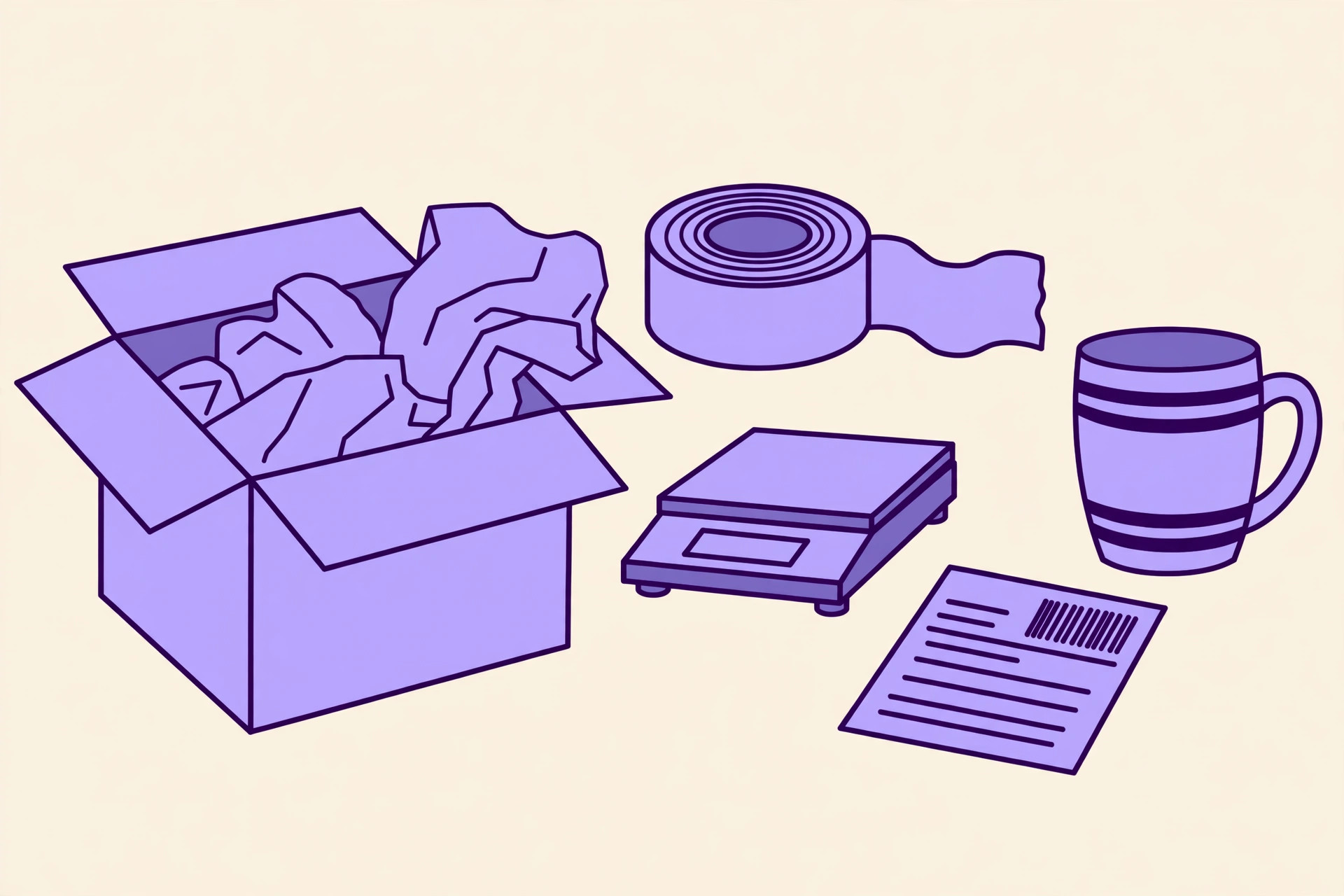
One table, one set of tools, every time. Pick one table or one corner of a room. Keep boxes, tape, scissors, tissue, labels, and a scale in the same spot. A small kitchen scale works fine for most orders. When the tools live in one place, packing takes ten minutes, not forty.
Keep three box sizes, not thirty. A small box, a medium box, and a mailer bag cover most orders. Too many sizes slow you down and waste space. Buy the sizes you use most, and keep a short stack of each by the table. The US Postal Service ship page explains the box and label options, and the UPS home page shows its own rates and drop-off points.
Step 2: Pack in two layers
Wrap the product first, then the box. Wrap the product in tissue or bubble wrap, so it cannot move. Then put it in the box with fill around it, so the box cannot crush it. Shake the box gently. If you hear it move, add more fill. A quiet box is a safe box.
Make the unboxing feel like a gift. A clean wrap, a thank-you note, and a small care card cost little and mean a lot. Buyers film unboxings, share them, and come back. Keep the extras light, so they do not push the weight — and the postage — up.
Step 3: Weigh it and print the label at home
Weigh every order before you label it. A wrong weight means a wrong label, and a wrong label can come back to you. Weigh the packed box on your scale, then buy and print the label from your computer. A printed label at home beats a long line at the post office.
Drop it off, or book a pickup. Most carriers will pick up from your door if you book it online. If you drop it off, use the drop box or the counter and keep the receipt until the buyer says it landed. A tracking number is your proof, and your buyer's peace of mind.
Step 4: Tell the buyer, then learn from each order
Send the tracking number the same day. A short message with the tracking link tells the buyer their order is on its way. It cuts the where-is-my-order messages to almost none. A buyer who can track the box will wait calmly. A buyer who hears nothing will worry.
Keep a short log of what breaks and what costs most. Note the orders that cost the most to ship, the boxes that broke, and the items buyers love. After a month, the log shows you where to change the pack or the price. How to Start an Online Store (How-To #007) is the home base for your shop, and How to Get Paid on Time Every Time (How-To #049) helps you keep the money side clean too.
At a glance
| Step | The short version |
|---|---|
| Ship station | One table, one set of tools, three box sizes. |
| Pack in two layers | Wrap the product, then fill the box so nothing moves. |
| Label at home | Weigh the packed box, print the label, keep the receipt. |
| Tell the buyer | Tracking link the same day, plus a thank-you note. |
Common mistakes
Packing with no scale. A guessed weight means a wrong label, and a wrong label can come back.
Fix: Weigh the packed box every time.
One layer of wrap. A product that can move in the box will break in the truck.
Fix: Wrap the product, then fill the box.
No tracking message. A buyer who hears nothing will worry and write to you.
Fix: Send the tracking link the same day.
Keeping thirty box sizes. Too many sizes slow you down and eat your space.
Fix: Keep three sizes you use most.
Questions people ask
What is the cheapest way to ship a small order?
For most small, light orders, the post office is the cheapest path, and printing the label at home saves more. Compare the post office and one other carrier for your most common size, then use the cheaper one as your default.
Do I need a scale to ship from home?
Yes, a small kitchen scale is enough for most orders. A wrong weight can mean a wrong label, a surcharge, or a return. A scale pays for itself in the first month.
Should I offer free shipping?
Free shipping can bring more orders, but you still pay the postage. Build the average postage into your price first, then offer it. Never offer it before you know what it costs you.
What if an order arrives broken?
Say sorry fast, and make it right fast: a new one, or the money back. Ask for a photo of the break, so you can learn what failed in the pack. A fast fix turns an angry buyer into a loyal one.
What comes next
This week: clear one table, buy three box sizes, and pack your next order in two layers. How to Start an Online Store (How-To #007) is the shop behind the orders, and How to Edit Product Photos for Free (How-To #040) makes the listing match the box.
Did it stick?
7 quick questions from the guide above. Answer them all, then drop your email to see your score.
0 of 7 answered
Drop your email and your score shows up right here.
One email a day, plus more free step-by-step how-to guides. Unsubscribe anytime.
Subscribe for more free step-by-step how-to guides to help you get more things done to grow your business or project everyday.
Unsubscribe anytime.