
Potential Changenaire #003: Aliko Dangote
He started at 21 with his uncle's loan and built Africa's largest industrial empire. Then he spent $20 billion building a refinery that cut his country's fuel imports by nearly two-thirds. We measure Aliko Dangote's record four ways — and the open questions.
Want more profiles of people who measurably moved the needle?
Join the Changenaire Weekly Newsletter for a new impact profile every day, and more.
Free forever. A free ebook copy of Rebuilding Justice: An Employment-Based House Arrest Story of Redemption, then one email a week. Unsubscribe anytime.
April 10, 1957. Kano, northern Nigeria. Aliko Dangote was born into a trading family — his grandfather was one of the wealthiest merchants in West Africa.
That last fact is worth naming, because it complicates the story in a useful way. He did not start from nothing. He started from a loan — reportedly ₦500,000, about $3,000 — from his uncle in 1977, when he was 21. What he did with it is the story.
He started trading. Rice, sugar, cement — the unglamorous goods an economy actually runs on. Then he did the thing that separates traders from builders: he started making the things instead of moving them. Cement first, then sugar, salt, flour. Each factory funded the next.
Thirty years of that compounding turned a trading firm into the largest industrial conglomerate in Africa. His own summary of it is blunt: "I built a conglomerate and emerged the richest black man in the world in 2008 but it didn't happen overnight. It took me 30 years."
The refinery
Then came the bet that defines him. Nigeria — Africa's largest oil producer — had spent decades exporting crude and importing refined petrol, a humiliation hiding in plain sight. Dangote decided to end it himself.
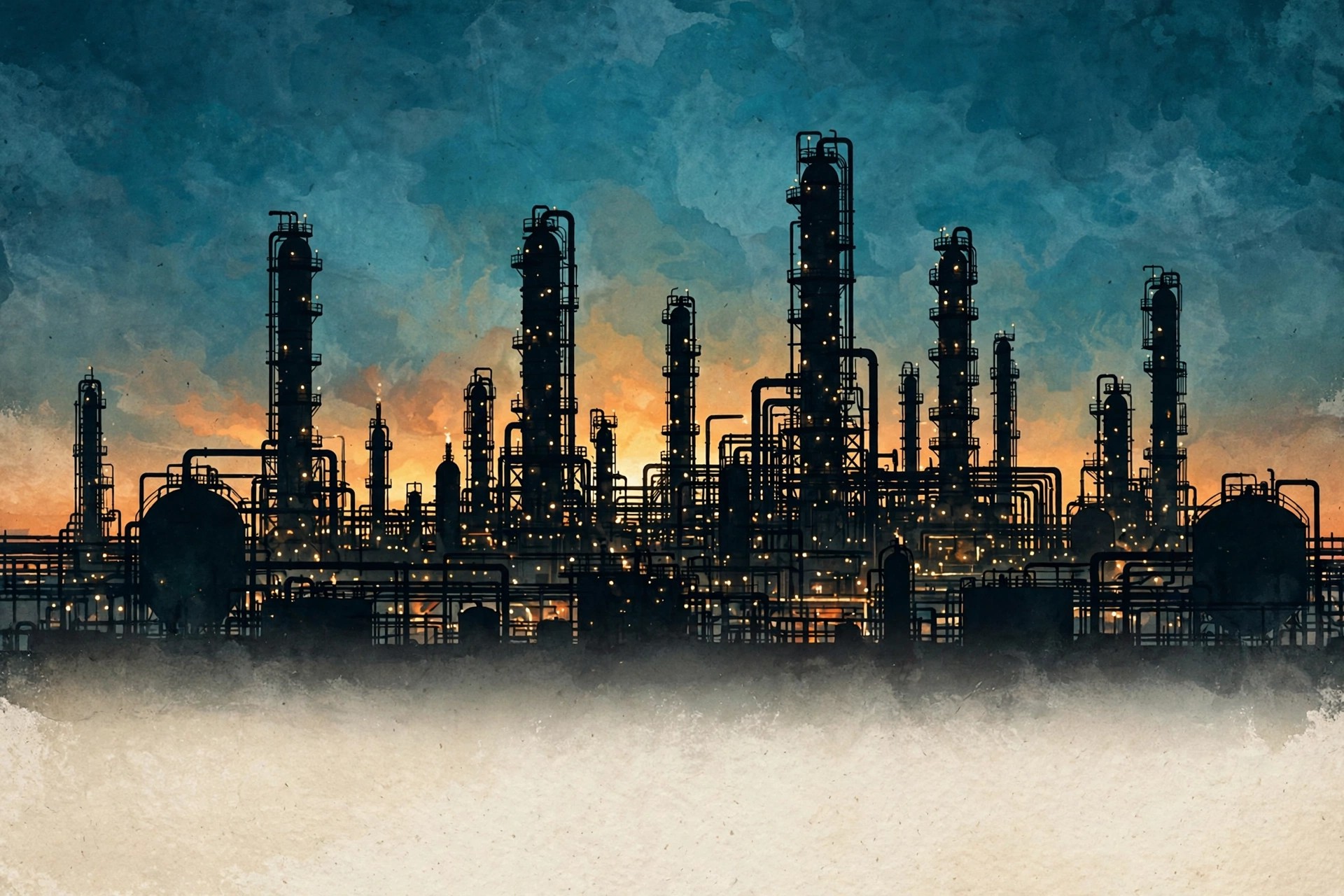
The Dangote Refinery at Lekki cost roughly $19 to $20 billion to build. At 650,000 barrels a day, it is one of the largest single-train refineries on earth. It started operating in January 2024; petrol followed that September.
The numbers since are the kind a ranking system dreams about. Nigeria's petrol imports fell about 62 percent in the first seven months of 2026 compared to the year before. Local refineries supplied nearly 79 percent of the country's petrol in the first half of 2026. Pump prices dropped roughly 28 percent between September 2024 and December 2025. By April 2026, the refinery had become the world's largest exporter of jet fuel.
Read that again slowly. One man's factory changed what fuel costs for 220 million people.
And he is not done. A $14.3 billion expansion aims to take the refinery to 1.4 million barrels a day by 2029, with a target of 95,000 peak jobs. A second refinery broke ground in Lamu, Kenya, in September 2026. A third is announced for Tanzania.
His philosophy of capital is on the record: "If you give me today $5 billion, I will not invest any abroad, I will invest everything here in Nigeria."
The numbers
Dangote Group employs more than 52,000 people across Africa, by the company's own count — one of the largest private employers on the continent.
The Aliko Dangote Foundation, founded in 1994, carries a $1.25 billion endowment and spends roughly $35 million a year on health, nutrition, education, and disaster relief. It has partnered with the Gates Foundation on polio eradication since 2013. In December 2025, Dangote pledged ₦1 trillion — about $688 million — over ten years for Nigerian education. In the first half of 2026 alone, he publicly gave or pledged at least $47 million, including a million bags of rice for the hungry.
And the tax line, which rarely makes the highlight reels: Dangote's companies paid more than ₦402 billion in taxes in 2024, making him Nigeria's single largest taxpayer, two years running as the country's most tax-compliant company.
Jobs, fuel, food, taxes. That is four different ways into the same sentence: the country works better because he built things in it.
The open questions
A serious ranking holds the criticisms in the same frame. Dangote's is a longer list than most profiles we will run, and it deserves honest space:
Monopoly and cronyism. The sharpest critique is that his empire was built with the state's help — import bans that cleared the field for his cement plants, political relationships going back decades. Scholars have published papers calling it a case study in crony capitalism. His defenders call it industrial policy. A ranking has to hold both.
Cement prices. Nigerians pay some of the highest cement prices in Africa — roughly ₦12,500 to ₦15,000 for a 50kg bag, against ₦7,000 to ₦8,000 in Ghana and Kenya — while his cement business posts enormous profits. In August 2026, the competition regulator flagged indications of possible price manipulation. The question writes itself: does the builder serve the people, or the margin?
The refinery fight. In 2024 he clashed publicly with Nigeria's petroleum regulator over fuel quality claims and import permits, and the dispute has continued in court since. Building at this scale in Africa means working with governments — that comes with the territory, and it is part of the record.
Foundation transparency. The foundation's giving is real and large, but researchers note it publishes no audited accounts, and some headline pledges are hard to track to disbursement. Pledges are promises; the ranking counts what lands.
Labor. In September 2025, unions clashed with the refinery over more than 800 sacked workers; the dispute was resolved through mediation. Scale does not exempt a builder from how the building treats people.
How we measure it
How many lives it touches: very high. 52,000-plus jobs, a refinery reshaping a nation's fuel supply, the largest taxpayer in Africa's biggest economy. Few individuals alive move numbers this large.
How deeply it changes a life: high. Cheaper fuel reaches every household and every transport fare. Industrial jobs compound into skills, suppliers, and towns. Foundation money reaches health and classrooms.
Will it outlast them: high, with a watch item. Refineries and cement plants outlive their builders by decades. The open question is succession — his daughters are reportedly being prepared to lead the empire. Whether the industry lasts is proven; whether the family transition lasts is not yet.
Can we actually count it: medium-high. Refinery output, import data, and tax payments are independently reported. Foundation disbursements are less transparent than the headlines.
Our call: Potential Changenaire — yes, with the open questions on the record. A 21-year-old took his uncle's loan and spent thirty years turning it into the industrial backbone of a continent — then bet $20 billion that his country should refine its own fuel. The criticisms are on the record, and so is the fuel in the tank. Both go in the ranking.
Tomorrow: #004.
Follow the series.
One profile every day. The ranking system is coming — this is how we build it.
All profiles