
The Business of LaMelo Ball: The Puma Deal and the Big Baller Brand Lesson — Sports #019
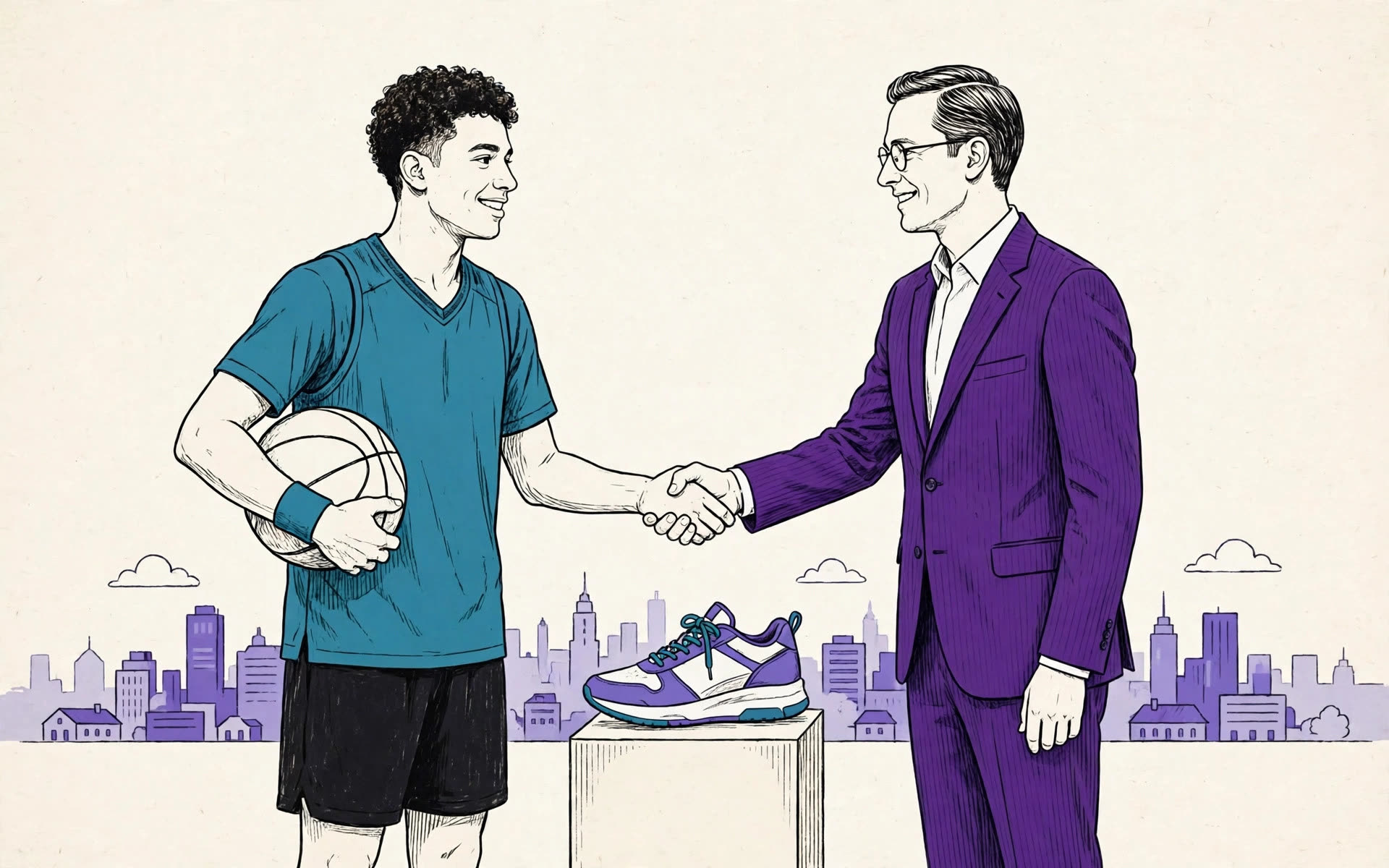
Here is the short version: LaMelo Ball built a shoe brand twice. The first try was his family brand, Big Baller Brand. It priced a rookie shoe at $495 and had no factory. The second try was Puma. It paid a reported $100 million and put his name on a real shoe. This piece walks through both deals, and the NBA contract that came next, with every number sourced.
Disclosure: some links on this page are affiliate links. As an Amazon Associate, Changenaire earns from qualifying purchases made through links on this page, at no extra cost to you.
Key takeaways
- LaMelo signed with Puma in October 2020, at 19, in a deal reported at about $100 million.
- His first Puma shoe, the MB.01, launched in December 2021.
- His family brand priced a rookie shoe at $495 with no factory and no stores.
- LaVar Ball asked Nike, Adidas, and Under Armour for $1 billion for all three sons.
- In July 2023 LaMelo signed a five-year Hornets extension worth up to $260 million.
One honest note before you start: Sports For Entrepreneurs is education, not financial, legal, or tax advice. Changenaire is not your financial advisor, your lawyer, or your agent. Talk to a licensed professional before you make money decisions.
Who this is for: builders who want to turn a name into a brand, and keep the brand once it grows. Who should adjust: if you came here for LaMelo Ball's game stats or his next shoe drop, this is not that piece. This piece is about the deals, the prices, and the lessons you can use.
This piece sits in the Sports For Entrepreneurs hub, in the Business of the Game pillar. It pairs with three neighbors: how an endorsement deal works, which breaks down the deal terms LaMelo signed; LeBron James and the path to ownership, which shows the long game of owning, not renting, your name; and Shaq and the Newark Blueprint, which shows what a brand builds across a whole career. Read the four together and you have the full picture: the deal, the ownership, the brand, and the career it builds.
Go deeper (affiliate link — we may earn a commission): the shoe business in this piece — a founder with $50 and an idea — is the story of Shoe Dog: A Memoir by the Creator of Nike by Phil Knight (Scribner, 2016), which tells how Nike grew from a small import plan into a global brand. You need nothing to buy to use this piece. If you want the founder's side of the shoe deals above, this is the book that tells it. Skip it if you only want the lesson — the sections below are enough to start.
Why it matters to entrepreneurs™:
Two deals tell the whole story. One deal had hype and no plan. The other had a big firm and a real shoe. Both deals started with the same name. The name was the asset. The plan was the gap. If you build a brand, learn the gap first. Your name can open doors. Your plan decides what walks through them.
The Puma deal
LaMelo Ball signed with Puma in October 2020. He was 19 years old. The deal was reported at about $100 million. Puma had left basketball years before. It came back through him.
The shoe came first, and the shoe carried the brand. His first Puma shoe launched in December 2021. It was called the MB.01. Puma gave him room to shape the design. The shoe sold on his name and his style.
Puma bought more than a player. It bought a face for its return to basketball. LaMelo had a big online following. He had a look fans could spot at once. Puma put him at the front of its basketball line.
Copy this: sell the story, not just the skill. Puma paid for what LaMelo meant to young fans. Ask what your work means to your buyers. Then price that meaning, not just your hours.
The Big Baller Brand lesson
Before Puma, there was Big Baller Brand. LaMelo's father, LaVar Ball, built it for his three sons. In 2017 he asked Nike, Adidas, and Under Armour for $1 billion. The ask covered all three sons for ten years. All three firms said no.
So the family built the shoe itself. Lonzo Ball's first shoe, the ZO2, sold for $495 a pair. It sold by preorder only, on the family site. No store carried it. Every sale was final.
The price was not the real problem. The brand did not own a factory. It sold shoes before they were made. Pairs arrived late, and some fell apart. A business partner was later said to have taken $1.5 million from the firm.
The idea was right, and the build was wrong. Own the brand. That part was smart. But own the factory, the ship date, and the cash too. A bold price needs proof behind it.
The NBA contract
The court paid next. The Hornets picked LaMelo third in the 2020 draft. He won Rookie of the Year in 2021. In July 2023 he signed a five-year extension worth up to $260 million.
It was a first for the Hornets. No Hornets player had signed a rookie max extension before. The team bet on its young star. It bet on upside, not on wins so far.
Three income streams now stack. The NBA salary pays the base. The Puma deal pays for the brand. His own gaming brand, MB1 Gaming, adds a third stream. One name feeds all three.
Copy this: stack income around one name. Your salary is stream one. Your brand deal is stream two. Your own product is stream three. Build them in that order.
The four moves
Pull it together into the moves that matter. First: own your name, and put the rights in writing. Second: prove the product before you set a bold price. Third: own the factory, or own the ship date in writing. Fourth: stack three income streams around one name.
Run those four in order and you have the lesson. The name opens doors. The proof sets the price. The build keeps the trust. The stack keeps the cash flowing when one stream dries up.
Copy this: take one page and write four lines: your name, your proof, your ship date, and your three streams. If one line is blank, that is the work. Do that line first.
At a glance
| The deal | What it is | The number behind it |
|---|---|---|
| The Puma deal | Signed October 2020, at 19 | Reported at about $100 million |
| The first shoe | MB.01, launched December 2021 | Puma's return to basketball |
| The family brand | Big Baller Brand, built 2016 | $495 rookie shoe, no factory |
| The $1 billion ask | LaVar Ball to Nike, Adidas, Under Armour, 2017 | All three said no |
| The NBA deal | Five-year extension, July 2023 | Up to $260 million |
| The lesson | Own the brand and the build | Price needs proof behind it |
Common mistakes
Pricing before proof. A $495 shoe with no track record asks buyers to trust the hype. Fix: prove the product first, then set the price.
Selling what you do not own. Big Baller Brand sold shoes it had not made. Fix: own the factory, or own the ship date in writing.
Asking for the moon. A $1 billion ask for three teens priced the family out of the room. Fix: ask for a deal the other side can say yes to.
Mixing family and cash. A partner dispute cost the brand $1.5 million and its trust. Fix: put money rules in writing, even with family.
Betting on one stream. One shoe or one deal can end. Fix: stack three streams around one name.
Questions people ask
How much is LaMelo Ball's Puma deal worth?
Reports put it at about $100 million. Puma has not shared the terms. The deal was signed in October 2020, a month before the draft. Hot New Hip Hop reports the $100 million figure. Figures checked November 2026.
What was Big Baller Brand's first shoe?
Lonzo Ball's ZO2, priced at $495 in May 2017. It sold by preorder only on the family site. Rapping Sports tells the $495 story. LaMelo's own Big Baller Brand shoe, the MB1, cost $395. Figures checked November 2026.
Why did Big Baller Brand fail?
It sold shoes before they were made, pairs arrived late, and some fell apart. A partner was later said to have taken $1.5 million in 2019. GB Times reports the brand is now defunct. Lonzo and LaMelo both left for deals with big brands. Figures checked November 2026.
What is LaMelo Ball's NBA contract?
A five-year extension with the Charlotte Hornets, signed in July 2023, worth up to $260 million. He was the first Hornets player to sign a rookie max extension. Figures checked November 2026.
What comes next
Take the four moves and run them on your own brand — the name, the proof, the build, and the stack. Then read the neighbors: how an endorsement deal works for the deal terms; LeBron James and the path to ownership for the long game; and Shaq and the Newark Blueprint for what a brand builds across a career. The Sports For Entrepreneurs hub collects every piece in this engine as it publishes. What the game teaches.
Sources
Every fact in this post was checked against the sources below in November 2026.
- Boardroom — LaMelo Ball launches MB1 Gaming (checked November 2026) — Puma deal signed in 2020; MB1 shoe out in December 2021.
- Hot New Hip Hop — The Best LaMelo Ball Shoes (checked November 2026) — Puma deal reported at about $100 million.
- The Score — Ball signed extension (checked November 2026) — five-year deal worth up to $260 million, July 2023.
- Rapping Sports — The $495 Shoe Nobody Could Afford (checked November 2026) — $1 billion ask; $495 ZO2; $10 million standard offer.
- GB Times — Is Big Baller Brand Still in Business? (checked November 2026) — $1.5 million said to be taken; brand now defunct.
- What Pros Wear — LaMelo Ball's Big Baller Brand MB1 Shoes (checked November 2026) — MB1 at $395 when LaMelo was 16.
- Books-A-Million — Shoe Dog by Phil Knight (checked November 2026) — ISBN-10 1501135910.
- Shoe Dog: A Memoir by the Creator of Nike by Phil Knight (Scribner, 2016), ASIN 1501135910 — the book recommended in this post. ASIN verified by web search only (ISBN-10 1501135910 confirmed against library catalogs and book databases), never by fetching amazon.com, and not claimed as Amazon-live-verified.
Subscribe for more free step-by-step how-to guides to help you get more things done to grow your business or project everyday.
Email required. Unsubscribe anytime.
Read our Privacy Policy.