
Self Improvement #003: How to Use Your Breath to Calm Down in Two Minutes
Before you change anything else, change the way you breathe. It is the fastest lever you own, and it is always with you — in the car, before the hard call, at 2 a.m. when the mind will not stop. Two minutes is a start — enough to notice a difference, but not the dose the research tested.
Health note: This piece is general information, not medical advice. It describes gentle techniques for healthy adults. Talk to a doctor before starting a new exercise or breathing routine — especially if you have a health condition, an injury, or pain that keeps coming back. If anything hurts, stop.
Disclosure: This post contains one affiliate link. If you buy through it, Changenaire may earn a commission at no extra cost to you. As an Amazon Associate, Changenaire earns from qualifying purchases made through links on this page. We only link books we would hand to a friend.
One book worth your money
You don’t need it to start — nothing here replaces the practice itself. But if you want the case made properly, 10% Happier by Dan Harris is the one: Harris wrote it for people who think meditation is not for them — a skeptic’s account, funny and practical, that never asks you to believe anything you cannot test yourself. (Referral link — we may earn a commission.)
And if the two minutes works and you want the fuller practice — short exercises, no incense, written for people who are sure they cannot meditate — Meditation for Fidgety Skeptics by Dan Harris is the one.
The two-minute method
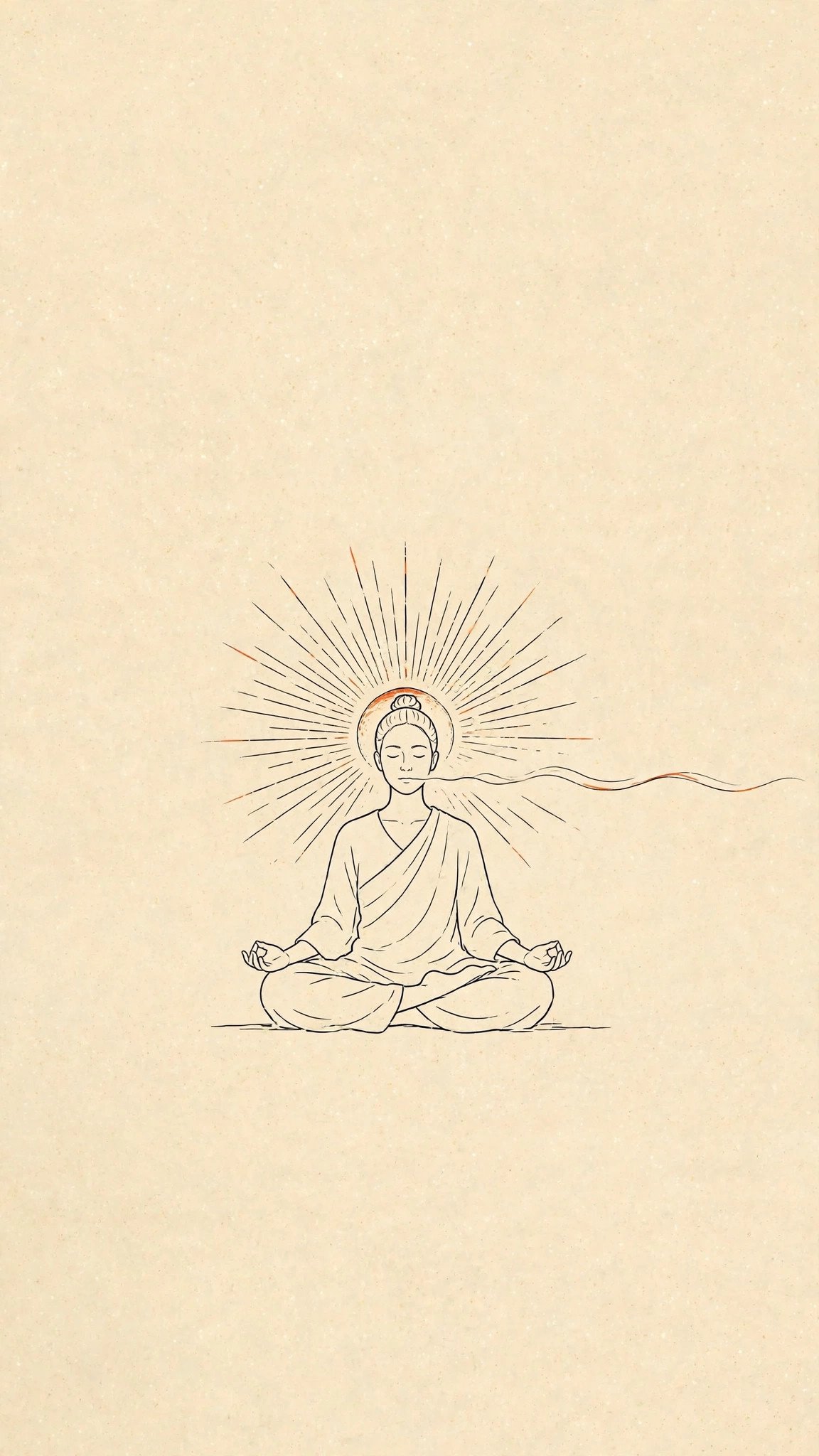
Inhale through the nose for four counts. Exhale through the mouth for six. That is the whole method. Do it six times — about two minutes. The long exhale is the point: breathing out slowly tells the body to stand down. You do not need to sit a certain way or close your eyes. You can do it at a red light, at your desk, or standing in the kitchen.
If your mind wanders, that is normal. You are not failing. Just come back to the count. The count is the anchor — it gives the mind one job, and one job is enough to crowd out the spiral.
Why it works
Your breath is the one part of the stress response you can steer on purpose. When you are wound up, the breathing goes short and high in the chest. That tells the body there is danger, and the body believes it. A slow exhale reverses the message. It is not magic and it is not a cure for everything. It is a lever — small, reliable, and yours.
The research behind slow breathing is real — a 2023 Stanford randomized trial found five minutes of cyclic sighing a day, done daily for a month, lifted mood and lowered stress. But be clear about what was tested: cyclic sighing, a double inhale followed by a long exhale — not this page’s four-in, six-out count, and five minutes a day, not two. Two minutes is a start, not the tested dose. A 2017 study on diaphragmatic breathing points the same way: slow, deep breathing eased stress and sharpened attention. You do not need the longer words. You need the count.
When to use it
Before the hard conversation. After the bad news. When the mind starts rehearsing the argument for the third time. When you wake up at night and the day starts replaying itself. The method works best if you use it before you need it — two minutes in the morning, two minutes before the workday ends. That way, when the pressure comes, the count is already familiar.
It also works after the fact. If you have already lost your temper or already sent the message you regret, two minutes of slow breathing will not undo it. It will keep the next one from being worse. That is still worth doing.
What not to buy
You do not need an app, a device, or a course. The method is four counts in and six counts out. Anyone charging you a monthly fee for that is selling you a timer. A free timer on your phone does the same job. Save your money for the things that actually need money.
What comes next
This is Self Improvement #003. The series continues the inner work: stillness, movement, time outdoors, and faith without the fine print. Next, we build the morning — how ten quiet minutes at the start of the day can carry the whole day, and how to make a routine that survives a bad week.
Two minutes. One count. No gear. Start today — the world you’re going to change is waiting on the person you’re becoming.
Sources
- Balban et al. (2023), "Brief structured respiration practices enhance mood and reduce physiological arousal," Cell Reports Medicine 4(1):100895 — a Stanford randomized trial of 108 healthy adults: five minutes of cyclic sighing daily for a month improved mood and lowered stress. Limits: it tested cyclic sighing (a double inhale followed by a long exhale), not the four-in, six-out pattern on this page, and five minutes a day, not two; the authors call it "promise as an effective stress management exercise," not proof.
- Ma et al. (2017), "The Effect of Diaphragmatic Breathing on Attention, Negative Affect and Stress in Healthy Adults," Frontiers in Psychology — slow, deep breathing eased stress and sharpened attention in healthy adults.
Subscribe for more free step-by-step how-to guides to help you get more things done to grow your business or project everyday.
Email required. Unsubscribe anytime.
Read our Privacy Policy.