
Self Improvement #057: How to Find North Without a Compass
The sun rises in the east and sets in the west, and the shadows it throws point the way in between. You do not need a compass to find north — a stick, two small stones, and fifteen minutes will do it. Learn it on a sunny day in your own yard, so it is yours when you actually need it.
Disclosure: This post contains one affiliate link. If you buy through it, Changenaire may earn a commission at no extra cost to you. We only link books we would hand to a friend.
One book worth your money
You don’t need it to start — nothing here replaces the practice itself. But if you want the case made properly, Braiding Sweetgrass by Robin Wall Kimmerer is the one: Kimmerer writes about what the living world teaches when you pay attention to it — the plants, the seasons, the ground under your feet. If finding north with a stick makes you want to know the outdoors better, this is the book that deepens it. (Referral link — we may earn a commission.)
The shadow-stick method
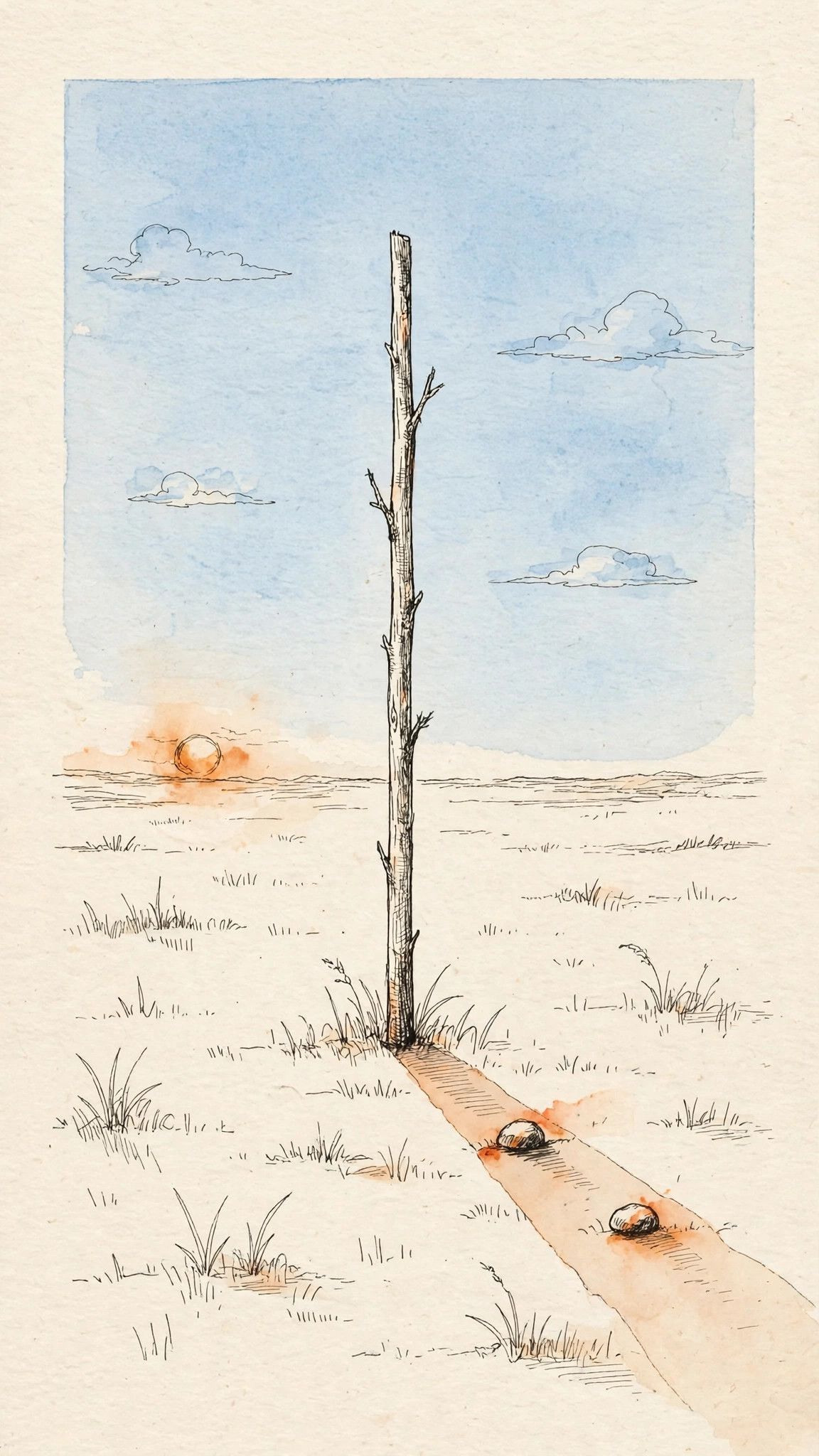
This is the one to learn first. It works anywhere the sun casts a shadow, in either hemisphere, and all you need is a stick. Push a straight stick about a metre long into flat, clear ground. Put a small stone at the tip of its shadow — that is your first mark. Wait 10 to 15 minutes, then mark the new tip of the shadow with a second stone. Draw a line between the two marks: that is your east-west line. The first mark is west and the second is east, everywhere on earth, because the sun moves from east to west and the shadow tip moves the other way. Now stand with your left foot on the first mark and your right foot on the second — you are facing north. The Old Farmer’s Almanac lays out the same steps, and the method comes from the U.S. Army field manual on finding direction by day, reprinted in full by Art of Manliness. One honest note: the sun rarely rises due east or sets due west, so this gives you approximate north — good enough to walk by, not good enough to survey land with.
After dark: the North Star
At night, look for the Big Dipper — seven bright stars shaped like a ladle. Follow the two stars at the front edge of the bowl upward and they point to Polaris, the North Star, which sits almost exactly over true north. It is the most reliable direction finder in the night sky, and it never moves while the other stars turn around it. Learn the Dipper on a clear night at home, so you can find it without thinking when you are out.
What not to buy
No compass yet, no app, no survival kit. A stick from the ground, two stones, and fifteen minutes of sun. And skip the old tale about moss growing on the north side of trees — moss grows where it is damp and shaded, which is not always north.
What comes next
This is Self Improvement #057. The series continues the inner work: stillness, movement, time outdoors, and faith without the fine print. Next, we go outside — how to watch the sunrise on purpose, and why the first light of the day steadies you.
One stick. Two marks. North.
Sources
- The Old Farmer’s Almanac, “How to Find North, South, East & West Without a Compass” (updated October 8, 2026) — the shadow-stick steps: mark the shadow tip, wait about 15 minutes, mark again; the first mark is west, the second east; stand with the left toe on the first rock and the right on the second to face north; Polaris sits almost exactly over true north.
- Art of Manliness, “How to Find Direction Using the Sun and Stars” (excerpt from U.S. Army field manual FM 21-76, 1968) — the shadow-tip method works any time the sun is bright enough for a stick to cast a shadow; the first shadow-tip mark is always west and the second always east, everywhere on earth.
Subscribe for more free step-by-step how-to guides to help you get more things done to grow your business or project everyday.
Email required. Unsubscribe anytime.