
Self Improvement #045: One Hour Outside Every Day
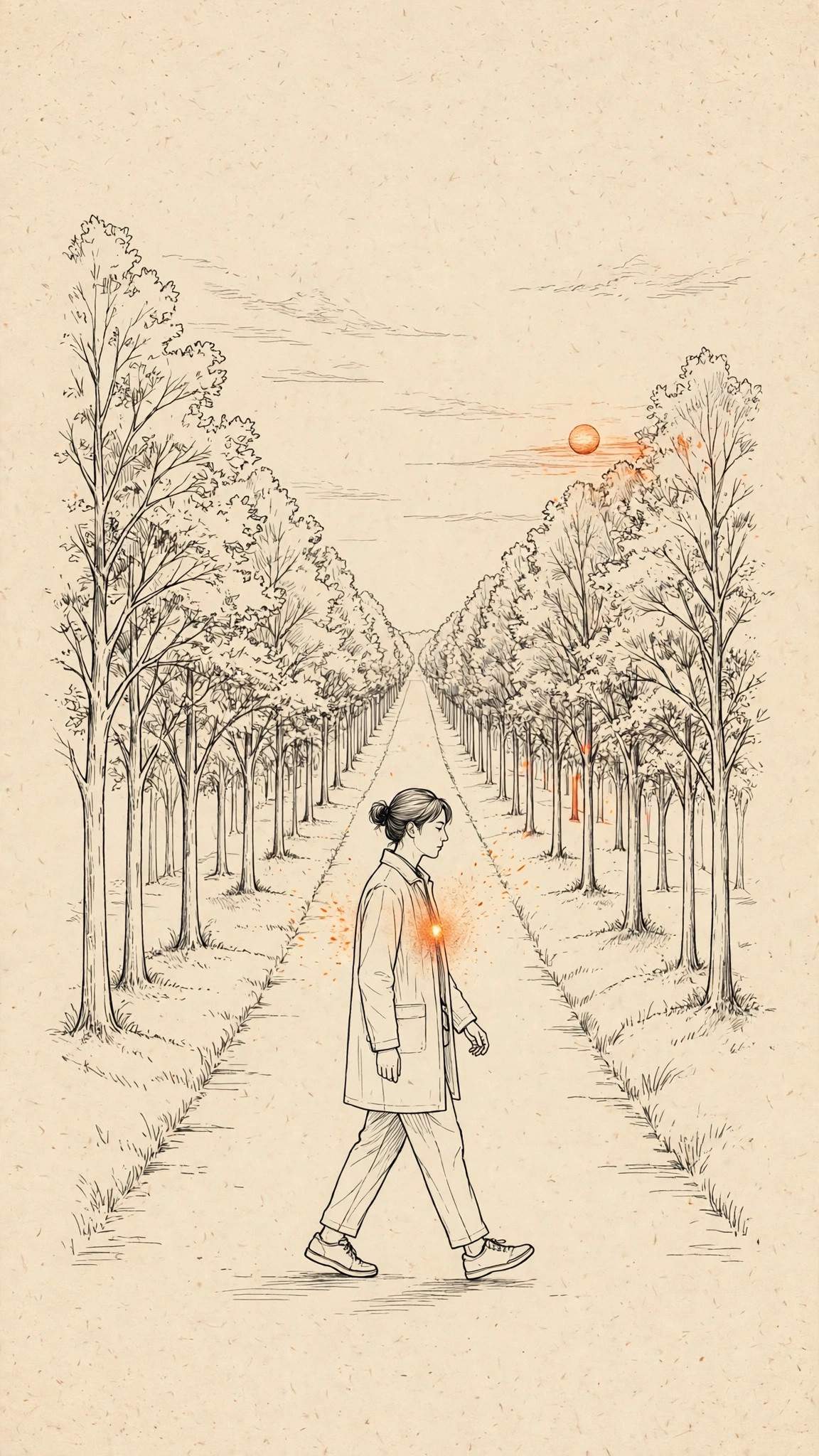
An hour outside every day sounds like a lot until you count what it replaces: an hour of scrolling, an hour of sitting under flat light, an hour of the same four walls. The walk does not need to be wild. A park bench counts. A tree-lined street counts. The hour is the point, not the place.
Disclosure: This post contains one affiliate link. If you buy through it, Changenaire may earn a commission at no extra cost to you. We only link books we would hand to a friend.
One book worth your money
You don’t need it to start — nothing here replaces the practice itself. But if you want the case made properly, The Nature Fix by Florence Williams is the one: Williams walks through the science of why time outside calms the mind — forests, rivers, city parks — and writes it like a travel story. Read it when you want the why behind the walk. (Referral link — we may earn a commission.)
Twenty minutes is enough to start
You do not need a forest. In a 2019 study, researchers had people spend time in nature and measured their cortisol, the stress hormone — and found that a nature experience of 20 to 30 minutes lowered cortisol most efficiently. The study, published in Frontiers in Psychology, used everyday nature, not wilderness: a garden, a park, a street with trees. Twenty minutes. That is the size of the ask.
Two hours a week is the line
An hour a day gets you there by Tuesday — and the rest of the week is spare change. A study of nearly 20,000 people in England found that those who spent at least 120 minutes a week in nature were more likely to report good health and wellbeing than those who spent less time outside. The study, published in Scientific Reports, found the pattern held whether the two hours came in one long visit or several short ones.
How to actually get the hour
Walk part of the way instead of all of it. Take the long route to the shop. Eat lunch outside. Do one errand on foot. Split the hour if you must — two half-hours count, and a walk with a friend counts double. The clock is yours; the sky is free.
What not to buy
No hiking boots, no outdoor membership, no gear list. Shoes you already own, a door, and an hour.
What comes next
This is Self Improvement #045. The series continues the inner work: stillness, movement, time outdoors, and faith without the fine print. Next, we go outside — how to start watching birds, and why ten quiet minutes outside changes the day.
One hour. One walk. Every day.
Sources
- Hunter, M. R., Gillespie, B. W., & Chen, S. Y.-P. (2019), “Urban Nature Experiences Reduce Stress in the Context of Daily Life Based on Salivary Biomarkers,” Frontiers in Psychology, 10, 722 — a nature experience of 20–30 minutes lowered cortisol most efficiently.
- White, M. P., et al. (2019), “Spending at least 120 minutes a week in nature is associated with good health and wellbeing,” Scientific Reports, 9, 7730 — people who spent at least 120 minutes a week in nature reported better health and wellbeing.
Subscribe for more free step-by-step how-to guides to help you get more things done to grow your business or project everyday.
Email required. Unsubscribe anytime.