
Self Improvement #026: How to Stop Overthinking a Decision
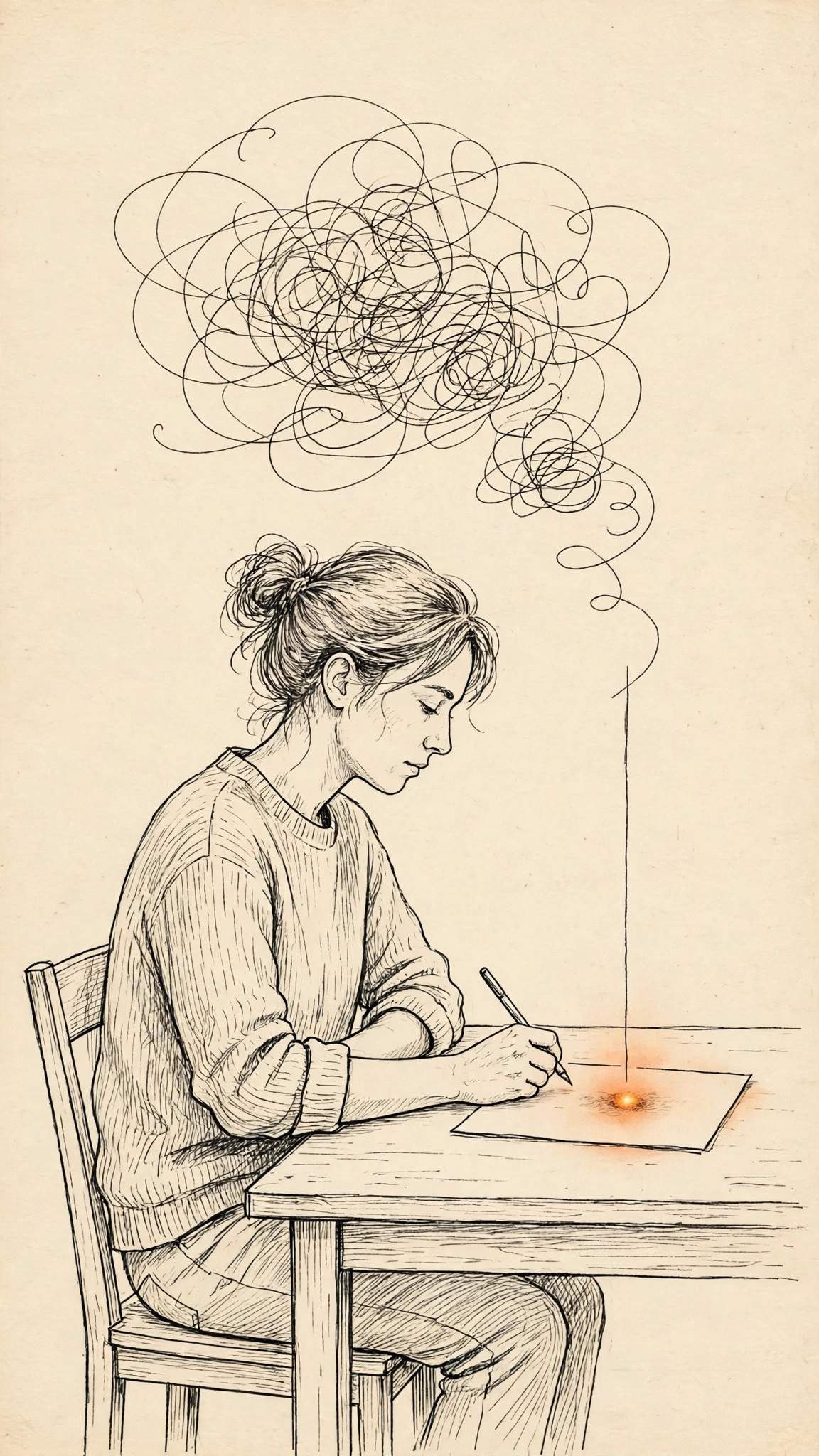
The decision has been circling your head for three days. Take the job or stay. Send the message or wait. Every time you think you have settled it, the loop starts again — same facts, same fears, no new answer. Overthinking is not careful thinking. It is the same thinking, repeated, until the choice feels impossible.
Disclosure: This post contains one affiliate link. If you buy through it, Changenaire may earn a commission at no extra cost to you. As an Amazon Associate, Changenaire earns from qualifying purchases made through links on this page. We only link books we would hand to a friend.
One book worth your money
You don’t need it to start — nothing here replaces the practice itself. But if you want the case made properly, 10% Happier by Dan Harris is the one: Harris went looking for calm as a skeptic and came back with a practice that fits a busy life — ten minutes a day, no incense, no chanting. It is the clearest case for starting small that you will find. (Referral link — we may earn a commission.)
Name the loop out loud
Overthinking has a pattern, and naming it breaks it. Cleveland Clinic’s guide to stopping overthinking describes the usual traps: catastrophizing — picturing the worst case as if it were certain — and all-or-nothing thinking, where a choice is either perfect or a disaster, with nothing in between. When you catch the loop, say what it is: “That is catastrophizing. The worst case is one outcome, not the only outcome.” The thought does not vanish. It loses its grip.
Give the thinking a deadline
A decision without a deadline is a decision that never gets made. Pick a time — tonight at eight, or tomorrow after lunch — and make the call then. The University of Virginia’s advice on thinking less and deciding better puts it another way: instead of running the question around in your head, talk to people who have faced the same choice, and ask yourself what you are learning from the question. The deadline is not a punishment. It is permission to stop rehearsing and start living with a choice.
Choose the one you can live with
Most decisions do not have a right answer. They have an answer you can live with, and one you cannot. Write down the two options and ask one question about each: “If this goes badly, can I recover?” If the answer is yes for both, the choice is smaller than it feels — pick the one that fits the life you want, and let the other one go. A choice you can live with, made today, beats a perfect choice made never.
What not to buy
No decision-making course, no app that promises to choose for you, no book of frameworks. The loop breaks with a pen, a deadline, and one honest question — all of them free. If the worry keeps running your days and your sleep, that is the time to talk to a professional, not a shopping page.
What comes next
This is Self Improvement #026. The series continues the inner work: stillness, movement, time outdoors, and faith without the fine print. Next, we stay still — the quiet hour, and why silence is a skill you can practice.
Name the loop. Set the deadline. Choose, and move on.
Sources
- Cleveland Clinic, “How To Stop Overthinking” (accessed November 2026) — overthinking is an unhealthy habit that causes more stress by focusing on the negative; common traps include catastrophizing and all-or-nothing thinking; a daily worry period and challenging negative thoughts help break the loop.
- University of Virginia, “How to think less – and decide better” (January 23, 2026) — instead of running a question around in your head, talk to people who have faced the same choice and ask what you are learning from the question.
Subscribe for more free step-by-step how-to guides to help you get more things done to grow your business or project everyday.
Email required. Unsubscribe anytime.
Read our Privacy Policy.