
Self Improvement #061: How to Watch the Sunrise on Purpose
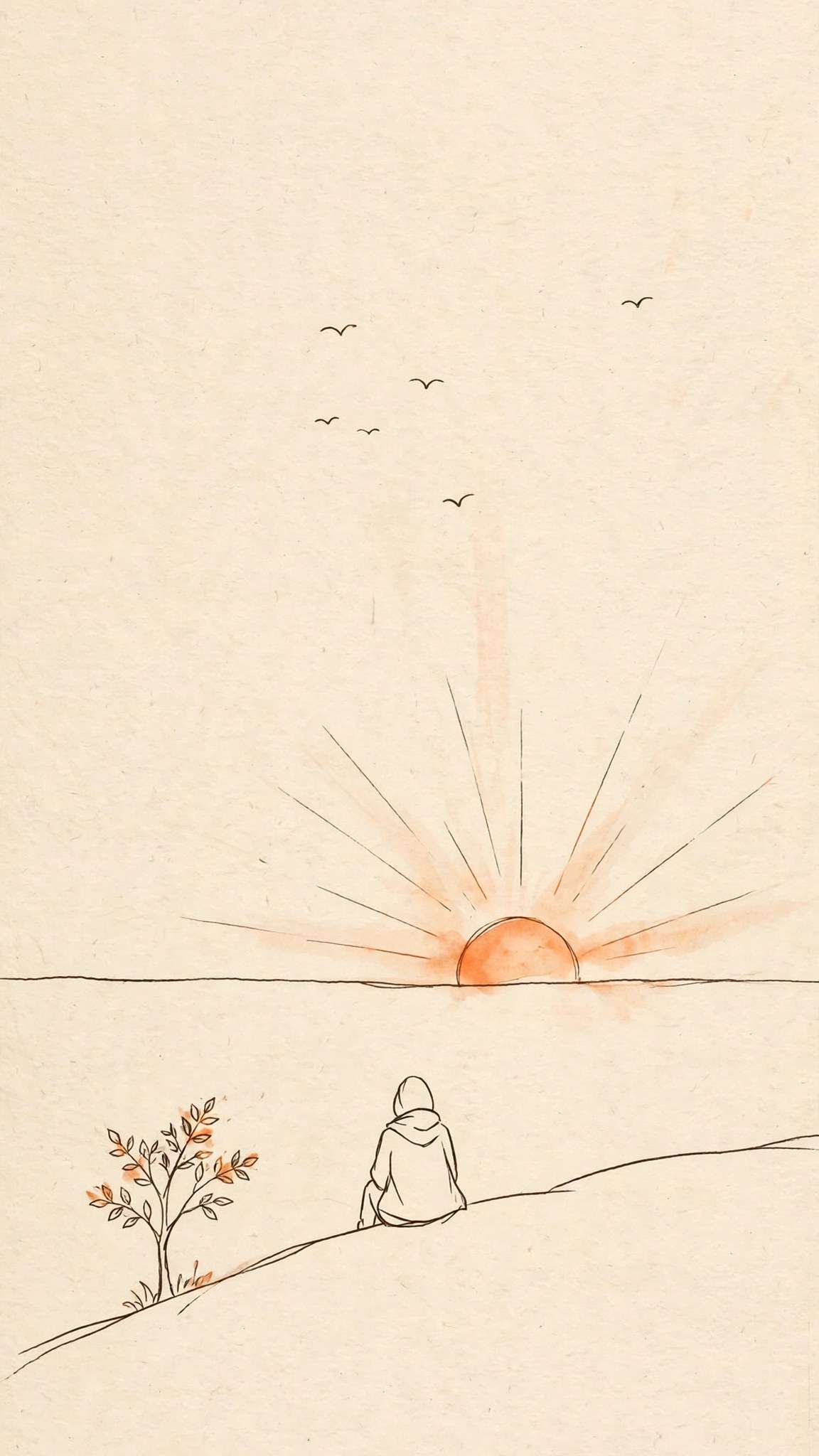
The sun comes up every morning, and most of us miss it — we are inside, already scrolling, already behind. Watching the sunrise on purpose is the smallest possible ceremony: ten minutes, no phone, one sky changing color. It costs nothing, and it sets the day before the day sets you.
Disclosure: This post contains one affiliate link. If you buy through it, Changenaire may earn a commission at no extra cost to you. We only link books we would hand to a friend.
One book worth your money
You don’t need it to start — nothing here replaces the practice itself. But if you want the case made properly, The Nature Fix by Florence Williams is the one: Williams gathers the research on what time outside does to the mind — how it lowers stress, sharpens thinking, and steadies mood. The sunrise is the shortest version of her case: a few minutes outside, on purpose. (Referral link — we may earn a commission.)
First light sets your clock
Your body keeps a roughly 24-hour clock, and light is its strongest signal. The CDC’s National Institute for Occupational Safety and Health explains it plainly: bright morning light shifts the clock earlier, so you get sleepy earlier in the evening and wake up earlier in the morning — and seeing bright light in the morning helps you fall asleep easier at night. The sunrise is the most reliable morning light there is. You do not need to stare at the sun. You need to be outside while it rises, letting the light reach your eyes.
How to watch it
Pick your spot the night before — a porch, a park bench, a window that faces east, the end of your street. Get there a few minutes before the sun clears the horizon, so you see the whole rise, not just the end of it. Leave the phone inside, or in your pocket. Stand or sit still for ten minutes and watch the light change: the gray going gold, the sky warming, the day arriving. Daylight is far brighter than any room: the Sleep Foundation notes that direct sunlight reaches up to 10,000 lux, while even bright office lighting rarely reaches about 500. Ten minutes outside beats an hour under a ceiling light. When the sun is fully up, go inside and start the day — it has already started well.
What not to buy
No sunrise lamp, no app that plays dawn sounds, no special spot you have to drive to. The sun rises wherever you are.
What comes next
This is Self Improvement #061. The series continues the inner work: stillness, movement, time outdoors, and faith without the fine print. Next, we go outside — how to find a quiet spot outside near home, and why five minutes there counts.
One sunrise. Ten minutes. Begin the day.
Sources
- CDC, National Institute for Occupational Safety and Health, “Effects of Light on Circadian Rhythms” (Module 2; accessed November 2026) — bright morning light causes a phase advance (getting sleepy earlier in the evening and waking up earlier in the morning); seeing bright light in the morning helps you fall asleep easier at night.
- Sleep Foundation, “Light and Sleep” (accessed November 2026) — light is one of the strongest regulators of the body’s internal clock; daylight in direct sunlight has up to 10,000 lux, far more intense than even bright office lighting, which rarely reaches about 500 lux.
Subscribe for more free step-by-step how-to guides to help you get more things done to grow your business or project everyday.
Email required. Unsubscribe anytime.