
How to Handle a Client Who Wants a Refund — How-To #056
It lands at 9:04 on a Tuesday. "I want a refund." No hello, no detail — just the demand, sitting at the top of your inbox while you are still holding your coffee. Your stomach drops, and then the pride kicks in: the work was good, the client is wrong, and you are not giving money back for nothing. Both feelings are honest. Neither one is a decision. This post is the decision — five questions, in order, that separate the refunds you should pay from the fights you should win. Because here is the number that changes the whole argument: a refund costs you the sale. A chargeback costs you the sale, plus a $15 fee on Stripe or $20 on PayPal, plus the product you already shipped, plus a mark on your dispute ratio. The cheapest refund is almost always the one you issue yourself.
Disclosure: some links on this page are affiliate links. If you buy through one, Changenaire may earn a commission at no extra cost to you. As an Amazon Associate, Changenaire earns from qualifying purchases made through links on this page. Changenaire has no affiliate relationship with Stripe or PayPal — the fees below are reported from their published pricing and from independent chargeback guides, not from any partnership.
Go deeper (affiliate link — we may earn a commission): Never Split the Difference: Negotiating As If Your Life Depended On It by Chris Voss and Tahl Raz (Amazon Associates link — we may earn a commission) — the FBI negotiator's playbook for hearing what the other side actually wants, including the two moves this post leans on: labeling what the client feels, and getting them to say "that's right." Our full summary is Book Deep-Dive #016: Never Split the Difference. Optional reading; the five questions below stand on their own.
Three questions decide it, and they come in this order: what is the client actually asking for, what did you actually do, and what does each path cost? Answer those three honestly and the pay-or-fight call usually makes itself. Two honest notes before you start. First, the story that prompted this post is a real one — a small-business owner posted in November that a regular customer disputed an order as fraud, and 43 owners upvoted the question of what to do when a client wants a refund — but it is a question from a public thread, not a case we verified ourselves, and the people in it have not had a say here. Second, this is practical guidance for a business decision, not legal advice — if a dispute grows into a legal claim, your lawyer gets the final word. More step-by-step guides in this series live on the Changenaire Blog.
| The situation | Lean pay it | Lean fight it |
|---|---|---|
| The amount | Small — less than an hour of your time is worth | Large enough that losing it hurts for a month |
| Whose fault it is | Yours, or honestly unclear | Theirs — delivered as described, used, then disputed |
| The client | A regular, or someone who will send others | A first-timer who paid, vanished, then disputed |
| Your evidence | Thin — no proof of delivery, no written agreement | Strong — tracking, signatures, messages, a signed policy |
| The clock | The dispute is fresh and a refund still closes it | A chargeback already landed and the fee is already charged |
What is the client actually asking for?
Read the message twice before you answer it. The first read is for your feelings — the sting, the unfairness, the urge to type back immediately. The second read is for the ask. And the ask is rarely just "give me my money back." Sometimes it is "fix this and I will stay." Sometimes it is "I am embarrassed that I bought the wrong thing and I need a graceful exit." Sometimes it is "I am angry and I want someone to hear it." Each of those gets a different reply — a fix, a swap, an apology — and only one of them is a refund.
So reply to the ask, not the tone. Write back within a day, name what you heard — "it sounds like the delivery arrived two days late and the event already passed" — and ask one clarifying question before you offer anything: "Would a replacement by Friday fix this, or do you need the money back?" That sentence does two jobs at once. It shows the client you listened, which is half the dispute, and it tells you whether you are negotiating a refund or solving a problem. Owners who skip this step end up refunding people who would have accepted a fix — and fighting people who only wanted to be heard.
One rule for the whole exchange: never negotiate the refund in the same message where you defend the work. Defending first makes the client dig in; offering first makes you look guilty. Hear them, ask the question, then decide — in that order.
What did you actually do wrong — and can you prove it?
Now check your records before your feelings. Open the agreement, the invoice, the delivery confirmation, the message thread — the paper trail, not your memory of it. What did you promise, in writing? What did you deliver, and when? Did the client sign off, use the product, or come back for more before complaining?
There are only three honest outcomes. You delivered what you promised, and you can prove it — tracking numbers, signed acceptance, messages saying "this is great" before the complaint arrived. That is a fightable case. You delivered something short of what you promised — late, incomplete, not as described — and the records show it. That is a refund, and the sooner you pay it, the cheaper it is. Or the records are thin on both sides: no written scope, no delivery proof, a handshake deal. That is the dangerous middle, and it is where most small owners lose — not because they were wrong, but because they cannot prove they were right. If your records are thin, pay the refund and fix the paperwork. The lesson costs less than the chargeback.
Build the evidence folder while the facts are fresh, whichever way you lean: the agreement, the invoice, the delivery proof, the messages in order, the refund policy the client saw before paying. If this becomes a chargeback, that folder is your entire case — the card company never meets you, never hears your side in person, and decides on paper. A folder built today is a case. A folder built in three weeks, after the deadline notice arrives, is a scramble.
What does the refund really cost you?
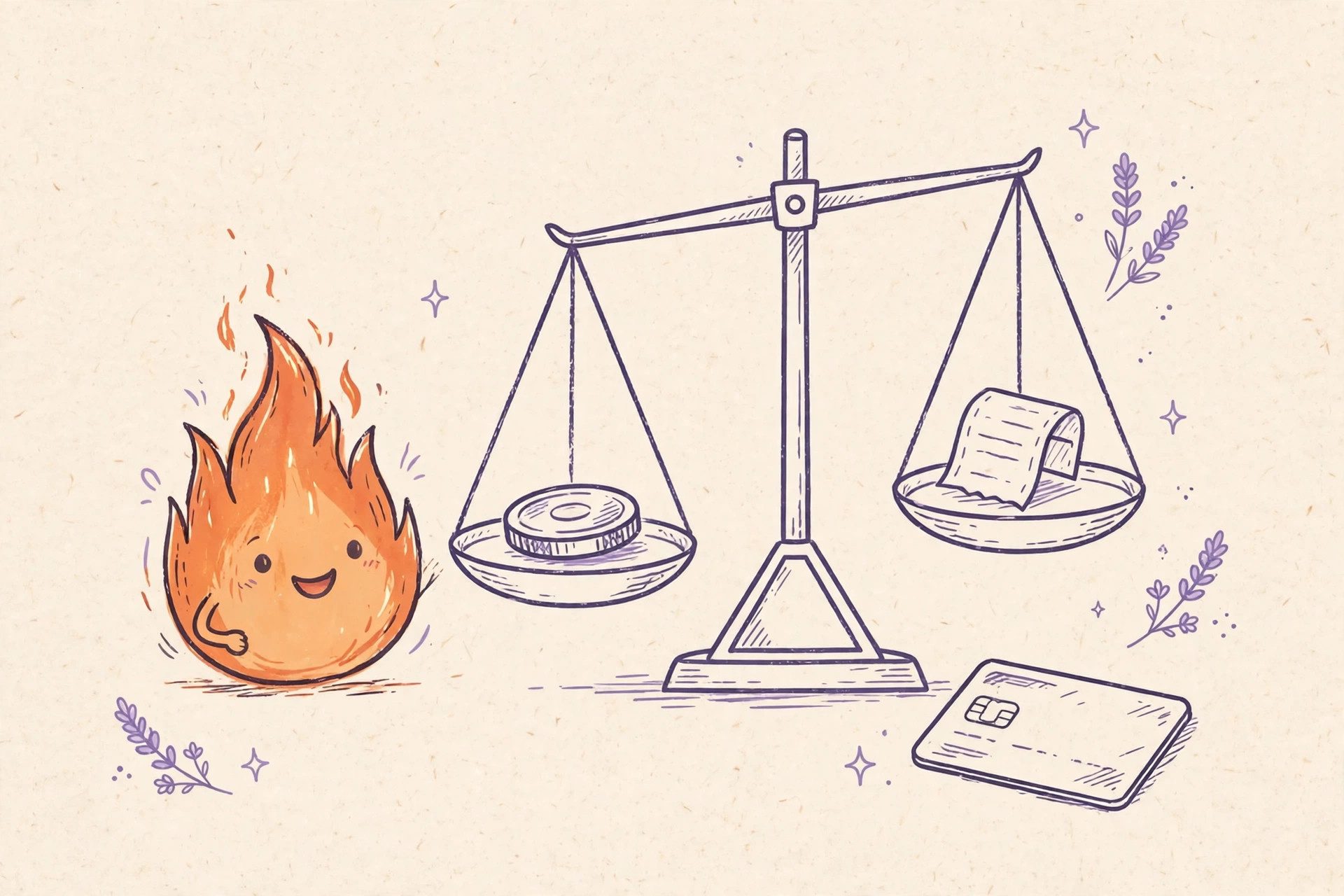
Do the math on both paths, with real numbers, not pride. Take an $80 sale where the product cost you $30 to make or buy. Path one, you refund: you lose the $80. The client may come back, may not — but the bleeding stops at $80, and no bank ever hears about it.
Path two, the client charges back: the card company takes the $80 from your account the day the dispute opens, before you can respond. Stripe adds a $15 dispute fee; PayPal adds $20. The product is already gone — that is the $30, lost either way. So the chargeback costs you $95 to $100 on an $80 sale, plus the hours gathering evidence, plus a mark on your dispute ratio that counts whether you win or lose. And the cardholder has a long time to start all this: generally 120 days from the transaction, or from the expected delivery date, and up to 540 days in some delayed-delivery cases. A refund issued today closes a door that stays open for four months.
There is one more cost, and it is the one owners miss: Visa's dispute monitoring program starts flagging merchants at a 0.9% dispute ratio once they pass 100 disputes in a month. A small shop will rarely reach that level — but the ratio is a reminder that the card networks keep score, and every dispute lands on your record, won or lost. The refund you issue yourself never does.
When is paying the refund the right call?
Pay it when the amount is small, the fault is yours, or the client is worth more than the sale. Small means the refund costs less than the hour you would spend fighting it — if your time is worth $50 an hour and the fight takes two hours, a $60 refund is already cheaper than winning. Fault means you missed the deadline, shipped the wrong thing, or described it wrong. Worth means a regular customer, a referral source, or someone whose review your next ten customers will read.
Pay it fast, and pay it in full. A partial refund offered after a week of arguing reads as an admission and an insult at the same time. A full refund within a day reads as a business that stands behind its work. Say so in plain words — "You are right, we missed the mark, here is your money back" — and mean it. Then ask, once, what would have made it right, and write the answer down. That answer is worth more than the refund: it is the fix that stops the next one.
And keep the receipt. The refund confirmation, the email, the transaction ID — filed in the same folder as the evidence. A refunded payment almost never comes back as a chargeback, because there is nothing left to dispute. But "almost never" is not "never," and the receipt is what proves the money went back.
When do you fight — and how do you fight clean?
Fight when the claim is false. The order arrived, the tracking proves it, and the client still called it fraud. The service was delivered as described, the client used it, and now wants it free. The policy was shown before payment, the client agreed to it, and the complaint is buyer's remorse wearing a fraud costume. Those are winnable fights — and they are worth fighting, because paying a false claim teaches the market that your checkout is an ATM.
Fight with evidence, not emotion. The card company decides on paper, and the paper that wins is boring: the agreement the client signed, the delivery confirmation with the date, the messages where the client said the work was good, the refund policy as it appeared at checkout. Write the response in plain sentences, in order, with the documents attached. No adjectives about the client. No story about how hard you worked. Just: this is what was promised, this is what was delivered, this is the proof.
And watch the clock, because your side of it is short. Visa gives merchants 30 days to respond and Mastercard 45 — but your processor sets its own, earlier deadline, often 7 to 21 days, to leave itself time to file. The due date on your case is the real deadline, not the network's outer limit. Start the day the notice arrives. A missed deadline is an automatic loss, no matter how right you are.
Questions people ask
Can a client still charge back after I refund them?
Almost never for the same payment. Once you refund the full amount, there is nothing left to dispute — the chargeback has no money to take. What can still happen is a second, separate dispute if the client claims the refund never arrived, which is why you keep the refund receipt and the confirmation email. Refund first, keep the proof, and the chargeback door closes.
What if the client threatens a bad review unless I refund?
Treat the threat and the refund as two separate questions. Decide the refund on the facts — what you delivered, what you promised — and answer the review threat by not negotiating with it in writing. If you do refund, refund because the facts say so, not because of the threat. If you do not refund, say so plainly, once, and stop replying to the pressure. Most review platforms remove reviews that are conditioned on a refund, so keep the messages.
Do I have to refund if my policy says no refunds?
A no-refunds policy protects you against buyer's remorse, not against a broken promise. If you delivered what you said you would, the policy usually holds — and a card company will look at the policy the client agreed to. If you did not deliver what you promised, the policy will not save you: the card company decides on the facts, not your terms page. A policy is a shield for the honest sale, not a wall around a bad one.
How long does a client have to dispute a charge?
Cardholders generally have 120 days from the transaction — or from the expected delivery date when the goods or services were due later — to file a dispute, and up to 540 days in some delayed-delivery cases. That is why a refund request can arrive months after the sale. Your side of the clock is much shorter: Visa gives merchants 30 days to respond and Mastercard 45, and your processor usually sets an even earlier deadline. Check the due date on the case itself, not the network's outer limit.
What comes next
Today: answer the message, ask the one clarifying question, and pull your evidence folder together. This week: decide by the table above — pay it fast when the facts say pay, fight it clean when the facts say fight — and file the receipt either way. Next month: write the refund policy you wish you had already had, put it where clients see it before they pay, and start keeping delivery proof on every order without exception. The goal was never to win every dispute. It was to stop paying for the same lesson twice. How to Get Paid on Time, Every Time (How-To #049) is where the money side of this gets steady — and How to Price Your Product or Service (How-To #018) is where the margin that absorbs a refund comes from.
Sources
Every figure in this post was checked against the sources below in November 2026. Fees and time limits change by network and by processor — confirm the numbers on your own processor's page before you act. This post is practical business guidance, not legal advice.
- Cardholder filing window of 120 days (up to 540 days for some delayed-delivery cases); merchant response windows of 30 days for Visa and 45 days for Mastercard; processor deadlines often shorter (7 to 21 days in practice) — Chargeflow, Visa Chargeback Rules 2026, Chargeback Gurus, A Merchant's Guide to Chargeback Time Limits, and FloPay, Chargebacks Explained. Checked November 2026.
- Dispute fees: $15 on Stripe (US), $20 on PayPal for card chargebacks, $15 on Shopify Payments and Braintree — Tagada, Merchant Chargebacks: Process, Fees and Ratio Limits (2026). Checked November 2026.
- Visa Dispute Monitoring Program standard threshold: 0.9% dispute ratio with at least 100 disputes in a month — FloPay, Chargebacks Explained. Checked November 2026.
- Demand evidence: r/smallbusiness, "Client wants a refund" (43 upvotes, 77 comments, November 17, 2026) and "Regular customer disputed an order as fraud" (November 18, 2026). Recorded in
hidden_files/community-intel-2026-11-18.md. - Chris Voss with Tahl Raz, Never Split the Difference: Negotiating As If Your Life Depended On It (Harper Business, 2016).
Subscribe for more free step-by-step how-to guides to help you get more things done to grow your business or project everyday.
Unsubscribe anytime.