
Self Improvement #023: How to Fix Your Posture at a Desk
By three in the afternoon your neck aches, your shoulders are up around your ears, and your lower back has started its daily complaint. The chair did not do that. The way you sit in it did — and it can improve in one afternoon.
Health note: This piece is general information, not medical advice. It describes gentle techniques for healthy adults. Talk to a doctor before starting a new exercise or breathing routine — especially if you have a health condition, an injury, or pain that keeps coming back. If anything hurts, stop.
Disclosure: This post contains one affiliate link. If you buy through it, Changenaire may earn a commission at no extra cost to you. As an Amazon Associate, Changenaire earns from qualifying purchases made through links on this page. We only link books we would hand to a friend.
One book worth your money
You don’t need it to start — nothing here replaces the practice itself. But if you want the case made properly, Yoga Anatomy by Leslie Kaminoff & Amy Matthews is the one: Kaminoff and Matthews show, muscle by muscle, how the body is meant to sit, stand, and move — the clearest drawings of posture and breath you will find. Read it, and the desk setup above starts to make sense in your own body. (Referral link — we may earn a commission.)
Set the chair first
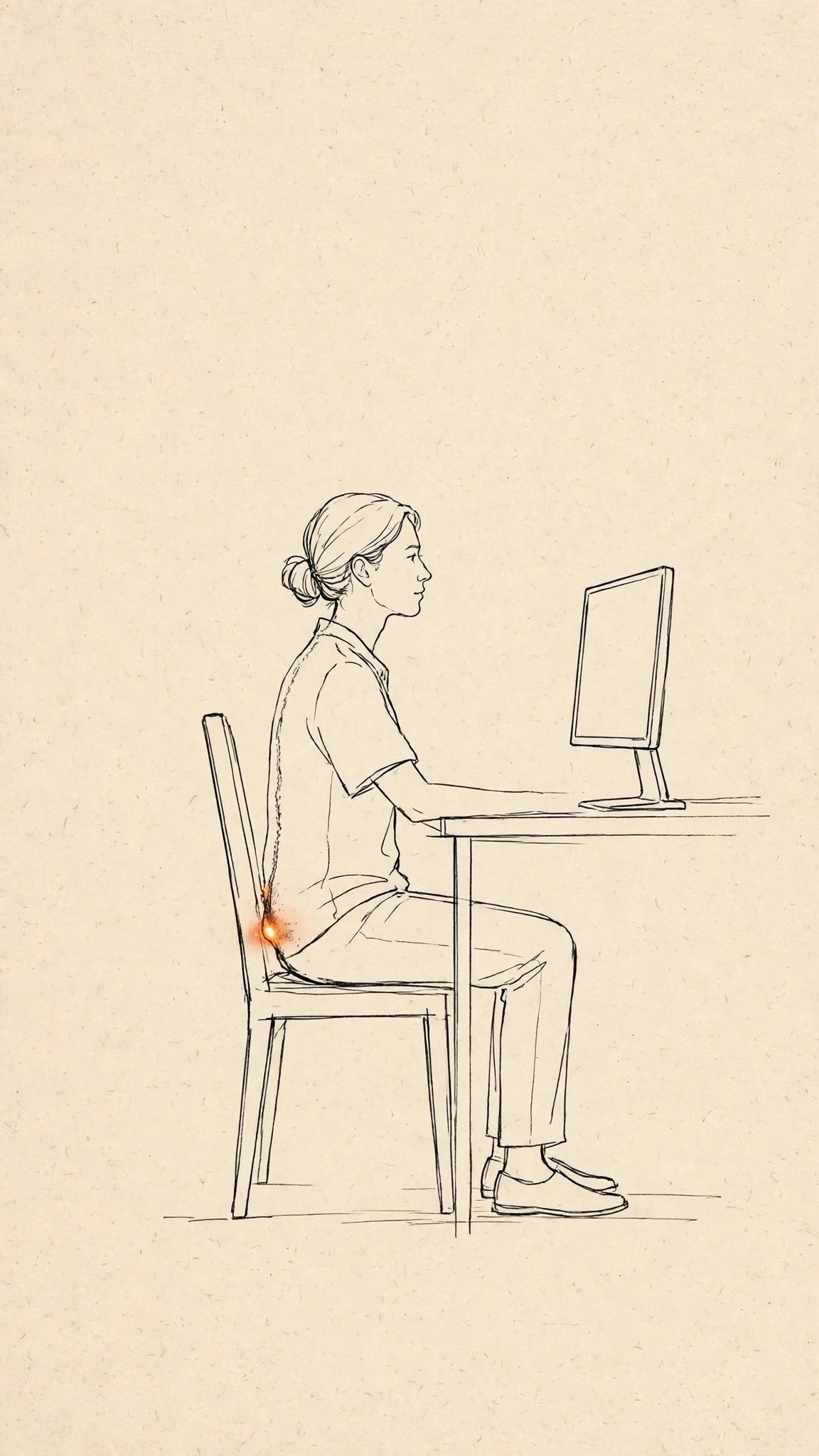
Good posture at a desk starts with the chair, not with willpower. Harvard Health explains why good posture matters: sitting tall, with your back supported and your shoulders relaxed, takes the load off the muscles that ache by three in the afternoon. Sit all the way back in the chair, so the backrest does the holding. Feet flat on the floor, knees level with your hips. If your feet do not reach, put a book or a box under them.
Set the screen second
The screen should sit at eye level, about an arm’s length away, so you are looking straight ahead instead of down. The CDC and NIOSH guide to working from home puts it the same way: monitor at arm’s length with the top at or below eye level, feet flat with hips and knees at or beyond 90 degrees. A stack of books under a laptop works fine. Most people notice the difference quickly.
The thirty-minute reset
Even a good setup goes stale if you never move. Every thirty minutes, stand up. Roll your shoulders, big and slow, forward and back. Walk to get water. Stretch your arms up and let your chest open. You are not taking a break from the work. You are taking a break from the slump — and the slump is what hurts.
What not to buy
No posture brace, no special chair, no standing-desk conversion — not yet. Start with the setup: chair, screen, feet. If the ache is still there after a week of sitting right and moving every half hour, that is the time to ask a doctor or a physical therapist, not a shopping page.
What comes next
This is Self Improvement #023. The series continues the inner work: stillness, movement, time outdoors, and faith without the fine print. Next, we move — strength without a gym: the bodyweight basics, and why your own weight is the only equipment you need.
Feet flat. Screen at eye level. Shoulders down. Start this afternoon.
Sources
- Harvard Health Publishing, “Why good posture matters” (accessed November 2026) — sitting tall with the back supported and shoulders relaxed takes the load off aching muscles.
Start with the screen. The CDC's home-office guidance (2020, checked November 2026) puts an external monitor about an arm's length away, with the top of the monitor at or below eye level — and says to use a book or a box to raise it if needed. That one change does more for a forward head than any exercise, because the head follows the eyes. If the screen sits low, the head goes down to meet it, all day, every day. Raise it with what you have: CDC/NIOSH, Working from Home.
Subscribe for more free step-by-step how-to guides to help you get more things done to grow your business or project everyday.
Email required. Unsubscribe anytime.
Read our Privacy Policy.