
Self Improvement #024: Why Walking in the Cold Makes You Tougher
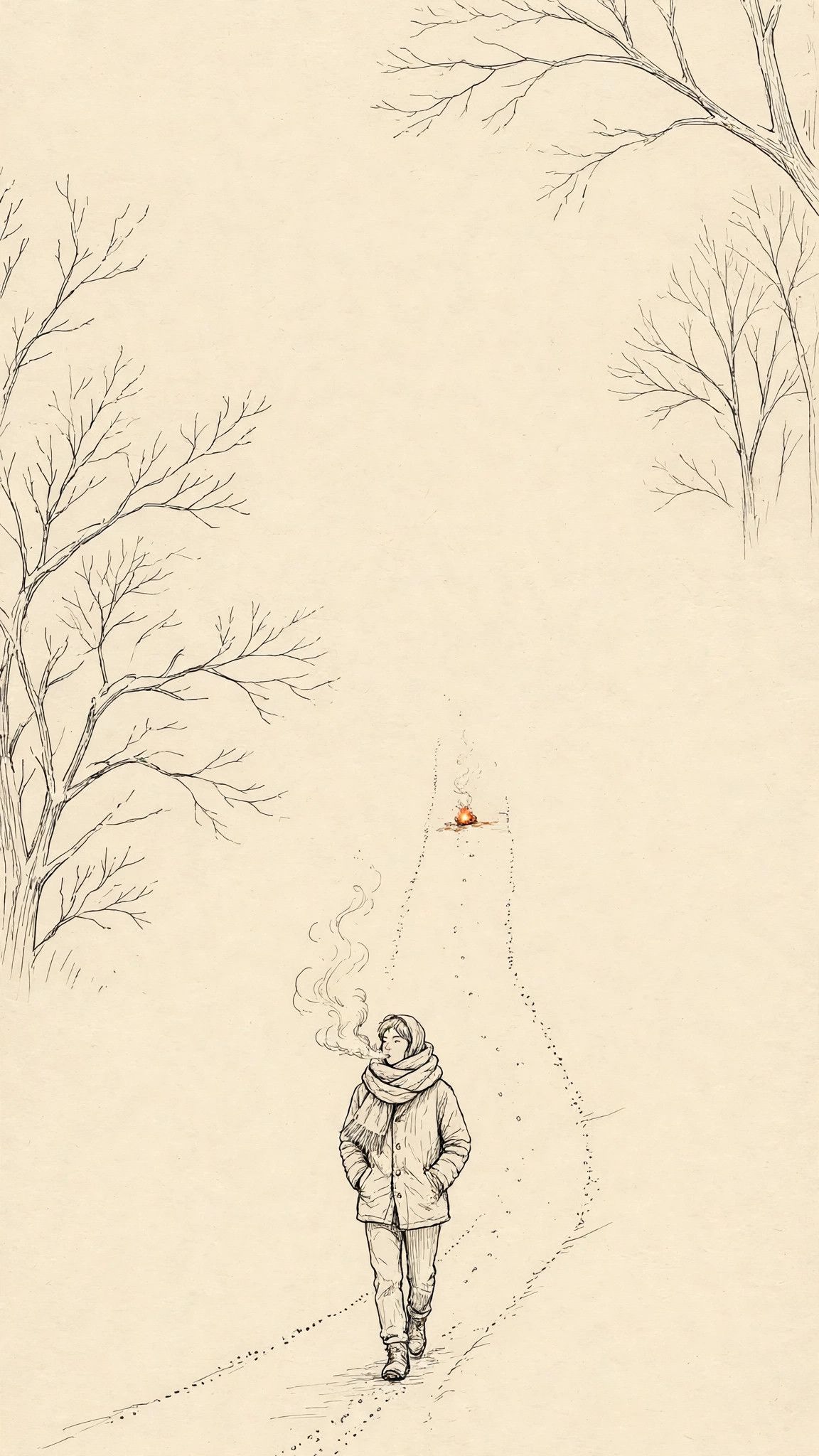
The cold morning looks like a reason to stay in. It is the opposite. Ten minutes outside in a warm coat does something a warm room cannot: it wakes you up, steadies your mood, and reminds you that discomfort is survivable — and that you are the one who survived it.
Health note: This piece is general information, not medical advice. It describes gentle techniques for healthy adults. Talk to a doctor before starting a new exercise or breathing routine — especially if you have a health condition, an injury, or pain that keeps coming back. If anything hurts, stop.
Disclosure: This post contains one affiliate link. If you buy through it, Changenaire may earn a commission at no extra cost to you. As an Amazon Associate, Changenaire earns from qualifying purchases made through links on this page. We only link books we would hand to a friend.
One book worth your money
You don’t need it to start — nothing here replaces the practice itself. But if you want the case made properly, Braiding Sweetgrass by Robin Wall Kimmerer is the one: Kimmerer writes about the natural world as a teacher — plants, seasons, and weather as lessons, not scenery. Read it, and the cold walk stops being a chore and starts being a conversation. (Referral link — we may earn a commission.)
Dress for it, then stop thinking about it
The cold is only a punishment when you are dressed for the couch. Harvard Health’s guide to layering for a winter walk lays out the system: a light layer next to the skin, a warm middle layer, and a waterproof outer layer — and dress for a temperature about ten degrees warmer than the forecast, because you will generate your own heat as you walk. A warm coat, a hat, gloves, and warm socks are the whole kit. Once you are dressed for it, the cold is weather, not an enemy.
Ten minutes is enough
You do not need an hour. Walk briskly for ten minutes, breathe through your nose, and let your body warm itself up. Harvard Health’s safety tips for exercise make the same point in the other direction: take five to ten minutes to warm up first, and dress properly for cold-weather workouts — layers you can peel off as you warm up, and do not forget the gloves. Ten minutes out the door, ten minutes back. That is a walk, and it counts.
Why it makes you tougher
Toughness is not a feeling. It is a record. Every cold morning you walk anyway is one more piece of proof that discomfort does not run your day. The walk does not need to be heroic. It needs to happen. By the third morning, the cold is not a wall anymore. It is a door you know how to open.
What not to buy
No heated jacket, no special boots, no cold-weather gear set. A coat you already own, a hat, and gloves will do. The walk is the point, not the kit — and the kit you already have has survived every winter so far.
What comes next
This is Self Improvement #024. The series continues the inner work: stillness, movement, time outdoors, and faith without the fine print. Next, we go outside — how to read the weather like a farmer, and why the sky tells you more than the forecast does.
Cold air. Warm coat. Ten minutes out the door. Start tomorrow morning.
Sources
- Harvard Health Publishing, “No excuses: How to layer up for walking in cold weather” (accessed November 2026) — a light layer next to the skin, a warm middle layer, and a waterproof outer layer; dress for a temperature about ten degrees warmer than the forecast.
- Harvard Health Publishing, “10 Tips for Exercising Safely” (accessed November 2026) — take five to ten minutes to warm up, and dress properly for cold-weather workouts, layers you can peel off, gloves included.
Subscribe for more free step-by-step how-to guides to help you get more things done to grow your business or project everyday.
Email required. Unsubscribe anytime.
Read our Privacy Policy.