
Traction: Stop Running Your Business on Nerves — Book Deep-Dive #017
Disclosure: some links on this page are affiliate links. If you buy through one, Changenaire may earn a commission at no extra cost to you. As an Amazon Associate, Changenaire earns from qualifying purchases made through links on this page.
Monday morning. Forty-seven unread emails. A supplier who needs an answer today, a customer who needed one yesterday, and a meeting at ten that will run long and decide nothing. You are the whole operating system — the memory, the schedule, the tiebreaker, the fire department — and the business only runs as well as your nerves hold up that week. Gino Wickman opens Traction: Get a Grip on Your Business (Amazon Associates link — we may earn a commission), first published in 2011 and expanded in 2012, with one question: do you have a grip on your business, or does your business have a grip on you? His answer is the Entrepreneurial Operating System — EOS — a simple set of tools built from years of running real companies, not from theory. More than 2 million copies later, it is still the closest thing to an owner’s manual for a small business: six parts, one weekly rhythm, no guesswork.
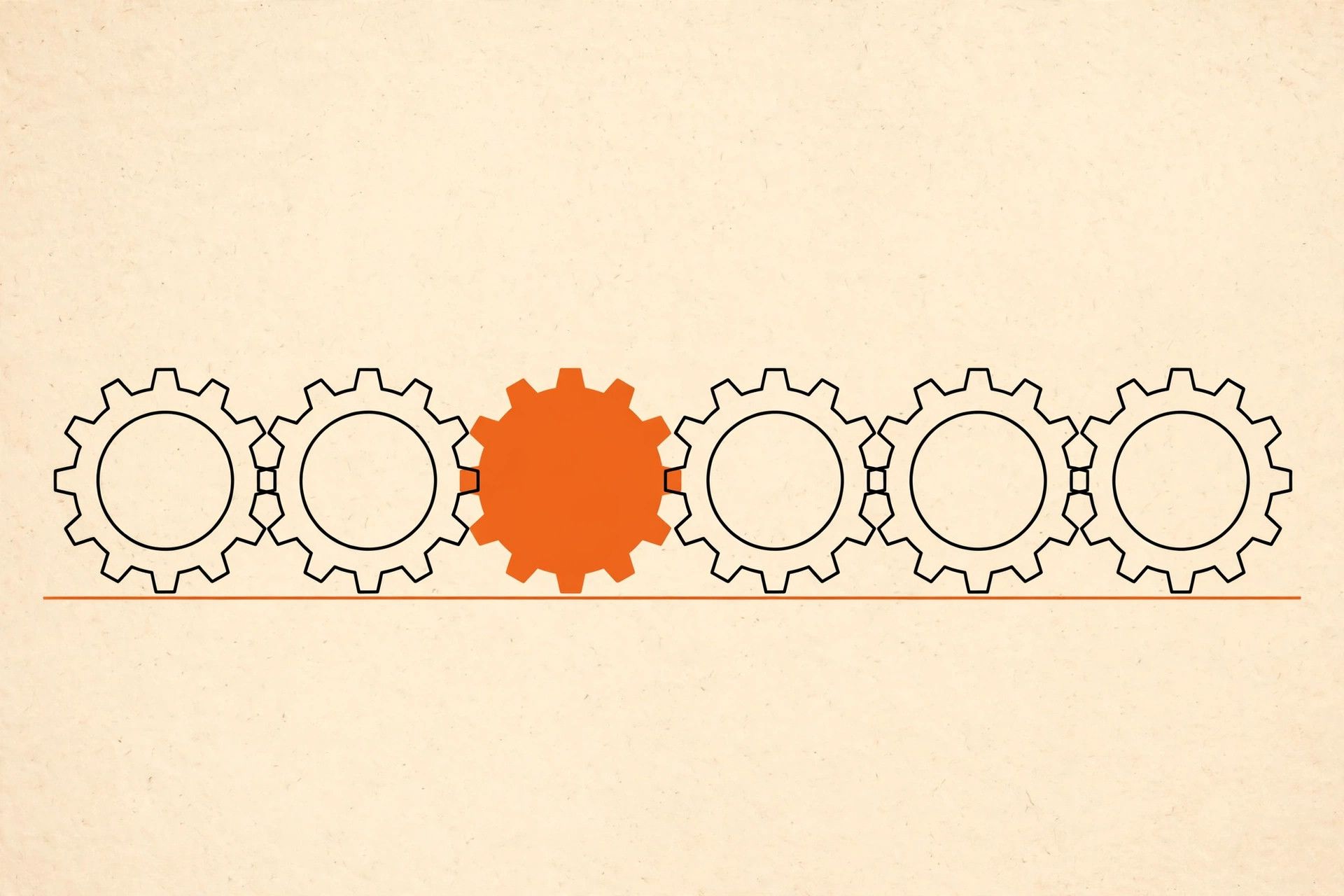
Here’s the book in one line: most small businesses don’t stall for lack of effort — they stall because the founder is the whole operating system, and one person can only hold so much before things start slipping, so Wickman gives you a system that runs on a weekly rhythm instead of on your nerves.
This is the seventeenth deep-dive in our Book Deep Dives and Recommendations For Entrepreneurs series, and it sits naturally next to the last two. The Hard Thing About Hard Things (#015) asked what to do when the business is in trouble and the easy answers are gone. Never Split the Difference (#016) asked how to get to a yes that holds when the other side has every reason to say no. This one asks the question underneath both: how do you run the business week to week — the meetings, the numbers, the people, the problems — so the hard calls and the hard conversations stop piling up in the first place?
Key takeaways
- Six parts, not one trick — Vision, People, Data, Issues, Process, and Traction. Strengthen all six, because the weakest part caps the rest.
- Rocks: three to seven priorities per 90 days, each with one owner and a clear finish line, beat a 50-page annual plan nobody opens.
- A Scorecard of five to fifteen numbers, checked every week, tells you the truth before your gut does — and before the bank balance does.
- The Level 10 Meeting: one 90-minute meeting a week, same agenda, same slot — and the hour in the middle is spent solving issues, not discussing them.
- Right person, right seat: every seat needs someone who gets it, wants it, and has the capacity for it — and the Accountability Chart makes the gaps visible instead of polite.
Six parts, one system — and you’re probably missing three
Wickman’s first move is to stop treating a business like one big problem. It’s six parts, and he names them plainly: Vision — everyone on the same page about where the business is going and how it gets there. People — the right people in the right seats. Data — a handful of numbers that tell you the truth every week. Issues — a list of what’s actually wrong, dealt with instead of dodged. Process — the handful of core processes written down so the business doesn’t live in one person’s head. Traction — the discipline to actually do the work, on a rhythm, instead of starting strong and fading by February.
The part founders skip is the one that explains their week. Vision usually exists — it’s in the founder’s head, in a pitch deck, in a mission statement on the wall. What’s missing is the rest of the machine. Nobody wrote down the process for onboarding a customer, so every new hire invents it. The issues list lives as a knot in the founder’s stomach instead of on paper. And traction — the doing — depends on whoever shouts loudest that morning. Wickman’s test is simple: rate each of the six parts from one to ten. Most businesses score high on vision and low on everything else, and the low scores are the ceiling. Fix the weakest part first. That’s where the week gets easier.
The People part deserves its own look, because it’s where small businesses quietly bleed. Wickman’s tool is the Accountability Chart: every seat in the business, drawn as a box, with one name in each box. Not job titles — seats, defined by the five or so things that seat is accountable for. Then the People Analyzer: for each person, three questions. Do they get it — do they actually understand the job? Do they want it — do they genuinely want to do it, not just tolerate it? Do they have the capacity — the time, the skill, the headroom — to do it well? Get it, want it, capacity: GWC. One honest no is a conversation, not a verdict. Two no’s, and the seat is wrong for the person, or the person is wrong for the seat — and pretending otherwise is how a founder ends up doing someone else’s job on top of their own.
Rocks: the 90-day promise that beats the annual plan
Every founder knows the annual plan. It gets written in January, admired for a week, and found again in December, mostly undone. Wickman replaces it with Rocks: three to seven priorities for the next 90 days, no more. Each Rock has one owner and a finish line you can point at — done or not done, no partial credit, no “we made progress.” Launch the new checkout page. Hire the second driver. Cut the supplier list from nine to four. A Rock is big enough to matter and small enough to finish, and the 90-day window is the whole trick: a year is too long to stay focused, a week is too short to finish anything real, and 90 days is the stretch where a team can push hard, then stop, look up, and pick the next set.
The Vision/Traction Organizer — the V/TO — is where the Rocks live. It’s two pages, and Wickman is stubborn about the length: core values, core focus, a ten-year target, a three-year picture, a one-year plan, and this quarter’s Rocks. Two pages, because a plan nobody can hold in their head isn’t a plan — it’s a binder. The discipline is in the choosing. A business with twelve Rocks has no Rocks; it has a wish list. Three to seven forces the argument that matters: what are we NOT doing this quarter? That argument, had honestly every 90 days, is most of what “focus” actually means.
The Scorecard: a dozen numbers that tell the truth weekly
Here’s the tool most founders resist, and the one that changes the week fastest. The Scorecard is five to fifteen numbers, picked once, checked every week, on the same day, by the same person. Not a dashboard with forty charts. A dozen numbers that predict the business instead of reporting on it: leads this week, quotes sent, orders shipped, cash in the bank, customer complaints, hours billed. Wickman’s rule is that a number earns its place on the Scorecard only if someone owns it and only if it tells you something in time to act. A number you look at once a month is history. A number you look at every week is a steering wheel.
Why weekly? Because founders usually find out about problems from the bank balance, and by then the problem is a month old. A Scorecard catches the dip while it’s still a dip: leads fell two weeks in a row, quotes are up but closes are down, one customer is quietly becoming half the revenue. The numbers don’t fix anything by themselves. They do something quieter and more useful — they take the argument out of the room. Nobody has to feel that sales are slowing down. The Scorecard says so, in ink, and the meeting can get on with what to do about it.
The Level 10 Meeting: ninety minutes that end meeting sprawl
And then the meeting. Founders hate meetings because most meetings are drift — no agenda, no ending, no decisions. Wickman gives one meeting a spine and kills the rest. The Level 10 Meeting runs 90 minutes, same time, same agenda, every week: five minutes of good news, five on the Scorecard, five on Rock progress, five on to-dos, then a full hour on issues. Not updates — issues, the three or so that matter most, solved with IDS: Identify the real issue, Discuss it once and properly, Solve it with a to-do, an owner, and a date.
The ending is the part that makes it work. Everyone rates the meeting from one to ten, out loud, and a team averaging under eight fixes the meeting itself — shorter, sharper, fewer people in the room. The rating keeps the meeting honest the way the Scorecard keeps the business honest: nobody has to argue about whether the meeting was useful, because the number is on the table. And the rule that matters most: issues don’t leave the room unsolved. A problem discussed three weeks in a row without a decision isn’t a discussion — it’s a habit. IDS breaks the habit by forcing the third step. Identify, discuss, solve. Then move on.
Use it this week
First, build a starter Scorecard: write down the ten numbers that matter most to the business — leads, quotes, orders, cash, complaints, whatever tells the truth about your week — and check them every Monday before you open email. Second, pick your three Rocks for the next 90 days, write each one as a sentence with a finish line, and put one name next to each. Third, run one Level 10 Meeting this week, even if the team is just you and one other person: same agenda, 90 minutes, and spend the hour on your top three issues with IDS — identify, discuss, solve — and don’t leave the room without an owner and a date on each one. Fourth, draw your Accountability Chart on one page: every seat, one name in each box, and find the seat with two names or no name — that’s the gap doing quiet damage. Fifth, run GWC on one role that frustrates you: does the person get it, want it, and have the capacity for it? One honest no means a conversation this week, not a hope that it sorts itself out.
Who should skip this book
If you want a book about ideas — a big theory of business, a story that inspires you and sends you back to the same chaos on Monday — this isn’t it, and Wickman doesn’t pretend it is. This is a manual: checklists, agendas, charts, and a system you run every week. If you’re a solo freelancer with no team, no plans to hire, and no one to meet with, half the tools need more than one chair — take the Scorecard and the Rocks and leave the Accountability Chart for later. Company of One (#010) is the better read for the week you’re staying small on purpose. And if your business is already running on a system that works — numbers checked weekly, meetings that end with decisions, everyone clear on their seat — you’ll nod along and change nothing. For everyone else, the ones whose week still runs on their nerves, this is the book that hands the business a spine.
One honest note before you buy: the book is plain to the point of dry — Wickman writes like an operator, not a storyteller, and the tools repeat across chapters because they’re meant to be used, not admired. Don’t read it for the prose. Read it with a pen, build the Scorecard as you go, and judge it by what your Monday looks like next month.
Questions people ask
What are the six key components in Traction?
Vision, People, Data, Issues, Process, and Traction. Wickman’s point is that a business is a system of six parts, and the weakest part caps the rest — a clear vision means nothing if the wrong people are in the wrong seats, and a great team still stalls if nobody tracks the numbers. The book gives you a tool for each part: the Vision/Traction Organizer for vision, the Accountability Chart and People Analyzer for people, the Scorecard for data, IDS for issues, documented processes for process, and Rocks plus the weekly meeting for traction.
What is a Rock in Traction?
A Rock is one of the three to seven most important things the business must get done in the next 90 days. Each Rock has one owner and a clear done-or-not-done finish line — no vague goals, no shared ownership. Wickman borrows the 90-day world from the way real businesses actually run: a year is too long to stay focused, a week is too short to finish anything big, and 90 days is the stretch where a team can push hard and then stop, look up, and pick the next set. Rocks are how the vision turns into work on a calendar.
What is the Level 10 Meeting in Traction?
The Level 10 Meeting is Wickman’s 90-minute weekly meeting, run on the same agenda every week: five minutes of good news, five on the Scorecard, five on Rock progress, five on to-dos, then a full hour solving the week’s top issues with IDS — Identify, Discuss, Solve. The meeting ends with everyone rating it from 1 to 10, and a team that averages below 8 fixes the meeting itself. The point is that most meetings fail because they have no spine; give one meeting a fixed shape and the same slot every week, and the issues that used to drag on for months get decided in the room.
Is Traction only for bigger companies, or does it work for a small team?
Wickman built EOS for entrepreneurial companies with roughly 10 to 250 people, and he says so plainly — the Accountability Chart and the weekly meeting assume there is a team to run them with. But a solo founder or a team of three can still use the heart of it without hiring anyone: the Scorecard, the Rocks, the 90-day rhythm, and a weekly meeting with yourself or your one partner. What doesn’t scale down is the parts that need more than one chair. If you’re alone and plan to stay alone, take the tools and skip the org chart.
See it on Amazon → (Amazon Associates link — we may earn a commission)
Read this next: Get A Grip by Gino Wickman and Mike Paton — the companion fable: a fictional company, Swan Services, spends a year putting EOS to work, and you watch the tools from this book survive contact with real people, real resistance, and a real payroll. Traction is the manual; Get A Grip shows you what implementation actually feels like. (Amazon Associates link — we may earn a commission)
From the Book Club shelf: browse all twenty-six picks.
Sources
Figures in this guide are as of November 2026 unless noted.
- Amazon — Traction: Get a Grip on Your Business — by Gino Wickman; BenBella Books, expanded edition, April 3, 2012; 246 pages; ISBN 9781936661848; the Entrepreneurial Operating System (EOS) and its six key components.
- EOS Worldwide — the Entrepreneurial Operating System — the home of EOS: the six key components, the Scorecard, Rocks, and the Level 10 Meeting.
- Target — Traction by Gino Wickman — over 2 million copies sold; EOS built from real-world implementation in more than 100 companies; the six key components of the business.
- Publishers Weekly — Get A Grip: Your Journey to Get Real, Get Simple, and Get Results — Gino Wickman and Mike Paton; BenBella, 2012; ISBN 978-1-937856-08-3; the EOS fable of Swan Services.
- Simon & Schuster — Get A Grip — Gino Wickman and Mike Paton; published October 30, 2012; the story of Swan Services resolving its issues by implementing EOS.
- Changenaire Book Club — The Books — our shelf note on the book: Wickman built a simple operating system for running a small business — six parts that turn a company that runs on the founder’s nerves into one that runs on a weekly rhythm.
Subscribe for more free step-by-step how-to guides to help you get more things done to grow your business or project everyday.
Unsubscribe anytime.