
Good to Great: The Leap Is Slow, Boring, and Decided Long Before Anyone Notices — Book Deep-Dive #018
Disclosure: some links on this page are affiliate links. If you buy through one, Changenaire may earn a commission at no extra cost to you. As an Amazon Associate, Changenaire earns from qualifying purchases made through links on this page.
One thousand four hundred and thirty-five companies. That is where Jim Collins started. His team looked at every company that had ever appeared in the Fortune 500, and asked a plain question: which of these went from good results to great ones — and stayed great for fifteen years? Eleven made the cut. Eleven out of 1,435. And after the leap, those eleven beat the general stock market by an average of seven times over fifteen years. The book is Good to Great: Why Some Companies Make the Leap... and Others Don’t (Amazon Associates link — we may earn a commission), published in 2001, and it has sold more than four million copies since — because the answer Collins found is the opposite of what most business books sell. There was no single move. No hero moment. No magic product. The leap came from disciplined people, disciplined thinking, and disciplined action, repeated year after year, until the wheel turned on its own.
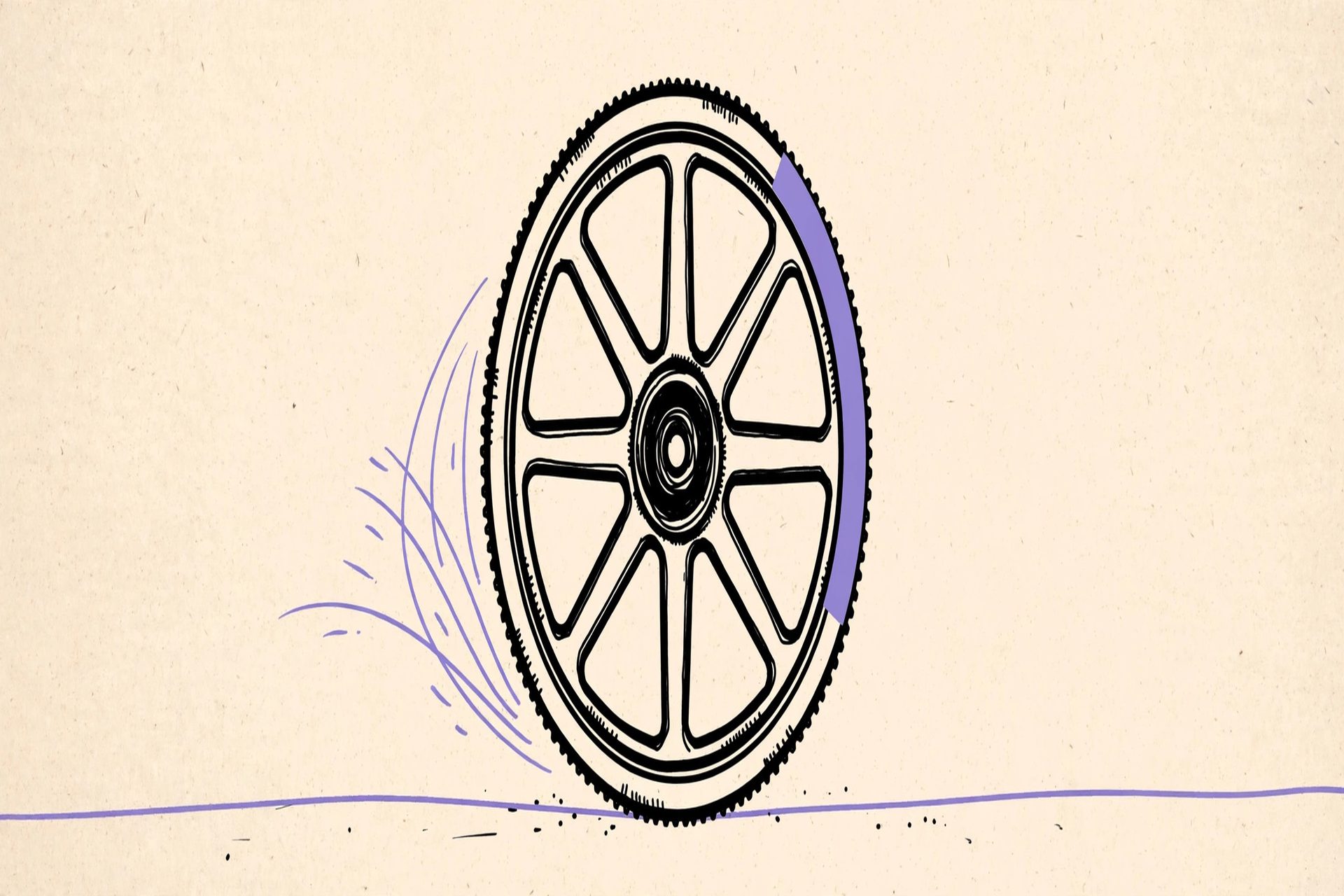
Here’s the book in one line: great companies are not built by one brilliant decision — they are built by getting the right people first, telling the truth about where the business stands, picking one thing to be the best at, and then pushing the same wheel, in the same direction, until momentum does the heavy lifting.
This is the eighteenth deep-dive in our Book Deep Dives and Recommendations For Entrepreneurs series, and it sits naturally next to the last two. Never Split the Difference (#016) asked how to get to a yes that holds when the other side has every reason to say no. Traction (#017) asked how to run the business week to week so the problems stop piling up. This one asks the question underneath both: what actually separates the businesses that make the leap from the ones that stay good — and how do you know if yours is one of them?
Key takeaways
- First who, then what — get the right people on the bus before you decide where to drive it. The wrong hire costs more than the wait.
- Level 5 leaders are quiet and stubborn: ambitious for the company, not for themselves — quick to credit the team, slow to take credit.
- Confront the brutal facts, and keep faith at the same time: the Stockdale Paradox says you need both, and optimism alone gets people killed.
- The Hedgehog Concept: one thing at the center of three circles — what you can be best at, what pays, what you care about. Everything outside it gets stopped.
- The flywheel: no single push makes the leap. Steady pushes in the same direction build until the wheel turns on its own — and the doom loop is what happens when you change direction every year.
First who, then what — the bus comes before the road
Collins’s first finding is the one most founders get backwards. When a business stalls, the instinct is to draw up a new plan — a new product, a new market, a new strategy. The eleven companies did the opposite. They got the people right first, and the plan second. Collins calls it first who, then what: get the right people on the bus, the wrong people off, and the right people in the right seats — and only then decide where to drive.
That starts at the top, with what Collins calls the Level 5 leader. Level 5 is a mix that looks like a contradiction: deep personal humility and fierce professional will. These leaders were ambitious for the company, not for themselves. They credited the team when things went well and took the blame when things went badly. The famous example is Darwin Smith at Kimberly-Clark. Smith sold off the company’s paper mills — its core business, the thing it had done for a century — and bet everything on consumer products like Kleenex and Huggies. It looked reckless. It was the leap. And Smith was the opposite of a celebrity chief executive: quiet, awkward in public, allergic to the spotlight. Collins’s point is blunt. The leap was not led by charisma. It was led by people who did not want the credit.
For a small business, the bus is smaller, but the rule holds. One wrong hire in a team of four is a quarter of the company. Collins is clear that getting the wrong person off the bus is not cruelty — it is rigor, and rigor is not the same as ruthlessness. Ruthless is cutting people to hit a number. Rigorous is being honest about whether someone is in the right seat, and acting on the answer instead of hoping it sorts itself out. A founder who keeps a good person in the wrong seat is not being kind. They are paying twice: once in the work that does not get done, and once in the better seat that person never gets to sit in.
Tell the truth about where you stand — the Stockdale Paradox
Then comes the hardest part of the book, and the one that matters most to a founder in trouble. Collins calls it confronting the brutal facts — and he tells it through Admiral James Stockdale, who spent more than seven years as a prisoner of war in Vietnam. Stockdale noticed something about who survived and who did not. The ones who broke were the optimists: the men who kept saying they would be out by Christmas, then by Easter, then by next Christmas — and died of a broken heart when the date kept moving. Stockdale’s rule, the Stockdale Paradox, is two things held at once: never lose faith that you will win in the end, and never hide from the brutal facts of where you stand right now.
That is a hard pair to hold, and most founders drop one side or the other. Some drop the faith: the numbers look bad, so they decide the business is finished before they have actually looked at the numbers. More common is dropping the facts: the bank balance is thin, one customer is half the revenue, the product nobody buys keeps getting new features — and the founder keeps saying next quarter will fix it. Collins found that the great companies built habits for telling the truth to each other: questions, not blame. Arguments about the facts, not about the people. And when the facts were ugly, the leaders did not shoot the messenger — they thanked the person who brought the bad news, because a fact faced early is a problem you can still fix.
Here is where this book speaks to the question a lot of founders are quietly asking: when do you keep fighting, and when do you close? The brutal facts and the next idea in this book are the test. If the facts say the business can be the best at one thing, the money can work, and you still care — that is the case for fighting. If the facts say none of those three is true, no amount of optimism closes the gap. That is not a verdict the book hands you. It is a test the book hands you, and it only works if you answer it honestly.
The Hedgehog Concept: one thing, better than anyone
The test has a name: the Hedgehog Concept. Collins borrows it from the writer Isaiah Berlin, who divided the world into foxes and hedgehogs. The fox knows many things. The hedgehog knows one big thing. The eleven companies were hedgehogs. Each one found a single idea at the center of three circles, and built everything around it. The circles: what you can be the best in the world at. What drives your money — the one number that, when it moves, the business moves with it. And what you care about deeply. Where the three circles overlap, that is the hedgehog. Everything outside it gets stopped, not postponed.
Walgreens is the cleanest example. The company decided it would be the best at convenient drugstores — a store on the corner, open when people need it, easy to get in and out of — and it measured itself on profit per customer visit. Not revenue, not store count. Profit per visit. Every decision ran through that lens: if a move did not make the visit better or more profitable, it did not happen. That is the discipline of the hedgehog, and it is the opposite of how most small businesses grow: one more service, one more product line, one more kind of customer, until the business is good at nothing in particular and tired all the time.
For a one-person or three-person business, the three circles fit on one page, and that is the point. Write them down. What can you honestly be the best at — not the biggest, the best? What is the one number that tells you the business is healthy? What do you still care about after a bad month? If the answers are vague, the business is probably a fox right now: chasing many things, catching none of them. The fix is not a bigger plan. It is a smaller one — one thing, done better than anyone around you, and the courage to stop the rest.
The flywheel: greatness is boring, repeated, and slow
And then the last idea, the one the whole book hangs on. Collins says there was no single moment when any of the eleven companies became great. No launch, no deal, no breakthrough quarter. He pictures it as a flywheel — a huge, heavy wheel. The first pushes barely move it. The tenth push moves it a little. But every push adds to the last, and one day the wheel’s own weight starts working for you, and it turns faster than the effort you are putting in. The leap is not a jump. It is the moment people finally notice the wheel turning — years after the pushing started.
The opposite is the doom loop, and it will feel familiar. A new leader arrives with a new direction. A new program, a new slogan, a new restructuring. Six months later, nothing has changed, so the next new thing arrives. The wheel never builds momentum because the pushes keep changing direction. Collins found the great companies did the unglamorous thing instead: a culture of discipline — freedom inside a clear framework, where people know the hedgehog and act on it without being told — and technology treated as an accelerator, never the driver. The eleven adopted new technology only after the hedgehog was clear. The comparison companies bought the technology first and hoped it would tell them what to do. It never does.
That is the sentence to carry out of this book. If your week feels like a doom loop — new idea on Monday, new priority by Thursday, nothing finished by Friday — the problem is probably not effort. It is direction. The flywheel rewards the boring week, repeated: the same good work, in the same direction, with the same people, until the wheel turns on its own.
Use it this week
First, write your three circles on one page: what you can be the best at, the one number that tells you the business is healthy, and what you still care about after a bad month. If any circle is blank, that is the work — not a new product. Second, draw your bus: every seat in the business, one name in each box, and find the seat with no name or two names — that is the gap doing quiet damage. Third, pick five numbers that tell the truth about your week — leads, closes, cash, complaints, repeat customers — and check them every Monday before you open email. Fourth, start a stop-doing list: three things you will quit this quarter, and tell one person about the list so it is real. Fifth, have one brutal-facts conversation: the number or problem you have been avoiding — look at it with someone you trust, name it out loud, and decide what it means before next week starts.
Who should skip this book
If you want a fast fix or a hero story, skip it — Collins is selling the opposite, and he does not hide that. If you run a solo practice with no plans to grow a team, half the book is about companies with teams, and you will have to translate instead of copy: take the hedgehog and the flywheel and leave the org charts for later. Company of One (#010) is the better read for the week you are staying small on purpose.
One honest note before you buy: two of the eleven companies later stumbled badly — Circuit City went bankrupt in 2009, and Fannie Mae was taken over by the government in 2008. Critics have pointed that out since the book came out, and they have a point. The book’s claim is narrower than its title sounds: these companies made the leap once, and the study is about how they did it. It is not a promise that they stay great, and it is not a recipe that works the same way for every business. Read it as a study of eleven real companies with real numbers, not as a sure thing — and judge the ideas by whether they fit your business, not by whether the eleven stayed on top.
Questions people ask
What are the 11 good-to-great companies?
Abbott Laboratories, Circuit City, Fannie Mae, Gillette, Kimberly-Clark, Kroger, Nucor, Philip Morris, Pitney Bowes, Walgreens, and Wells Fargo. Collins and his team started with every company that had ever appeared in the Fortune 500 — 1,435 of them — and kept only the ones that went from average results to great ones and held those results for at least 15 years. After the leap, the eleven beat the general stock market by an average of seven times over fifteen years.
What is a Level 5 leader in Good to Great?
A Level 5 leader mixes deep personal humility with fierce professional will — ambitious for the company, not for themselves. Collins found that every one of the eleven companies was led through its leap by this kind of leader: quiet, stubborn, quick to credit the team and slow to take credit. The famous example is Darwin Smith at Kimberly-Clark, who sold off the company’s paper mills — its core business — to bet everything on consumer products like Kleenex and Huggies. The point is the opposite of the celebrity CEO: the leap was led by people who did not want the spotlight.
What is the Hedgehog Concept?
The Hedgehog Concept is the one idea at the center of three overlapping circles: what you can be the best in the world at, what drives your money — your economic engine — and what you care about deeply. Collins borrows the fox and the hedgehog from the writer Isaiah Berlin: the fox knows many things, the hedgehog knows one big thing. The eleven companies each found their one big thing and built everything around it — Walgreens, for example, decided it would be the best at convenient drugstores and measured itself on profit per customer visit. The discipline is in what the idea rules out: everything outside the three circles gets stopped, not just postponed.
What is the flywheel effect in Good to Great?
The flywheel is Collins’s picture of how the leap actually happens: not one big push, but steady pushes in the same direction, over years, until the heavy wheel starts turning on its own. There is no single breakthrough moment — no miracle product, no genius hire, no magic quarter. The opposite is the doom loop, where a company changes direction every year or two, launches a new program, gets a new leader, and never builds momentum. For a small business, the flywheel is the argument for boring consistency: the same good week, repeated, is what moves the wheel.
See it on Amazon → (Amazon Associates link — we may earn a commission)
Read this next: Built to Last by Jim Collins and Jerry I. Porras — the prequel Collins wrote with Jerry Porras: eighteen companies that were great from the start, studied over six years at Stanford, and the habits that kept them going for a century. As the publisher puts it, Good to Great is about turning good results into great results; Built to Last is about turning great results into an enduring great company. (Amazon Associates link — we may earn a commission)
From the Book Club shelf: browse all twenty-five picks.
Sources
Figures in this guide are as of November 2026 unless noted.
- Amazon — Good to Great: Why Some Companies Make the Leap... and Others Don’t — by Jim Collins; HarperBusiness, October 16, 2001; 320 pages; ISBN 9780066620992; 1,435 companies studied, 11 made the leap, cumulative stock returns beat the general market by an average of seven times in fifteen years.
- Wikipedia — Good to Great — the eleven good-to-great companies and their comparison companies; more than four million copies sold; the Hedgehog Concept drawn from Isaiah Berlin’s “The Hedgehog and the Fox”; Circuit City and Fannie Mae’s later troubles and the criticism that followed.
- Publishers Weekly — Good to Great — Jim Collins; HarperBusiness, 320 pages, ISBN 978-0-06-662099-2; a transition defined by a long flat stretch followed by 15 years of increased profits, with 11 companies meeting the criteria out of roughly 1,400 in the Fortune 500.
- Google Books — Built to Last: Successful Habits of Visionary Companies — Jim Collins and Jerry I. Porras; six-year research project at the Stanford Graduate School of Business; eighteen visionary companies, average age nearly one hundred years; 2004 edition, ISBN 9780060566104, 368 pages.
- Changenaire Book Club — The Books — our shelf note on the book: Collins and his team studied 1,435 companies and found 11 that went from good to great — and stayed great for at least 15 years. The leap didn’t come from one big move. It came from disciplined people, disciplined thinking, and disciplined action, repeated year after year.
Subscribe for more free step-by-step how-to guides to help you get more things done to grow your business or project everyday.
Unsubscribe anytime.