

Building a StoryBrand 2.0: Make Your Customer the Hero — Book Deep-Dive #019
Disclosure: some links on this page are affiliate links. If you buy through one, Changenaire may earn a commission at no extra cost to you. As an Amazon Associate, Changenaire earns from qualifying purchases made through links on this page.
A buyer lands on your site. She reads for five seconds. Then she leaves, and she could not tell you what you sell. Donald Miller says that is not a traffic problem. It is a clarity problem. Your message is muddy, so the buyer moves on to a site she can grasp in one glance. His book is Building a StoryBrand 2.0: Clarify Your Message So Customers Will Listen (Amazon Associates link — we may earn a commission), and it gives you a seven-part frame for any message: a character, a problem, a guide, a plan, a call to act, a win, and a loss to dodge. The first edition came out in 2017. HarperCollins Leadership put out this revised edition on January 7, 2025, 304 pages, and the publisher says over one million business leaders have picked up the frame since the first edition. Miller runs StoryBrand, a firm that helps brands state their message in plain words.
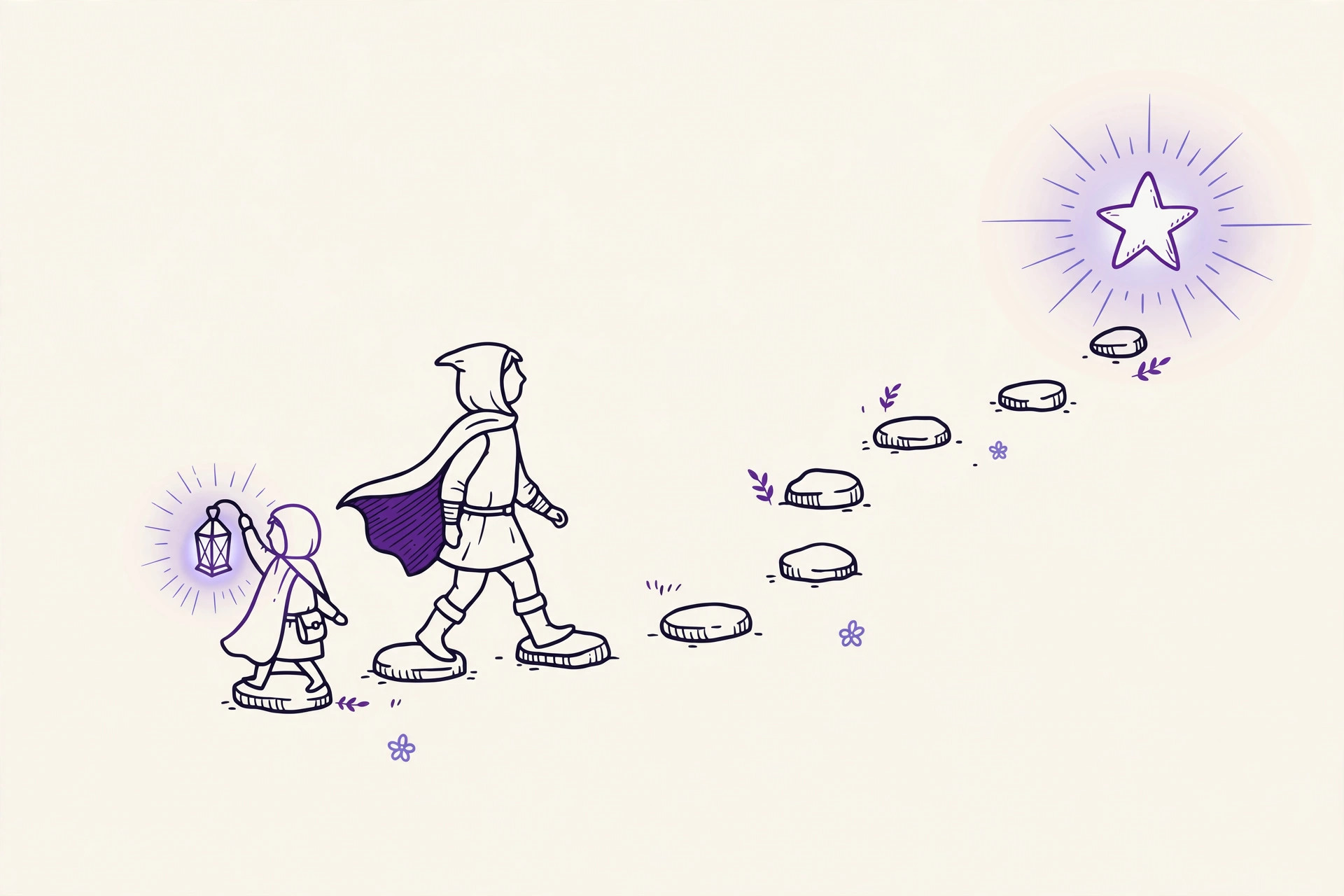
Here is the book in one line: your customer is the hero of the story, you are the guide, and your job is to state the problem, hand over a plain plan, and ask for the sale in words a stranger could repeat back to you.
This is the nineteenth deep-dive in our Book Deep Dives and Recommendations For Entrepreneurs series, and it sits naturally next to the last two. Traction (#017) asked how to run the business week to week so the problems stop piling up. Start with Why (#008) asked why people buy the why behind the work, not just the work itself. This one asks the next question: how do you say what you sell so plainly that a stranger gets it in five seconds?
Key takeaways
- The customer is the hero. You are the guide. Say so on every page.
- A problem has three layers: what is wrong, how it feels, and why it is wrong that it exists.
- A guide earns trust two ways: care, in the buyer's own words, and proof that you have done it before.
- A plan has three steps, no more. A buyer who sees ten steps sees work, not help.
- One clear ask beats five soft ones. Say what to do next, and say it in plain words.
Your customer is the hero, not you
Miller's first move is a swap of roles. Most brands cast themselves as the hero of their own story. The home page opens with the firm's name, its years in business, and its awards. The buyer reads it and thinks one thing: what does this have to do with me? Miller flips the cast. The customer is the hero. The brand is the guide. The hero wants something. The guide has the skill and the plan to help them get it.
He puts it with a film test. Your customer is Luke Skywalker, and you are Yoda. Luke wants something. Yoda has the skill and the plan. Nobody pays to watch Yoda's life story. They pay to see Luke win. Your site should work the same way. The first line should name what the buyer wants, not what you have won. If your home page reads like a trophy shelf, the buyer will leave and find a guide who talks about them instead.
The test takes ten seconds. Read the first line of your home page out loud. If it starts with "we" and your firm's name, flip it. Start with the buyer's want instead. "We help busy parents plan meals in twenty minutes" beats "We are a meal firm with ten years of craft." The first line talks about the buyer. The second talks about you. Only one of them earns the next five seconds.
The seven parts, in order
The frame has seven parts, and the order is the point. A character wants something. A problem blocks them. A guide steps in. The guide gives a plan. The guide calls them to act. The act ends in success, or in failure if they do nothing. Skip a part and the story sags. Name the want but skip the problem, and the buyer feels no pull. Give a plan but never ask, and the buyer drifts away with no next step.
Start with the character: one buyer, one want. Not "small firms" or "people who like food." One kind of buyer, with one want, in one plain line. "A new parent who wants dinner on the table in twenty minutes." The want is the hook. If you cannot name the want in one line, you do not know the buyer well enough yet, and no ad will fix that.
Then the problem, in three layers. Miller says a problem has a villain, a root cause you can name. Then three layers: the outer problem, what is wrong on the surface; the inner problem, how it feels; and the deep problem, why it is wrong that this problem exists at all. A late bill is the outer problem. The shame of a late bill is the inner problem. The deep problem is that a hard-working person should not feel small over a bill. Most brands stop at the outer layer. The buyer feels seen at the inner and deep layers.
Then the guide: you, in two short lines. A guide earns trust two ways, and you need both. First, care: a line in the buyer's own words that shows you get it. "We know what it is like to miss dinner with your kids." Second, proof: a line that shows you have done it before. Years in the trade, buyers served, a result you can name. Care without proof is warm but weak. Proof without care is cold. Put the two lines side by side and the buyer can trust you.
The plan, the ask, and the stakes
A plan has three steps, no more. Miller's rule is firm: three steps, each one plain. Step one, step two, step three. A buyer who sees ten steps sees work, not help. He splits the plan in two. The first half is the steps to buy: book a call, get a quote, start the work. The second half is the promises that calm fear: a plain price, no lock-in, a free first look. The steps show the path. The promises take the fear out of step one.
Then the call to act, and there are two kinds. A direct ask wants the sale now: buy, book, sign up. A soft ask wants a small yes first: get the free guide, watch the short film, take the quiz. Most buyers are not set to buy on the first visit, so the soft ask keeps them close until they are. Every page needs at least one ask, and the direct ask should be the one that stands out. A site with no ask is a shop with no till.
Last come the stakes: the win and the loss. Show the win in one line: life after the problem is fixed, in the buyer's words. Then name the loss in one line: what stays broken if they do nothing. Miller is blunt here. People move more to dodge a loss than to chase a win, so a message with no stakes feels nice and changes nothing. Name the cost of waiting, plainly and with care, and the buyer has a reason to act now.
Say it in one line
Miller's sharpest tool is the one-liner. It has three parts: the problem, the product, and the win. "We help busy parents get dinner on the table in twenty minutes, so the night ends at the table, not in the drive-through line." One line, three parts, no jargon. Write yours on a card. If it takes two lines, cut a word. If it takes a paragraph, you have not found it yet.
Test it on a stranger. Read the line once, then ask them to say it back. If they can, it works. If they stall, the line is still about you, not about them. This test is the whole book in one move: a message that a stranger can repeat is a message that can travel. A message that needs you in the room to explain it will die the moment you leave.
What is new in 2.0
This is a revised edition, not a new book. The core frame is the same as the 2017 edition: the customer is the hero, you are the guide. What is new is depth. Miller goes further on how to use the seven parts, with more cases from real firms and more help on the one-liner. The book also comes with access to StoryBrand AI, a tool that drafts your message inside the frame. If you read the first edition, the frame will feel known. The new depth and the tool are the reasons to pick up this one.
Weigh the tool with care. A tool can draft the seven parts in minutes, but it cannot know your buyer for you. If you have not talked to buyers, sat in on sales calls, or read real support notes, the tool will draft a smooth message about the wrong want. Use it to speed up the draft, not to skip the homework. The frame works because it fits how people hear stories. No tool can fake that fit.
Use it this week
First, write your one-liner on one line: the problem, your product, and the win, in the buyer's words. Second, rewrite the first line of your home page so it starts with the buyer's want, not your firm's name. Third, list the three layers of your buyer's problem — what is wrong, how it feels, and why it is wrong — and put the inner layer on the page. Fourth, cut your plan to three steps and add one promise that calms fear, like a plain price or a free first look. Fifth, give every page one clear ask: a direct ask that stands out, plus a soft ask for the buyer who is not set to buy yet. Test the one-liner on one stranger before the week ends.
Who should skip this book
If you want a book on ads, funnels, or traffic, skip it — this is a message book, not a traffic book. It will not tell you where to place ads or how to run a sale. It tells you what to say once the buyer arrives. If your message is already clear and your problem is that the firm cannot run without you, Built to Sell (#013) is the better read for the week. If you sell only by word of mouth and your buyers already know you by name, you can run the frame once and set it aside.
One honest note before you buy: the frame is simple, and simple can feel thin if you already run a brand team. The book repeats the seven parts across chapters because they are a tool to use, not a tale to read once. Read it with a pen, fill in your own BrandScript as you go, and judge it by what your home page looks like next month — not by how new the ideas feel on the first read.
Questions people ask
What are the seven parts of the StoryBrand Framework?
A character, a problem, a guide, a plan, a call to action, failure, and success. The character is your customer, who wants something. The problem blocks them. The guide — your brand — gives them a plan and calls them to act. The act ends in success or in failure, and the story shows both so the buyer can feel the stakes.
What is a BrandScript in Building a StoryBrand?
A BrandScript is a one-page sheet with the seven parts filled in for your business: who the customer is, what they want, what blocks them, how you guide them, the three-step plan, the ask, and the win. Miller's rule is that you write it once and then use it to write every page, ad, and pitch, so the message stays the same everywhere a buyer meets you.
What is the difference between a direct and a transitional call to action?
A direct call to action asks for the sale — buy now, book a call, sign up. A transitional call to action asks for a small yes first — download a free guide, watch a short video, take a quiz. Most buyers are not ready to buy on the first visit, so the small yes keeps them close until they are. Every page needs at least one of the two, and the direct ask should be the one that stands out.
What is new in Building a StoryBrand 2.0?
It is a fully revised and updated edition of the 2017 book, published January 7, 2025 by HarperCollins Leadership. Miller goes deeper on how to use the seven story parts, and the book comes with access to StoryBrand AI, a tool that helps you draft your message in the frame. The core frame is the same — the customer is the hero and you are the guide.
Read this next: Start with Why (#008) — Simon Sinek's case for leading with why you do the work, the question that sits just behind Miller's frame: once you know the why, the StoryBrand frame is how you say it.
From the Book Club shelf: browse all twenty-six picks.
Sources
Figures in this guide are as of November 2026 unless noted.
- HarperCollins Leadership — Building a StoryBrand 2.0 — by Donald Miller; HarperCollins Leadership, January 7, 2025; 304 pages; ISBN 9781400248872; over one million business leaders since the first edition.
- ImpactPlus — What Is the StoryBrand Framework? — the seven parts in order, with the three layers of the problem and the BrandScript.
- Business Wire — Building a StoryBrand 2.0 release — HarperCollins Leadership to publish the revised edition on January 7, 2025, with access to StoryBrand AI.
- Changenaire Book Club — The Books — our shelf note on the book: Miller gives you a seven-part story frame that puts the customer at the center and turns a muddy message into one a stranger can grasp in five seconds.
Subscribe for more free step-by-step how-to guides to help you get more things done to grow your business or project everyday.
Unsubscribe anytime.