
Made to Stick: Six Ways to Make an Idea Stay — Book Deep-Dive #020
Disclosure: some links on this page are affiliate links. If you buy through one, Changenaire may earn a commission at no extra cost to you. As an Amazon Associate, Changenaire earns from qualifying purchases made through links on this page.
A man wakes in a bathtub full of ice. A note says his kidney is gone. You have heard this tale. It is not true, and you still recall it years later. Chip and Dan Heath open Made to Stick: Why Some Ideas Survive and Others Die (Amazon Associates link — we may earn a commission) with that tale — the Kidney Heist — and ask a plain question: why do false tales stick in the mind while true ones die on the page? The book came out on January 2, 2007, from Random House, 336 pages, and it is a New York Times bestseller. The brothers' books have sold over two million copies in thirty-three languages, the publisher says. The answer they found is six traits, spelled SUCCESs: Simple, Unexpected, Concrete, Credible, Emotional, Stories.
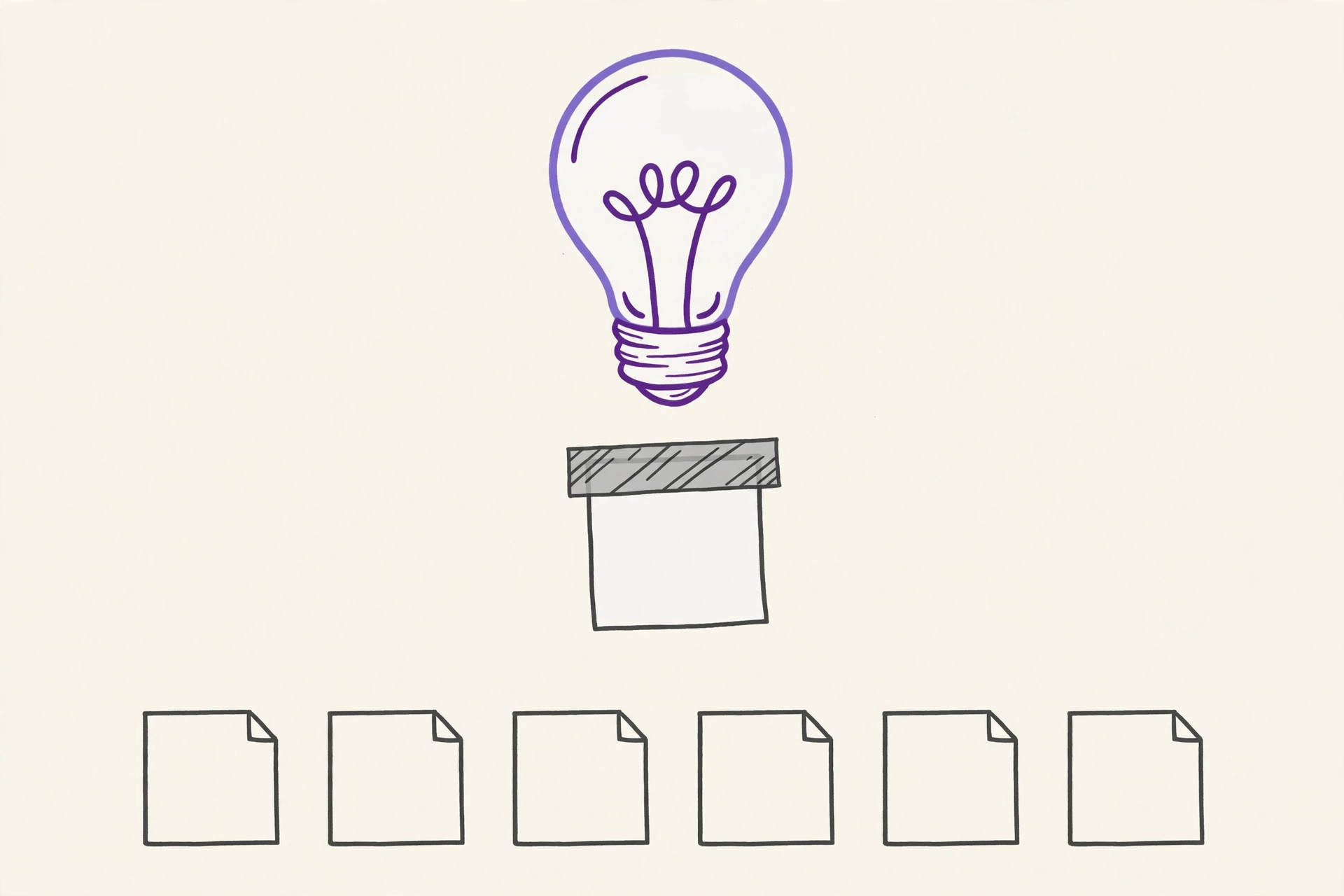
Here is the book in one line: an idea sticks when it is plain, breaks a pattern, shows a real scene, earns trust, stirs a feeling, and rides on a tale — and most business messages fail because they do none of the six.
This is the twentieth deep-dive in our Book Deep Dives and Recommendations For Entrepreneurs series, and it sits naturally next to the last two. Traction (#017) asked how to run the business week to week so the problems stop piling up. Start with Why (#008) asked why people buy the why behind the work. This one asks the next question: once your message is clear, how do you make it stay in the buyer's mind after they leave the page?
Key takeaways
- The Curse of Knowledge: once you know a thing, you cannot recall what it felt like not to know it.
- Simple means find the core, then say it in a few words. A proverb beats a paragraph.
- Unexpected gets attention. A gap in what you know holds it.
- Concrete beats vague every time. Show a scene with senses, not a claim with adjectives.
- Stories carry the rest. A tale can hold all five other traits at once.
The Curse of Knowledge
The book's first idea is the one that explains the rest. Once you know a thing, you cannot recall what it felt like not to know it. The Heaths call this the Curse of Knowledge, and it is the main reason business messages fail. You know your product so well that you speak in shorthand. The buyer hears the shorthand and hears nothing at all.
The book opens with a test that shows the gap. People tapped a well-known tune on a table and asked others to name it. The tappers thought half the listeners would get it. Only one in forty did. The tappers heard the tune in their heads as they tapped. The listeners heard taps. That is your message when you write from inside your own head: you hear the full tune, and the buyer hears taps.
The fix is not more words. More words from inside the curse just add more taps. The fix is a fresh ear. Read your message to someone who knows nothing about your trade, and watch their face. If they stall, you are still tapping. Cut the shorthand, name the thing in plain words, and test it again. The curse lifts only when you hear your own message as a stranger hears it.
Simple: find the core
Simple does not mean short for its own sake. It means find the core, then say it tight. The Heaths use the Golden Rule as the model: do to others what you would have them do to you. One line, a whole code of conduct inside it. Your message needs a core like that. Strip away the side points until one line is left. If you need a paragraph to say it, you have not found the core yet.
Southwest Airlines is the book's clean case. Its core was one line: THE low-fare airline. That line picked every hard call. No meals, no seat choice, fast turns at the gate. Each cut kept fares low, and low fares were the whole point. A core is not a slogan on a wall. It is a line that tells you what to say no to.
The test for your core takes one minute. Say what you sell in one line. Then ask: could a rival say the same line? If yes, it is not your core. It is a wish. Dig one layer deeper. What do you do that no one else in your lane does, in words a buyer would use? That line is the core. Build the page around it.
Unexpected: break the pattern, then hold the gap
We notice what breaks a pattern. The Kidney Heist works because it breaks what you expect from a night out. A man wakes in ice, not in his own bed. That jolt grabs the eye. Your message needs a jolt of its own. State the thing the buyer expects, then break it. "Most firms charge by the hour. We charge by the job." The break is small, but it wakes the reader up.
Surprise alone fades fast, so hold it with a gap. The Heaths call this a curiosity gap: a hole in what you know that your mind wants closed. Ask a plain question and wait one beat before you answer it. "What do most meal firms get wrong about dinner?" The reader's mind starts to guess, and a mind that is guessing keeps reading. A headline that asks a question holds the reader past the first line.
Use surprise with care. A cheap shock gets a click and a shrug. The gap must close with a real answer, or the buyer learns not to trust your next jolt. Break the pattern once, on the point that matters most. Then pay it off with a fact, a scene, or a tale the buyer can check. Surprise opens the door. Truth is what keeps the buyer in the room.
Concrete: show a scene, not a claim
Vague words slide off the mind. "World-class service" means nothing. A man in a tub of ice means something, because you can see it, feel the cold, and hear the note. Concrete means senses and specifics: a name, a place, a number, a thing you can touch. Swap each vague word for a scene, and the message gains weight it did not have before.
The book's name for this is the Velcro Theory of Memory. The more hooks an idea has, the more it sticks. A scene gives the mind hooks to hold: cold ice, a white note, a bare room. A claim gives it none. The Heaths add a second rule, the Human Scale Principle: people grasp one person, not a crowd. One child with a name beats a chart of a million. If your point is big, shrink it to one face first, then show the scale.
Test your own copy with a pen. Print the page and circle every vague word: quality, value, best, great, world-class. For each one, write a scene in the margin. What does "great service" look like at 9 a.m. on a Tuesday? Who does what, and what does the buyer see? If you cannot draw the scene, the word is doing no work. Cut it or swap it for the scene.
Credible, emotional, stories
Trust comes from details you can check. The book tells of a Nobel Prize-winning scientist who drank a glass of bacteria to prove that germs cause stomach ulcers. One vivid act, and the claim was settled in a way no chart could match. You do not need a stunt. You need proof the buyer can test: a named buyer, a real number, a promise with a date on it. Details you can check beat claims you must take on faith.
Feeling moves people to act. The book calls this the Mother Teresa Effect: one named child moves more gifts than stats about millions. We feel for one face. We go numb at a crowd. So lead with the one face, then show the scale. If your cause is big, do not open with the big number. Open with the one person the number stands for, and let the feeling do the work that logic cannot.
Stories wrap the other five traits into one. A tale can be plain, odd, vivid, true, and moving at once. The book tells of a teacher whose classroom test showed her pupils what prejudice feels like — and the lesson stuck for life. That is the test for your own tales. Can a buyer retell yours in the lift, in thirty seconds, and keep the point? If yes, the tale will travel further than any ad you buy.
Use it this week
First, pick one message you send most: your home page line, your pitch, or your most-used email. Second, cut it to its core in one line, and ask if a rival could say the same line — if yes, dig one layer deeper. Third, swap one vague word for one concrete scene with a name, a place, or a number. Fourth, open with one small break in the pattern, then a question that leaves a gap the reader wants closed. Fifth, tell the whole thing as a short tale to one real person, then ask them to say it back — what they repeat is what stuck, and what they drop is what to fix.
Who should skip this book
If you want a book on ads, funnels, or traffic, skip it — this is a message book, not a traffic book. It will not tell you where to place ads or how to run a sale. It tells you how to shape the point once the buyer arrives. If your message is already clear and your problem is that the firm cannot run without you, Built to Sell (#013) is the better read for the week.
One honest note before you buy: the book is from 2007, and some of its cases show their age. Firms named in it have changed, merged, or gone. The six traits hold up, but the examples are a time capsule. Read the traits as tools, not laws: a sticky tale still needs true facts behind it, and a tale that sticks to the wrong facts can do real harm.
Questions people ask
What does SUCCESs stand for in Made to Stick?
Simple, Unexpected, Concrete, Credible, Emotional, and Stories. The six traits the Heath brothers found in ideas that stick: ideas that are plain, break a pattern, show a real scene, earn trust, stir a feeling, and ride on a tale. Not every sticky idea uses all six, but the stickiest ones use most of them.
What is the Curse of Knowledge?
Once you know a thing, you cannot recall what it felt like not to know it. So you speak in shorthand the buyer cannot follow. The book opens with a test: people tapped a well-known tune on a table and asked others to name it. The tappers thought half the listeners would get it. Only one in forty did. That gap is the curse, and it is the main reason business messages fail.
Why does the Kidney Heist story stick?
It is plain, odd, vivid, and told as a tale — four of the six traits in one short story. A man wakes in a tub of ice with a note saying his kidney is gone. You can picture it in one second, it breaks what you expect from a night out, and it is easy to retell. It is not true, and that is the book's point: a false tale can stick while a true fact dies, because stickiness comes from how an idea is told, not from whether it is true.
Is Made to Stick only for marketers?
No. Teachers, founders, managers, and parents use the same six traits any time they need a point to stay put. A pitch to a buyer, a talk to a team, a lesson for a class, or a rule for a child all run on the same test: is it plain, does it break a pattern, can you picture it, do you trust it, do you feel it, and does it ride on a tale?
Read this next: Influence (#014) — Robert Cialdini's six levers of persuasion, the science of why people say yes, and the natural pair to the Heaths' six traits for ideas that stay put.
From the Book Club shelf: browse all twenty-six picks.
Sources
Figures in this guide are as of November 2026 unless noted.
- Penguin Random House — Made to Stick — by Chip Heath and Dan Heath; Random House, January 2, 2007; 336 pages; ISBN 9781400064281; New York Times bestseller; the brothers' books have sold over two million copies in thirty-three languages.
- SCORE — 6 Ways to Make Your Business Message More Powerful — the six SUCCESs traits in plain words, with ways to use each one.
- Arizona State University, W. P. Carey — Stickiness Is Powerful — a plain summary of the six traits and the book's cases, from the tapper test to the Velcro Theory of Memory.
- Changenaire Book Club — The Books — our shelf note on the book: the Heath brothers ask why false tales stick while true facts die, and give you six traits to make your own ideas stay put.
Subscribe for more free step-by-step how-to guides to help you get more things done to grow your business or project everyday.
Unsubscribe anytime.