

Hooked: Four Steps That Turn a Product Into a Habit — Book Deep-Dive #021
Disclosure: some links on this page are affiliate links. If you buy through one, Changenaire may earn a commission at no extra cost to you. As an Amazon Associate, Changenaire earns from qualifying purchases made through links on this page.
You pick up your phone to check the time. A minute later you are three posts deep in a feed you did not mean to open. You did not plan to go there. A cue sent you, and a loop did the rest. Nir Eyal calls that loop the Hook Model, and his book Hooked: How to Build Habit-Forming Products (Amazon Associates link — we may earn a commission) shows how it works, step by step. The book came out on November 4, 2014, from Portfolio, 256 pages, and Eyal is a Wall Street Journal bestselling author, as UXPin notes in its guide to the model. The loop has four steps: Trigger, Action, Variable Reward, Investment.
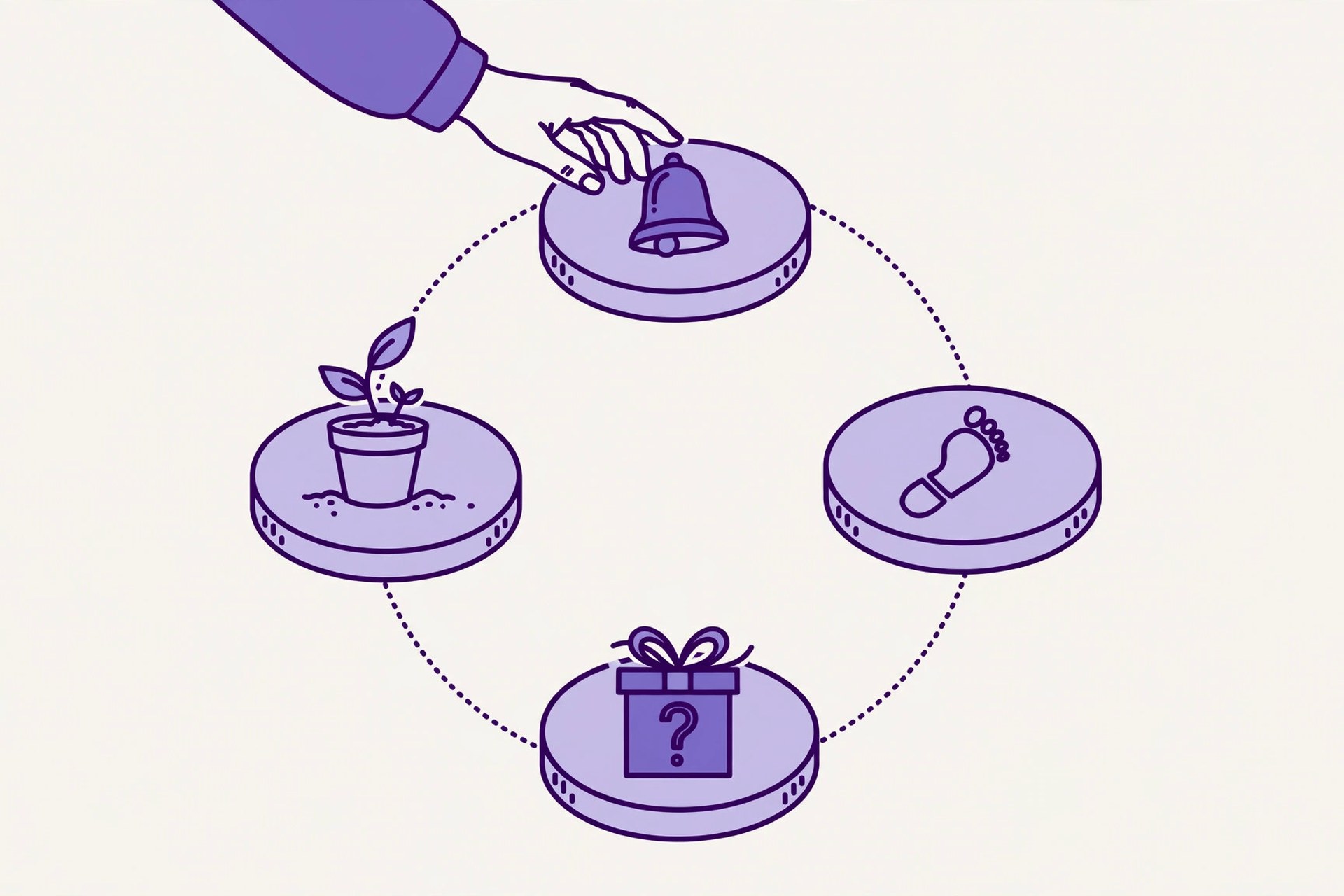
Here is the book in one line: a product becomes a habit when a cue starts a simple act, the act pays off in a way you cannot quite predict, and what you put in makes the next round easier to start.
This is the twenty-first deep-dive in our Book Deep Dives and Recommendations For Entrepreneurs series, and it sits next to two close kin. Atomic Habits (#001) shows how a person builds a habit one small step at a time. Traction (#017) shows how a firm runs its week so the work gets done. This one asks the next question: how do you build a product that people come back to on their own, without a nudge from you?
Key takeaways
- A habit is a loop: Trigger, Action, Variable Reward, Investment — and it runs again and again.
- An outside cue starts the loop. An inside cue — a feeling, a dull moment — keeps it going.
- The act must be dead simple. If it takes thought, the loop stalls.
- A payoff you cannot quite predict pulls harder than one you can.
- What the user puts in — time, data, friends — loads the next trigger.
Trigger: the cue that starts it
Every loop starts with a cue. Eyal splits cues into two kinds. An outside cue sits in the world around you: a ping, an email, a red dot on an app icon. An inside cue sits in your head: a dull moment, a pang of doubt, a wish to check in with friends. Outside cues start the habit. Inside cues keep it alive.
The best cue is a feeling your buyer already has. People do not open a photo app because the app is great. They open it when they feel bored, or left out, or keen to share a good day. Your job is to learn which feeling sends your buyer to you. Ask five buyers what they felt right before they last used your product. The same feeling will show up more than once. That feeling is your inside cue.
Do not start with a ping. A ping you send is an outside cue, and buyers learn to mute it. A loop that leans on pings dies the week you stop paying for ads. Build the loop so the buyer's own feeling does the work. The ping is a crutch for week one. The feeling is the habit for year one.
Action: make the next step dead simple
The act is the small thing the buyer does when the cue fires. Open the app. Tap the photo. Run a search. Eyal builds on the Fogg Behavior Model: an act happens when want, ease, and a cue all land at the same time. If the want is there and the cue fires, but the act is hard, nothing happens. So the act must be the simplest thing that still counts.
Cut the act down until it feels too small. One tap, not three. One field, not a form. One clear button, not a menu. Each extra step is a door the buyer can walk away through. Watch a new buyer use your product and count the taps to the first payoff. If the count is more than three, cut a step. The loop cannot form if the act feels like work.
Want matters, but you cannot fake it. The buyer must want the payoff the act leads to. If they do not, no amount of polish on the button will save you. That is why the book starts with the buyer's pain, not your feature list. Name the itch your product scratches, in the buyer's own words, and the act writes itself.
Variable reward: the pull that keeps you coming back
A payoff you can predict gets dull fast. A fixed prize — the same points each time — loses its pull by the third round. A payoff that shifts — sometimes a like, sometimes a find, sometimes nothing much — keeps the mind keen. Eyal traces this to old lab work on rewards: a prize that comes on a shifting plan holds attention far longer than one that comes on time.
The book sorts rewards into three kinds. Rewards of the tribe come from other people: likes, replies, a nod from the group. Rewards of the hunt come from things: a new fact, a deal, a rare find. Rewards of the self come from mastery: a streak kept, a skill gained, a task cleared. Most strong products mix two of the three. A feed gives you tribe and hunt at once. A learning app gives you self and tribe.
Keep the reward tied to the real payoff. The prize must serve the buyer's true aim, not just keep them tapping. A feed that shows you more of what you love is a true reward. A feed that shows you rage to hold your gaze is a trap. Eyal is blunt here: a loop that feeds on a real need is a good product. A loop that feeds on a weak spot is a trick, and buyers learn to spot tricks.
Investment: what the buyer puts in loads the next loop
The last step is the one most builders skip. After the payoff, the buyer puts something in: a photo, a friend invite, a saved list, a bit of time to set things up. That input makes the product better for them next time. A saved list makes the next visit faster. Friends on the app make the next visit warmer. The input is small, but it raises the cost of leaving.
Investment is what turns one loop into a chain. Each pass through the loop should leave the product a touch more yours. Your data, your people, your taste — all stored in the product, all waiting for the next cue. That is why a buyer stays with a clunky app they have fed for a year and drops a slick one they tried once. The stored value, not the shine, holds them.
Ask for the input right after the payoff, never before it. A form that blocks the first use kills the loop before it starts. Let the buyer taste the payoff first. Then, while the good feeling is fresh, ask for one small thing: a name, a pick, a friend to invite. One ask per visit is enough. Small gifts of effort, given gladly, add up to a habit.
Use it this week
First, pick one act your buyers repeat: open the app, check the feed, log a run. Second, ask five buyers what they felt right before they last did it, and write down the feeling that repeats — that is your inside cue. Third, count the taps from cue to payoff, and cut the path to three or fewer. Fourth, name the reward in plain words, and check which of the three kinds it is: tribe, hunt, or self. Fifth, add one small ask right after the payoff — a save, a follow, a friend invite — and watch whether buyers come back on their own the next day, without a ping from you.
Who should skip this book
If you want a book on ads, funnels, or traffic, skip it — this is a habit book, not a traffic book. It will not tell you where to place ads or how to run a sale. It tells you how to shape a product so people return to it on their own. If your problem is that the firm cannot run without you, Built to Sell (#013) is the better read for the week.
One honest note before you buy: the loop in this book is a strong tool, and strong tools cut both ways. A habit that serves a real need helps the buyer. A habit that feeds on fear or boredom harms them, and the harm comes back to you as lost trust. Eyal closes the book with a test for makers: build only the loop you would be glad to see used on you and the people you love.
Questions people ask
What is the Hook Model in Hooked?
A four-step loop: Trigger, Action, Variable Reward, Investment. A cue starts it, a simple act follows, a shifting payoff pulls the user back, and what the user puts in loads the next round. Each pass makes the loop a bit more automatic, until the user comes back on their own.
What is an internal trigger?
A cue that sits in the user's head, not on a screen: boredom, doubt, a wish to connect, a dull moment. Outside cues like pings start a habit. Inside cues keep it going, because the user sends themself back to the product.
What are the three kinds of variable reward?
Rewards of the tribe (likes, replies, praise from others), rewards of the hunt (new facts, deals, rare finds), and rewards of the self (mastery, streaks, a cleared list). Most strong products mix two of the three.
Is Hooked a book about tricks to trap users?
No, and Eyal says so in plain words. The book is a guide to building habits that serve a real need, and it closes with a test for makers: build only what you would be glad to see used on you. A loop that feeds on a weak spot is a trick, and buyers learn to spot tricks.
Read this next: Deep Work (#012) — Cal Newport's case for deep focus, the skill that makes one good hour worth five scattered ones — and the natural pair to Eyal's loop, since a habit that guards your attention is worth more than one that steals it.
From the Book Club shelf: browse the full Book Club shelf.
Sources
Figures in this guide are as of November 2026 unless noted.
- Penguin Random House — Hooked — by Nir Eyal, edited by Ryan Hoover; Portfolio, November 4, 2014; 256 pages; ISBN 9781591847786.
- UXPin — How to Hook Users With Habit-Forming UX Design — the four-step Hook Model in Eyal's own words, and the Wall Street Journal bestselling author note.
- Adobe Blog — Habit-Forming UX: Nir Eyal's Tips To Keep Users Coming Back For More — the four steps, from trigger to investment, with the slot-machine pull of shifting rewards.
- TapCub — Hook Model: 4 Phases, Metrics and Example — the three kinds of variable reward: tribe, hunt, and self.
- Changenaire Book Club — The Books — our shelf note on the book: Nir Eyal shows how a four-step loop turns a first visit into a habit, and how to build it so it serves a real need.
Subscribe for more free step-by-step how-to guides to help you get more things done to grow your business or project everyday.
Unsubscribe anytime.