

The ONE Thing: One Question That Clears Your Whole Day — Book Deep-Dive #022
Disclosure: some links on this page are affiliate links. If you buy through one, Changenaire may earn a commission at no extra cost to you. As an Amazon Associate, Changenaire earns from qualifying purchases made through links on this page.
Your list has twenty tasks on it. Each one feels urgent. By noon you have touched eight and finished none, and the day feels lost. Gary Keller and Jay Papasan say the list is the problem, not you. Their book The ONE Thing: The Surprisingly Simple Truth About Extraordinary Results (Amazon Associates link — we may earn a commission) gives you one question to cut the list down to a single next step. The book came out on April 1, 2013, from Bard Press, 240 pages, and it has sold over three million copies, as this guide to the book notes. The question is the whole method: what is the ONE Thing you can do such that by doing it, everything else gets easier or unnecessary?
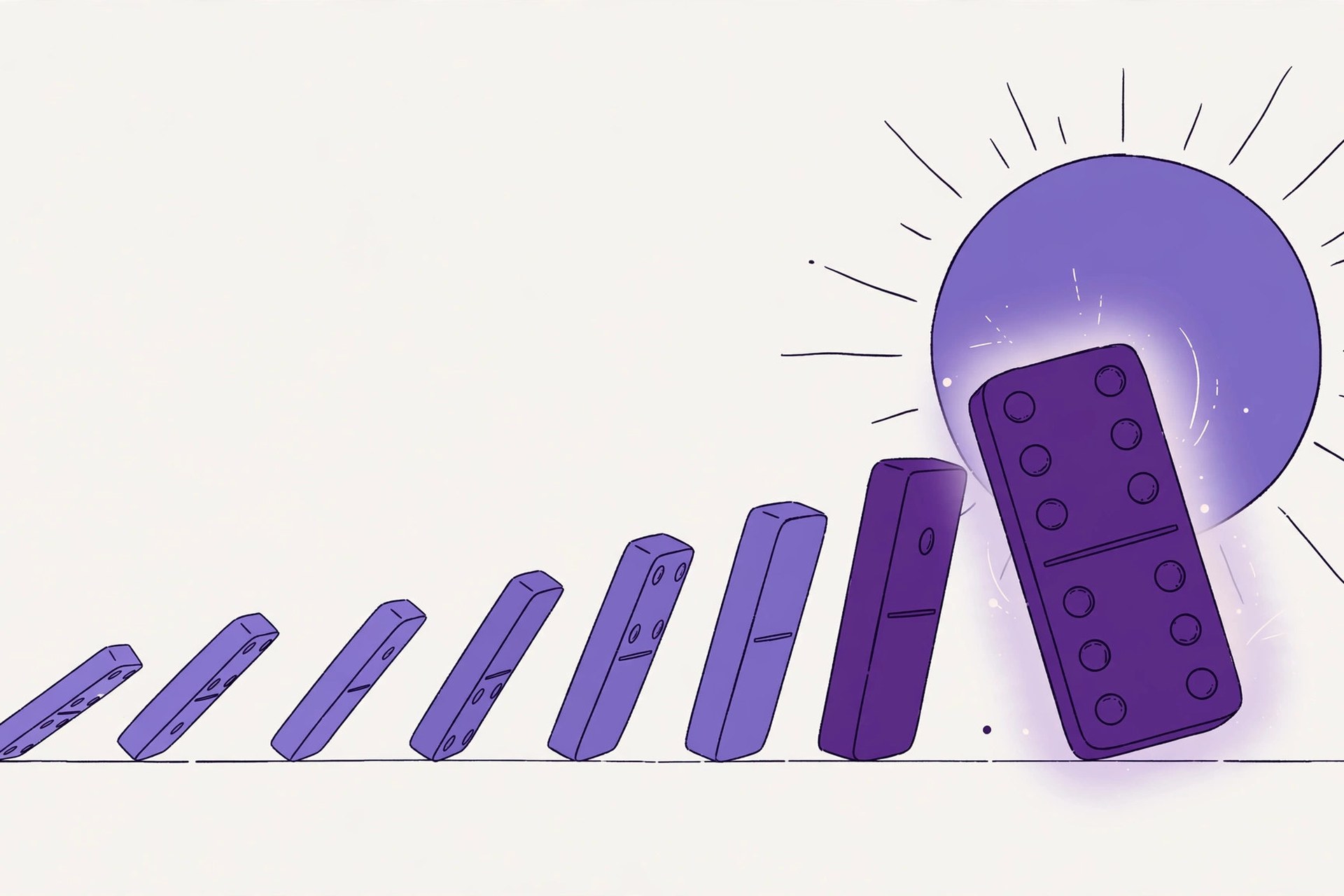
Here is the book in one line: big results come from doing one small thing well, then the next, not from doing many things at once — and one plain question picks the thing.
This is the twenty-second deep-dive in our Book Deep Dives and Recommendations For Entrepreneurs series, and it pairs well with two close kin. Deep Work (#012) shows why one good hour of focus beats five scattered ones. Atomic Habits (#001) shows how small steps add up. This one asks the next question: when your day holds ten good tasks, which one goes first?
Key takeaways
- The Focusing Question picks your next step: what is the ONE Thing you can do such that by doing it, everything else gets easier or unnecessary?
- Six lies steal your focus — the worst is that all tasks matter the same.
- You do not do two things at once. You switch, and each switch costs you.
- Willpower runs low through the day. Do the ONE Thing while yours is full.
- Small wins stack like dominoes. Knock the first one, and the rest fall easier.
Six lies that steal your focus
The book opens by clearing away six beliefs that block focus. The first lie is that all tasks matter the same. They do not. A short list holds one or two tasks that move the work, and the rest is noise. The to-do list hides this, because it gives each line the same weight. The Focusing Question strips the weight away: which one task makes the rest easier, or needless?
The second lie is that you can do two things at once. You cannot. What we call multitasking is fast switching, and each switch costs time and care. A mind that jumps between a pitch and a chat thread does both badly. Close the second tab. One task, one mind, until it is done or the block ends.
The last four lies sound wise, and each one bends the truth. A disciplined life sounds like the goal, but the book says you need discipline only long enough to build a habit — then the habit carries the load. Willpower sounds always on call, but it runs low through the day, which is why mornings matter. A balanced life sounds right, but big work needs seasons out of balance, then a return to the rest. And big is bad sounds safe, but thinking small is what keeps the work small.
The Focusing Question
The question has two forms, and both start the same way. The big form asks: what is the ONE Thing I can do in my life, or for my work, such that by doing it, everything else gets easier or unnecessary? The small form asks: what is the ONE Thing I can do right now? The big form sets the course. The small form picks the next step. Ask the big one once a year. Ask the small one each morning.
The question works because it forces a pick. Most plans end in a list, and a list lets you dodge the hard call. The question allows one answer. To answer it, you must rank the tasks, name the top one, and let the rest wait. That rank is the work. The schedule that follows is easy once the pick is made.
Ask it at each level, from the year down to the hour. What is the ONE Thing this year? This month? This week? Today? Right now? Each answer should line up with the one above it, like links in a chain. When the small answer serves the big one, the day has a spine. When it does not, you are busy, not moving.
Dominoes: go small to go big
Keller's image for the method is a row of dominoes. A small domino can knock a slightly larger one, which knocks a larger one still, until a tiny push topples a piece far larger than the first. The trick is to start with the piece you can tip today. Big results do not need a big first step. They need the right first step, then the next, in line.
Going small is not thinking small. The book is clear on this point: aim big, act small. A big aim sets the course. A small act starts the chain. Founders fail when they flip this — they plan big and act big, and the weight of the first step stops them cold. Pick the smallest step that still counts, and take it now.
Line the wins up in order, and let each one make the next easier. A call that lands one buyer makes the next call easier to make. A page that ships makes the next page easier to write. This is the domino run in real life: each win is proof and fuel for the next one. The chain breaks when you skip ahead to a step you have not earned yet.
Time blocking: guard the hours that count
A pick with no time set aside is a wish. The book's fix is time blocking: put the ONE Thing on the calendar as a block you guard, and do it before the day's noise gets a say. Keller's rule is to block four hours each morning for the ONE Thing, as this guide to the book notes. Four hours sounds like a lot. Start with two, and guard them like a meeting with your best buyer.
Guard the block from the thieves that steal it. The first thief is the urge to say yes to each new ask. The second is the fear that the rest will fall apart while you focus. The third is a tired body: poor sleep and poor food drain the will you need for the block. Say no once, let the small fires burn, and rest well. The block is the work.
End the block with a short note to your next self. Write down where you stopped and what comes next. The note takes two minutes, and it saves twenty the next morning. A block that ends clean starts clean. That is the whole trick: protect the hours, and the hours protect the work.
Use it this week
First, write down the ten tasks that fill your week: the calls, the posts, the fixes, the rest. Second, ask the Focusing Question of the list — what is the ONE Thing you can do such that by doing it, everything else gets easier or unnecessary — and circle the one task that wins. Third, block two hours tomorrow morning for that task alone, phone off, door shut. Fourth, when the block ends, write down where you stopped and what comes next. Fifth, ask the question again the next morning, and watch how fast the list shrinks when one task a day gets your full mind.
Who should skip this book
If you want a book on teams, hiring, or cash flow, skip it — this is a focus book, not a firm book. It will not tell you how to run a team or read a balance sheet. It tells you how to pick the one task that counts and guard the hours to do it. If your problem is that your days feel full but your work does not move, this is the right read for the week. If your problem is that no one knows your product exists, Traction (#017) is the better read.
One honest note before you buy: the book is short and plain, and some readers will find it too plain. The method is one question and one calendar block, said in many ways across 240 pages. That is the point, not a flaw — but if you want deep case files or new tools, you will not find them here. The value is in the doing: one question, asked each morning, for a month.
Questions people ask
What is the Focusing Question in The ONE Thing?
What is the ONE Thing I can do such that by doing it, everything else will be easier or unnecessary? Ask it in a big form for your life or work, and in a small form for right now. The big form sets the course. The small form picks the next step.
What are the six lies in The ONE Thing?
Everything matters equally, multitasking works, you need a fully disciplined life, willpower is always on call, a balanced life is best, and big is bad. Each one pulls you off focus, and the book takes them down one by one.
What is the domino effect in The ONE Thing?
A small domino can topple a slightly larger one, which topples a larger one still. Keller uses it to show how small wins stack: pick the first step you can tip today, and let each win make the next one easier.
How much time should I block for my ONE Thing?
Keller's rule is four hours each morning, guarded like a meeting. If four hours feels out of reach, start with two and guard them well. A pick with no time set aside is a wish, not a plan.
Read this next: Atomic Habits (#001) — James Clear's case for tiny steps that add up, the day-to-day twin of Keller's domino run, and the best next read once your ONE Thing is picked.
From the Book Club shelf: browse the full Book Club shelf.
Sources
Figures in this guide are as of November 2026 unless noted.
- Publishers Weekly — The One Thing — by Gary Keller, with Jay Papasan; Bard (NBN, dist.), April 2013; 240 pages; ISBN 978-1-885167-77-4.
- Lifestack — The One Thing by Gary Keller: Key Ideas — over three million copies sold, the Focusing Question, the six lies, and the four-hour morning block.
- Graham Mann — The ONE Thing: Summary & Key Ideas — the Focusing Question as the whole method, and why the path is subtraction, not addition.
- Wikipedia — The One Thing (book) — Bard Press, April 1, 2013; New York Times, Wall Street Journal, and USA Today bestseller lists.
- Changenaire Book Club — The Books — our shelf note on the book: Keller and Papasan give you one question that cuts a full list down to the single next step.
Subscribe for more free step-by-step how-to guides to help you get more things done to grow your business or project everyday.
Unsubscribe anytime.